
Takeoff To Opportunity
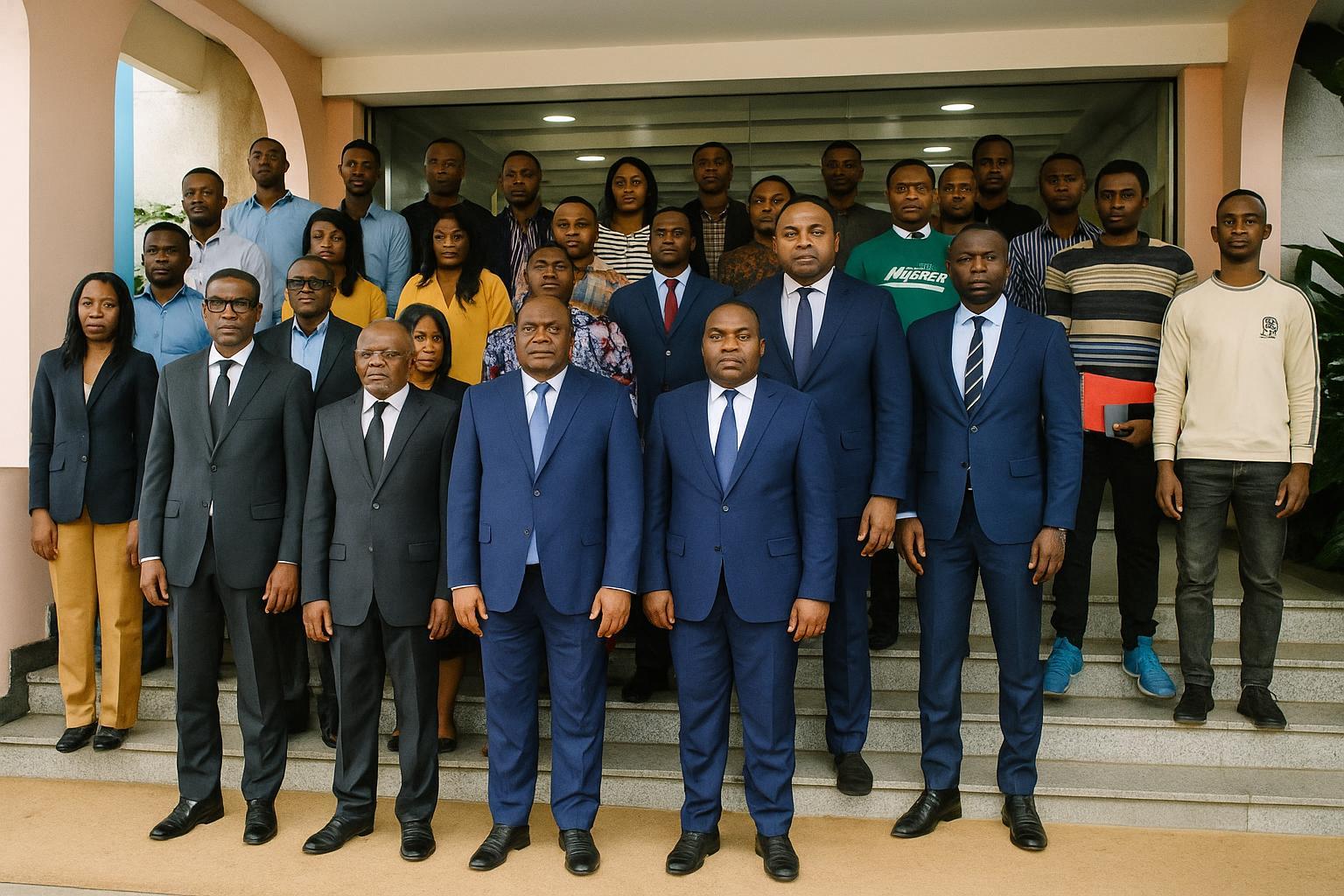
Brazzaville’s Maya-Maya airport buzzed with pride this week as nineteen young Congolese boarded flights bound for Algiers and Baku, clutching freshly stamped admission letters that open the door to five years of petroleum-engineering studies.
The fully funded programme, offered by the National Petroleum Company of Congo, SNPC, illustrates the company’s growing push to translate crude-oil revenues into concrete educational dividends for the nation’s youth.
Merit First, Borders Second
Chief executive Maixent Raoul Ominga told the students that selection flowed strictly from baccalaureate scores validated by the national Exams and Competitions Directorate.
Regional, ethnic or social origins never entered the equation, he stressed, noting that the approach mirrors President Denis Sassou Nguesso’s calls to reward diligence wherever it springs up across the Republic.
Seven of this year’s laureates are women, an encouraging ratio in a discipline traditionally dominated by men and a sign, Ominga argued, that “talent sees no gender”.
What The Scholarship Covers
Tuition, laboratory fees, health insurance, visas, round-trip tickets, hostel rooms, meals and emergency incidentals have already been settled in advance, according to internal SNPC documents consulted by our newsroom.
That financial blanket removes the pressures that often derail brilliant but vulnerable students, says Professor Arsène Moukou, dean of engineering at Marien-Ngouabi University, who is not involved in the scheme yet follows it “with keen interest”.
Success Comes With Strings
The SNPC contract is explicit: repeaters pay their own way home.
“You hold a one-time ticket,” Ominga reminded them. “If you stumble, your seat goes to the next cohort.”
It is a tough-love clause meant to cultivate discipline while reassuring taxpayers that the public oil firm deploys its social budget responsibly.
Graduates who clear every semester with success are promised automatic positions inside SNPC’s exploration, production or refining divisions, an incentive that links learning directly to future employment.
Follow-Up And Pastoral Care
A joint monitoring commission, comprising SNPC human-resources officers and academic liaisons in Algeria and Azerbaijan, will review transcripts every term and send progress dashboards to Brazzaville.
In case of medical or administrative hiccups, the panel can release contingency funds, arrange tutoring or, if required, fly a guardian to the campus—a practice piloted during earlier scholarship waves to China and India.
Scaling Up The Initiative
Ominga disclosed that exploratory talks are under way with universities in Malaysia, Norway and the United Arab Emirates to widen the list of destinations and diversify specialisations toward renewable energies and reservoir data science.
If concluded, those accords could raise the annual intake to forty students, doubling the current figure without straining SNPC’s balance sheet, company economists estimate.
Such scale, he argued, would help Congo capture more value along the hydrocarbon chain, from seismic modelling to advanced petrochemicals, while empowering a generation eager for high-skill, high-pay careers.
Voices Of The Beneficiaries
“I come from Mossaka, where flares light the night sky but skilled jobs remain scarce,” said Nadège Okouala, 18, who ranked first among the female candidates.
She intends to specialise in drilling safety so she can “protect both workers and wetlands back home”.
For Félix Ngoma, whose father runs a small mechanics workshop in Pointe-Noire, the promise of a job on graduation equals “winning two lotteries at once: education abroad and employment at home”.
A Broader Social Dividend
Beyond individual dreams, education experts view the scholarship as a strategic tool to localise expertise that multinationals still import at high cost.
Each engineer hired locally can circulate earnings inside the economy, mentor younger pupils and spur ancillary businesses, from data-processing startups to safety-equipment suppliers.
That virtuous loop, analysts suggest, exemplifies how corporate social responsibility aligns with national development agendas championed by central government.
While output from mature oilfields can fluctuate, the supply of skilled minds must remain constant, they argue.
Countdown To First Semester
Classes open in early October, giving students four weeks to acclimatise, complete language refreshers and settle administrative formalities with host universities.
SNPC has scheduled virtual check-ins every Sunday, ensuring parents can track attendance and emotional well-being without expensive roaming calls.
By the time the cohort returns for its first holiday, Brazzaville hopes to witness confident undergraduates talking fluidly about reservoir permeability and gas-lift optimisation.
Industry Eyes On Future Talent
TotalEnergies EP Congo, one of the largest foreign operators in the offshore Moho-Nord field, welcomed the initiative in a brief statement, saying it “broadens the local talent pool that every company ultimately relies on”.
Industry consultants note that as exploration moves into deeper waters and carbon-management techniques become standard, demand will surge for engineers versed in both classic drilling and cutting-edge environmental controls—skills the scholarship curriculum specifically embeds.
They add that fostering home-grown specialists reduces reliance on costly expatriates, improves knowledge retention and strengthens Congo’s bargaining power in joint-venture negotiations.
Already, several service companies have signalled interest in offering internships during summer breaks, a move that would familiarise the students with field equipment long before final graduation.