
First Charter Lands With 65 Returnees at Maya-Maya
Congo-Brazzaville opened a voluntary repatriation of its nationals living in South Africa on July 5. A first group of 65 people touched down at Brazzaville’s Maya-Maya international airport aboard a special ECAir flight.
Men, women and children stepped off the aircraft onto home soil. The government framed the arrival as the opening move of a broader effort, one designed to bring back citizens who no longer feel safe where they had settled.
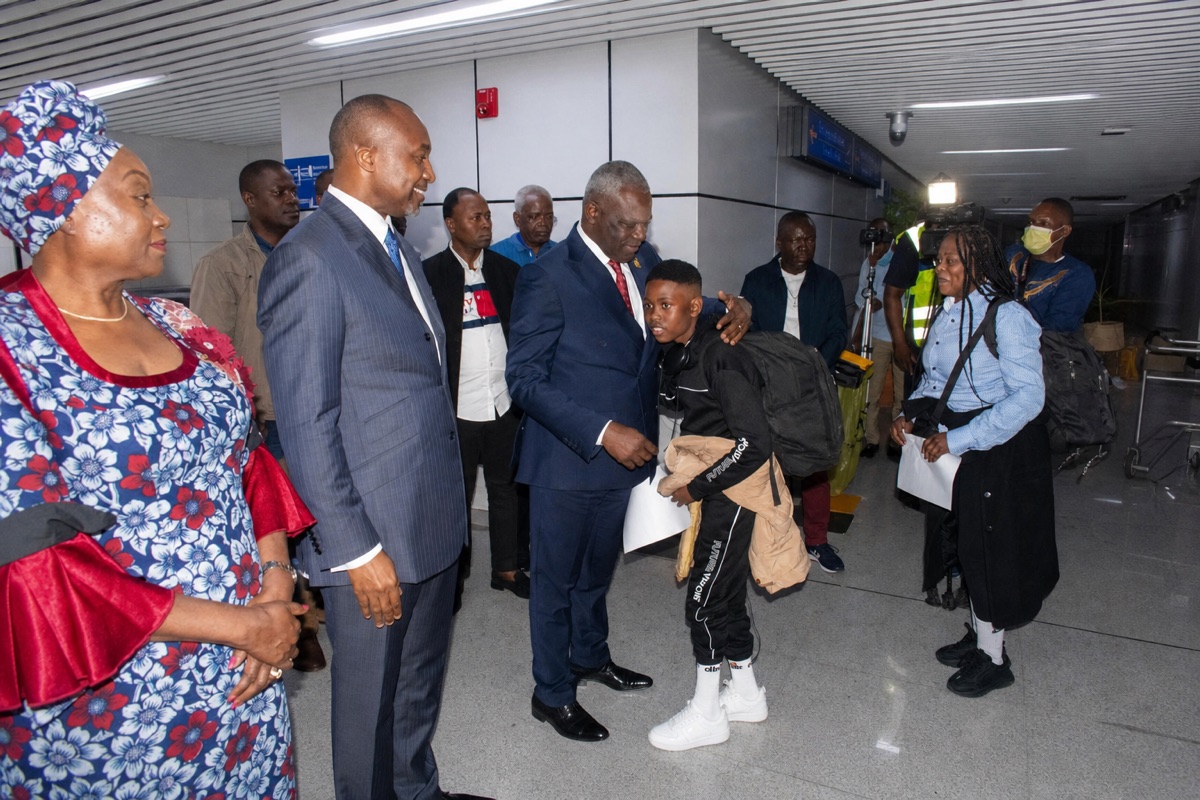
The scene at the terminal carried unmistakable political weight. Rather than a routine landing, it became a staged welcome, with senior officials on the tarmac to greet each returning family in person.
A Prime Minister on the Tarmac
Prime Minister Anatole Collinet Makosso led the reception, flanked by several members of his cabinet. His presence signalled that the operation was being handled at the highest level of the executive, not left to consular routine.
Welcoming the returnees to their native land, the head of government reaffirmed the state’s solidarity with compatriots forced to leave South Africa. He tied their departure directly to a climate of insecurity fed by xenophobic violence.
His words were measured but pointed. By naming the cause of the exodus, Makosso placed the return of these families within a wider concern shared across the region about the safety of African migrants abroad.
Ministers Signal a Whole-of-Government Effort
The turnout of ministers underlined how many arms of the state were involved. Transport, Civil Aviation and Merchant Marine Minister Josue Rodrigue Ngouonimba attended, a fitting presence given the airlift at the heart of the operation.
Alongside him stood Denis Christel Sassou N’Guesso, Minister of International Cooperation and the Promotion of Public-Private Partnership. His portfolio speaks to the diplomatic groundwork that a cross-border repatriation inevitably requires.
Social Affairs, Solidarity and Humanitarian Action Minister Lydie Pongault completed the line-up. Her department is expected to shoulder much of the follow-up, from reception to the practical support that returning families will need in the coming weeks.
Why the Returnees Chose to Come Home
The programme rests on a single principle: choice. It targets nationals who wish to return voluntarily, and its stated aim is to guarantee their safety rather than to compel anyone still weighing their options.
For many, the decision has not been abstract. The insecurity described by officials points to conditions that made staying feel untenable, pushing families to trade a life built abroad for the certainty of home.
That framing matters. By stressing volunteers, the authorities present the airlift as protection extended to citizens in distress, an act of assistance in the face of a situation they openly call worrying.
Solidarity as a Governing Message
Beyond logistics, the operation carries a message the government is keen to project. It shows an administration willing to reach across borders for its people when circumstances turn hostile, and to be seen doing so.
The choice to mobilise ECAir, the national carrier, reinforces that symbolism. A state airline flying citizens home converts a policy commitment into a concrete image, one that resonates well beyond the walls of the airport.
Solidarity, in this telling, is not a slogan. It is a plane on a runway, a prime minister at the foot of the steps, and a cabinet arranged to make clear that the return of every citizen is being taken seriously.
More Flights May Follow in the Days Ahead
Officials suggested this first wave will not be the last. Further rotations could be arranged in the days to come, allowing all Congolese who wish to return to do so under secure conditions.
The pace of any additional flights was left open. Much will depend on how many nationals ultimately choose to leave South Africa, and on the arrangements needed to move them safely across the continent.
For now, the 65 who landed at Maya-Maya represent both a completed journey and a signal of intent. Their arrival closes one chapter and, by the government’s own account, opens the way for others to follow the same route home.