
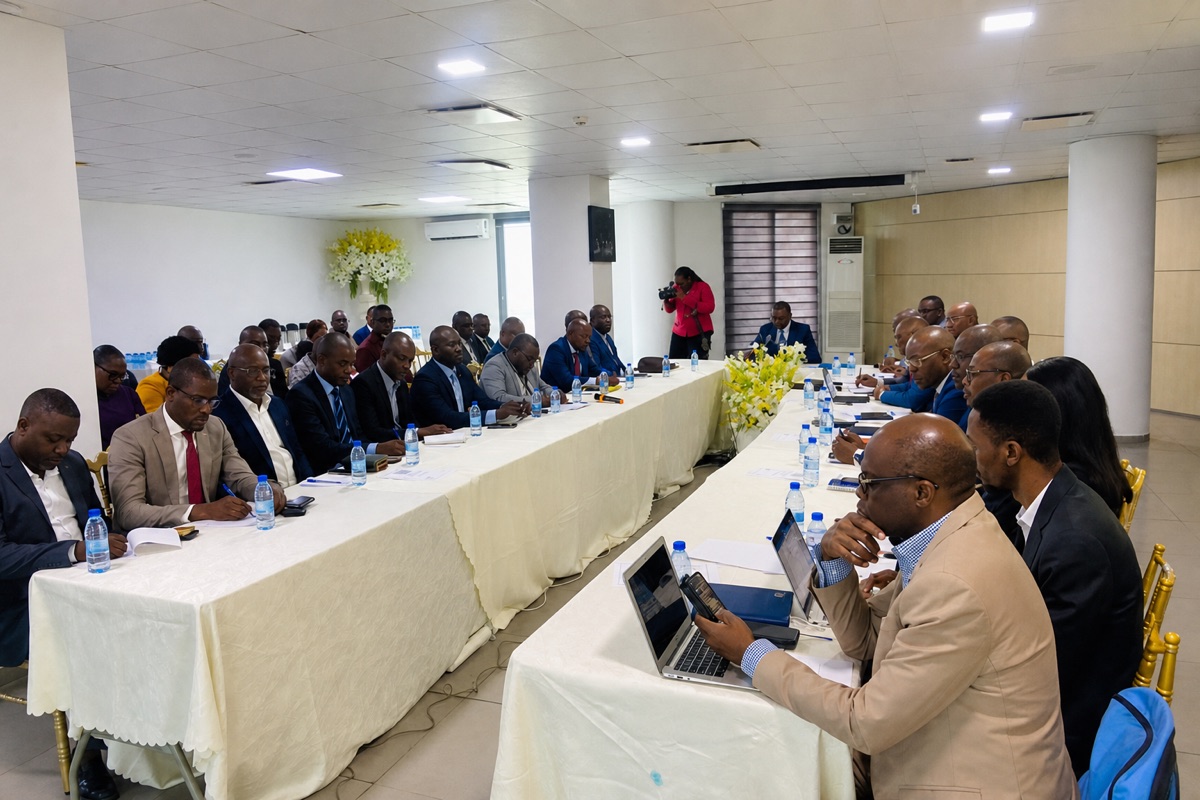
Congo-Brazzaville’s transport ministry has opened a new chapter in its dealings with organised labour. On 6 July in Brazzaville, Minister Josué Rodrigue Ngouonimba brought union representatives to the table for a fresh round of talks.
The meetings gathered delegates from administrations placed under his authority. The stated aim was to build a lasting framework for exchange, one that could steady a sector long marked by tension and unpaid workers.
A permanent channel for social dialogue
The government has framed the initiative as more than a one-off gesture. According to the ministry, the goal is to nurture social dialogue, sharpen the governance of public establishments and keep the workplace climate calm.
That language matters in a country where transport disputes can quickly spill into wider disruption. By institutionalising regular contact, officials hope to prevent grievances from hardening into strikes that paralyse ports, rail and civil aviation.
The approach echoes a broader idea gaining ground across Central Africa. Rather than reacting once conflict erupts, authorities are increasingly trying to anticipate friction and settle it around a table.
Who sat at the table
The talks drew a wide slice of the transport administration. Representatives came from the Congolese Shippers’ Council and the National Civil Aviation Agency, both central to trade and passenger movement.
The Merchant Marine and the Autonomous Port of Pointe-Noire also sent delegates. Pointe-Noire, as the country’s maritime gateway, carries particular weight, since disruption there ripples through the wider economy.
The Congo-Ocean Railway, known as the CFCO, completed the core group alongside other sector bodies. Together these organisations form the backbone of how goods and people move between the coast and the interior.
Bringing them into a single conversation gives the ministry a fuller picture. It also signals that no branch of the sector is being left outside the emerging dialogue.
The weight of unpaid wages
Beneath the talk of frameworks lay a hard grievance. Union representatives used the meetings to lay out concerns they described as pressing, with salary arrears standing out above the rest.
Georges Mabondzo, of the railway workers’ union, put a stark figure on the problem. He pointed to forty-four months of wage arrears owed to CFCO staff, a backlog stretching back more than three and a half years.
Such delays weigh heavily on households that depend on a single railway salary. They also test the loyalty of workers asked to keep trains running while their own pay remains outstanding month after month.
For the ministry, the number sets a clear benchmark. Any dialogue that fails to address these arrears risks being seen by workers as words without substance.
Guarded optimism from the unions
The unions did not leave the room empty-handed in spirit. Several welcomed the very fact of being consulted, reading it as a shift in how the government treats its social partners.
One representative said he had sensed in the minister a genuine willingness to listen to the social partners. That perception, even before concrete measures, carries value in a relationship often strained by mistrust.
Still, goodwill and back pay are not the same thing. The coming weeks will show whether the ministry can turn a promising tone into steps that ease the burden on rail workers and their colleagues.
The unions appear ready to give the process a chance. Their response suggests they see the framework as an opening rather than a conclusion, a door left ajar rather than a settled deal.
Why the framework could matter
The transport sector sits at the heart of Congo-Brazzaville’s daily life and its economy. Ports, railways and airports link producers to markets and families to one another across long distances.
When these services stall, the cost is felt far beyond the workforce directly involved. Traders, commuters and small businesses all rely on predictable movement of goods and people through the country.
By treating dialogue as a standing tool rather than an emergency measure, the ministry is betting on prevention. The wager is that steady conversation now can spare the sector costlier standoffs later.
Whether that bet pays off will depend on follow-through. The 6 July meetings set a tone and a table; the arrears they exposed will be the measure of what the new framework can actually deliver.
For now, the government has signalled that it wants to talk, and the unions have signalled that they are listening. In a sector shaped by years of frustration, that shared willingness is itself a modest starting point.