
Back-to-School Kits Delivered
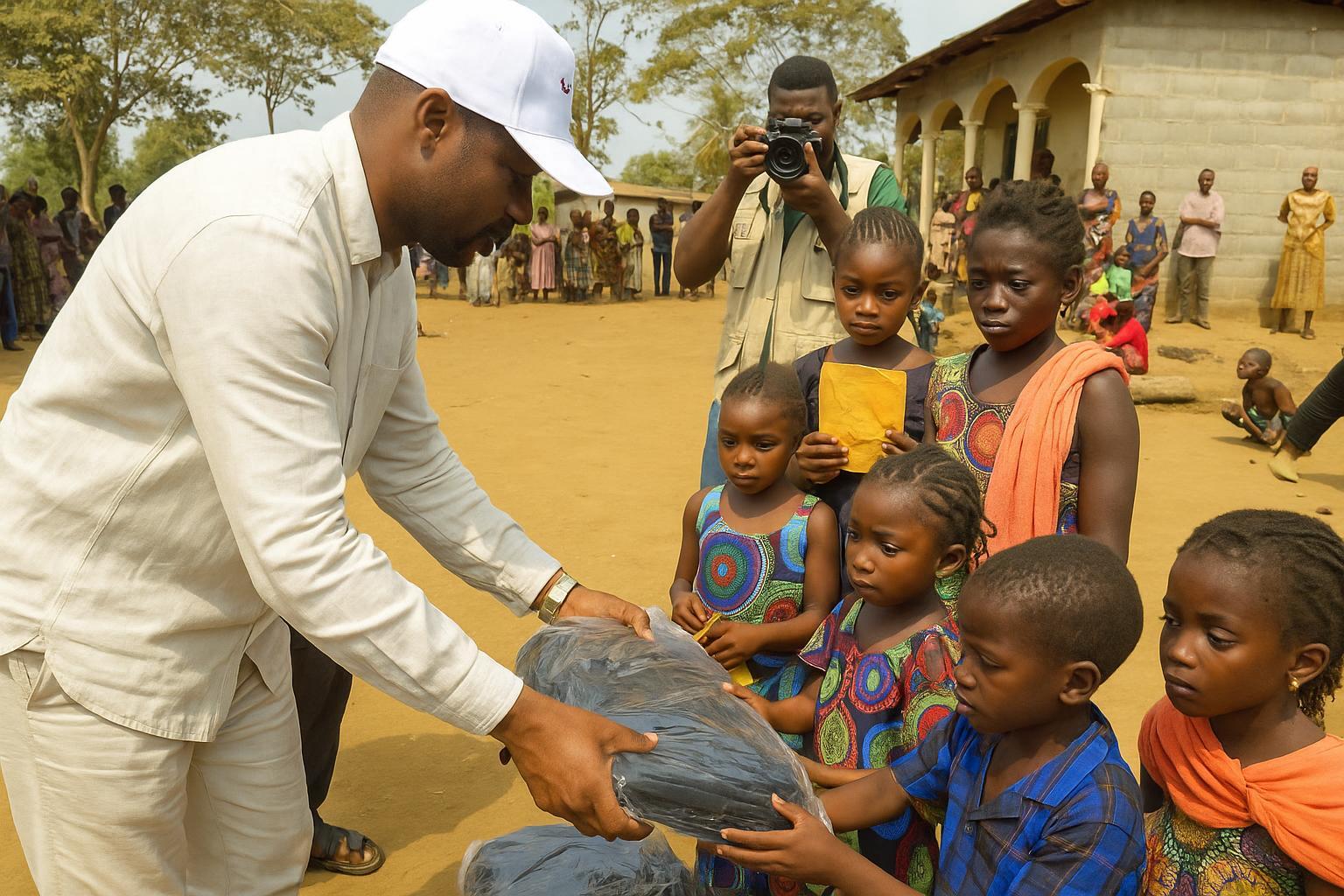
With the new academic calendar fast approaching, energy in Sibiti’s Moukanda Primary School is shifting from holiday quiet to hopeful preparation. On Monday, municipal councillor Gaël Mahoungou walked into the dusty courtyard carrying cartons that would soon brighten lessons for more than two hundred children.
The cartons held complete back-to-school kits: notebooks, pens, pencils and geometry sets tailored to every level from CP1 to CM2. In total, 200 plus pupils carefully queued, each receiving a pack that eliminates at least one expense from families’ lists for the 2025-2026 term.
Innocent Etouni Vondo, president of the school’s parent association, voiced collective relief. “The gesture we salute is a real comfort for parents facing financial hardship,” he said, his words echoing down the corridor where cracked walls still carry last year’s arithmetic charts.
Rehabilitation Works Progressing
Moukanda is one of Sibiti’s oldest public schools, and years of rain have scarred its plaster. Seeing that, Councillor Mahoungou decided the donation alone was not enough. He simultaneously commissioned rehabilitation work that includes roofing repairs, fresh paint and improved desk alignment.
The construction team started days after the donation ceremony. Workers replace weakened wooden beams before the height of the rainy season. According to the councillor’s schedule, every classroom should be ready by 1 October, the official opening day of classes across Lékoumou.
“It is our way of contributing to better learning conditions, which in turn impact pupils’ performance,” Mahoungou explained to local reporters, pointing to sacks of cement stacked beside the playground. The councillor insists infrastructure and supplies must advance together for lasting educational gains.
Community Impact and Equity
Parents watching the site see a direct link between fresh walls and their children’s morale. Several nodded agreement as Etouni Vondo repeated that lesson quality is inseparable from environment. Even without uniform textbooks, he argued, clean classrooms and pens in hand strengthen attendance.
For households whose income fluctuates with small-scale farming or informal trade, a single kit can represent a week’s earnings. Removing that cost frees money for uniforms or lunch, parents noted. Though modest in budgetary terms, such aid multiplies its effect through every family ledger.
The councillor’s move also aligns with the municipality’s broader push to support early grades where dropout risk is highest. By targeting CP1 to CM2 first, the initiative seeks to anchor basic literacy before pupils face the heavier material of collège.
Work crews begin at dawn, taking advantage of dry hours. Pupils passing by on their way to fetch water stop and gaze at new zinc sheets glinting in sunlight. The simple sight feeds anticipation for a brighter, leak-free learning space once the rains return.
Governance and Transparency
Inside the head-teacher’s office, stacks of newly delivered exercise books wait on a wooden table. Staff compile distribution lists to ensure each child signs for materials. Transparency, they say, builds trust with donors, parents and local authorities alike.
Beyond immediate relief, observers say the action conveys a message of proximity governance: solutions conceived and implemented within the community itself. In that sense, Mahoungou’s double initiative offers a template other wards could replicate without awaiting large capital programs.
Funding details were not publicly disclosed, yet the councillor emphasised that the work conforms to municipal procurement rules. No participant voiced concern, and parents appeared more focused on completion deadlines than on accounting minutiae, trusting oversight mechanisms already in place.
Looking Ahead to 1 October
As paint dries and notebooks change hands, attention turns to 1 October. The school aims for a ceremony that celebrates both reopening and renovation. For many children, it will mark the first time they sit at a desk unblemished by humidity stains.
If deadlines hold, the Moukanda experience could ripple across Sibiti, inspiring additional community contributions. For now, the new kits rest safely in pupils’ backpacks, tangible proof that simple acts—shared resources, repaired roofs—can keep the promise of education within reach for every learner.
Teachers preparing lesson plans say the supplies will standardise note-taking across classes, simplifying marking and peer tutoring. Uniform materials reduce the imbalance that sometimes appears when better-equipped pupils advance faster than their friends. Equity, they argue, begins with identical pencils and pages.
For its part, the Parents Association plans periodic clean-up days to maintain the refurbished premises. Vondo believes shared responsibility will protect the investment long after the contractor leaves. Sustained upkeep, he adds, turns a one-time donation into a durable stepping-stone for local schooling.