
Central African governments are moving to pool money against a shared danger. Faced with the threat of Ebola virus disease, the countries of the Cemac zone are working to set up an emergency health fund built around regional solidarity rather than scattered national efforts.
Brazzaville Talks Shape a Regional Safety Net
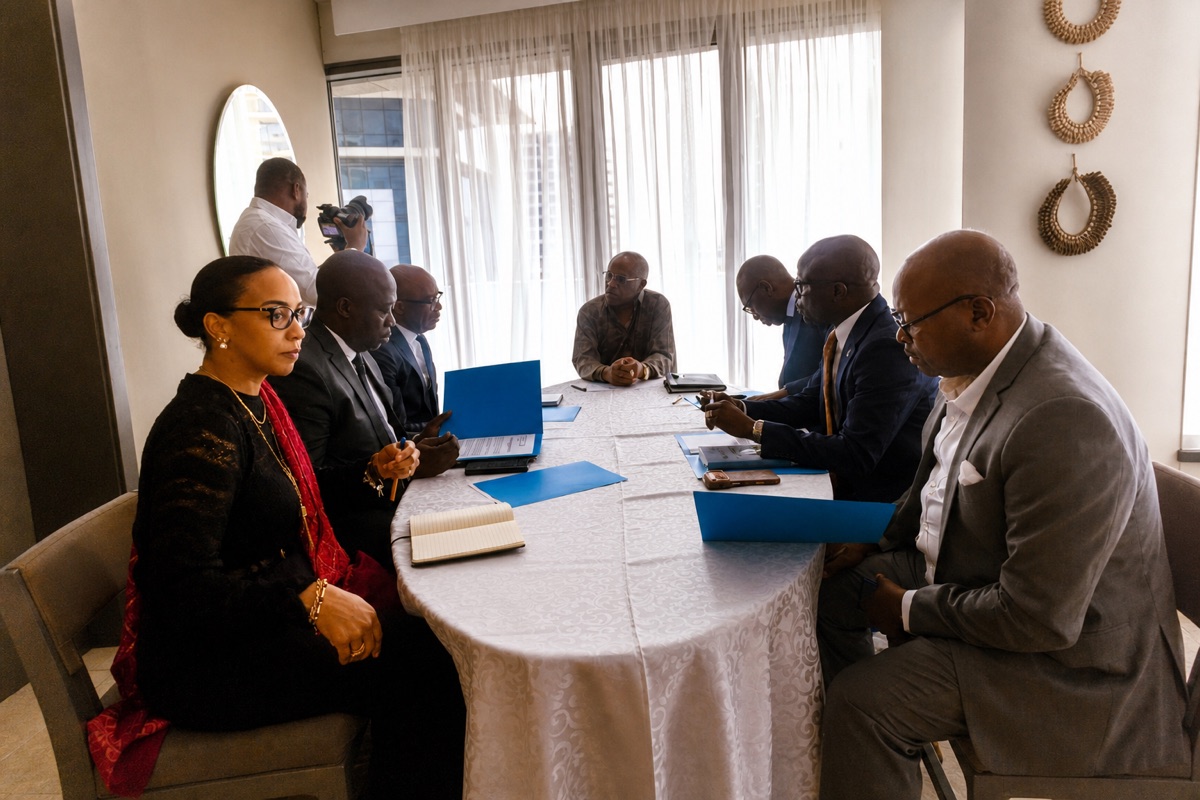
The push took concrete form at a coordination meeting held in Brazzaville. Delegates gathered to define how the planned fund would work and how member states could act together when a major outbreak crosses borders inside Central Africa.
The Cemac groups the economies of the region under a common monetary and economic framework. Extending that cooperation to health financing reflects a simple logic: viruses ignore frontiers, so the money meant to fight them should be able to move quickly across them too.
A Shared Purse for Fast Reaction
At the heart of the project sits the idea of a regional emergency mechanism. Rather than waiting for each country to mobilise its own budget when an epidemic strikes, the bloc wants a pooled reserve ready to release funds without delay once a crisis is confirmed.
That ambition answers a recurring weakness exposed by past outbreaks across the continent. Slow financing has often blunted the early response, the very window when containment is most effective. A mutualised fund aims to shorten that gap between alert and action.
For ordinary residents, the stakes are practical. Faster financing can mean earlier screening at points of entry, quicker deployment of medical teams, and better-stocked treatment sites. The goal is to keep a localised flare-up from turning into a wider regional emergency.
Why Ebola Concentrates Attention
Ebola carries a heavy reputation in Central Africa, a region that has lived through several episodes of the disease over the years. Its capacity to spread within communities and to overwhelm fragile health systems makes it a benchmark threat for planners thinking about collective defence.
The meeting in Brazzaville framed the fund as a response to exactly this kind of large-scale danger. By preparing the financing tool before an outbreak is declared, member states hope to trade improvised, last-minute appeals for a predictable and shared line of defence.
Solidarity as a Working Method
What stands out in the Cemac approach is the emphasis on mutualisation. Pooling resources spreads the cost and the risk, so that no single member faces a sudden epidemic alone. It also signals that regional bodies see health security as part of their core economic stability.
Building such a fund is, of course, more than a declaration. It requires agreement on how contributions are set, how money is released, and who decides when the emergency threshold has been reached. The Brazzaville coordination meeting was a step toward settling those modalities.
What Comes Next for the Fund
For now, the project remains a framework taking shape rather than a fully operating instrument. The discussions in Brazzaville were about laying foundations: agreeing on the purpose, the broad design, and the shared commitment that any common fund demands from its members.
The direction, though, is clear. Central African states want a financing tool that can be triggered the moment a serious epidemic appears, sparing the region the costly delays that have hampered earlier responses elsewhere on the continent.
If the mechanism delivers on that promise, it could become a quiet but important part of the region’s defences. A reserve that no one hopes to use, yet one whose mere existence could make the difference between a contained scare and a full-blown health crisis.
The coming phase will test political will as much as technical design. Turning a meeting’s conclusions into a funded, rules-based mechanism is the harder part, and it will show how far Cemac members are ready to act as a single health community.
For Brazzaville, hosting the talks underlines the Republic of the Congo’s place at the centre of this regional conversation. The capital has become a meeting point where the bloc tries to translate the language of solidarity into a tool that can actually be switched on when danger arrives.