
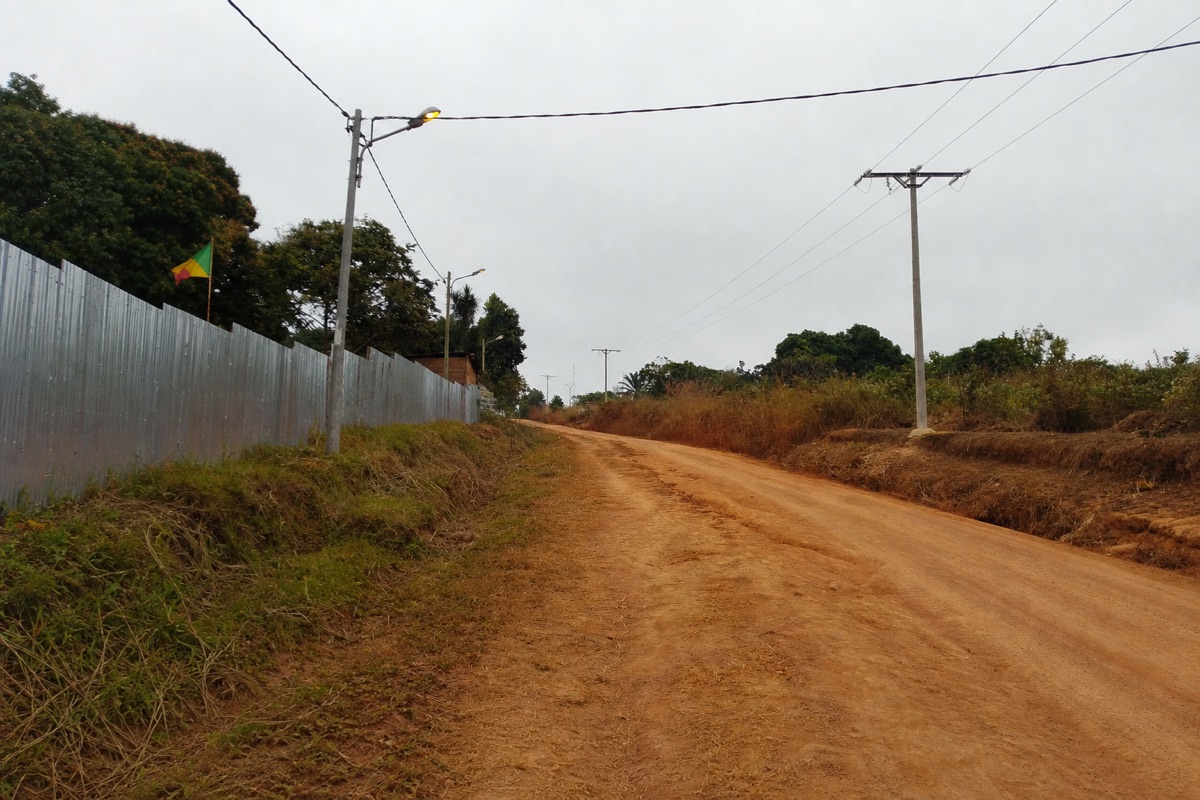
For the residents of three villages in Congo-Brazzaville’s Pool department, the switch finally flipped. Louingui, Boko and Loumo are now tied into the national electricity grid, closing a long wait for households that had lived for years without a steady supply of power.
A midnight connection welcomed by residents
The turning point came in the small hours of Saturday, 4 July 2026. Technicians from E2c, the Congolese national utility (Énergie électrique du Congo), completed the connection at Louingui deep in the night, to the visible delight of local families.
The timing hardly mattered. What counted was that the current arrived at all. For a district long left on the margins of the country’s power map, the moment marked a genuine shift rather than another promise deferred to some later date.
Sixty kilometres of new line across the Pool
Behind the flip of the switch lies a sizeable stretch of infrastructure. Crews built a line of more than 60 kilometres running from Kinkala to Boko, passing through Louingui along the way. From there, a branch of roughly 30 kilometres carries the current onward to reach Loumo.
That layout explains why the connection unfolded in stages. Louingui and Boko sit on the main artery, while Loumo depends on the dedicated spur. The completion of the Loumo link rounded out the electrification of all three localities across the same corridor.
What steady power could change on the ground
Access to reliable electricity is rarely just about lighting a room after dark. In these villages, it reshapes the economics of everyday work, giving small producers tools they could not previously run and extending the hours in which they can trade.
Officials frame the project as a lever for local development. The new supply is expected to support agriculture, craft trades and commerce in particular, the three pillars on which the rural economy of the Pool largely rests.
For farmers, power can mean cold storage, pumping and processing that reduce waste. For artisans and shopkeepers, it means machinery, refrigeration and longer opening hours. Each of those gains, modest on its own, adds up to a broader push for growth.
Part of a wider rural electrification drive
The three connections form one chapter in a larger campaign to bring the grid to the Pool’s under-served communities. Authorities describe the recent work as a significant step forward in that ongoing rural electrification programme rather than an isolated event.
The ambition, as presented, is to knit the department’s scattered localities into a single, dependable network. Each new line narrows the gap between the areas already served and those still waiting for their own connection.
Which localities could be next
The map is far from complete. Three further localities could be linked in the near term: Goma-Tsetsé, Linzolo and Mbanza-Ndounga. Each would extend the reach of the grid a little deeper into the department.
If those connections go ahead, Kindamba would remain the last district in the Pool still awaiting electrification. That prospect sets a clear, if demanding, horizon for the programme and offers a measure against which its progress can be judged.
No firm timetable was attached to those next phases in the accounts available. The localities named stand as stated intentions, and it remains to be seen how quickly the crews can repeat at Goma-Tsetsé, Linzolo and Mbanza-Ndounga what they achieved at Louingui, Boko and Loumo.
A quiet milestone with lasting weight
Set against national headlines, a night-time connection in three rural villages may look like a minor entry. Yet for the households involved, few developments carry as much practical weight as the arrival of dependable power.
The line from Kinkala to Boko, and the spur out to Loumo, now stand as tangible proof that the grid is inching outward. Whether that momentum holds will depend on the localities still queued behind them, from Goma-Tsetsé to Kindamba.
For now, Louingui, Boko and Loumo can count themselves among the connected. In a department where the grid has long stopped short of many doorsteps, that alone is reason enough for the celebration that greeted the crews on a July night.