
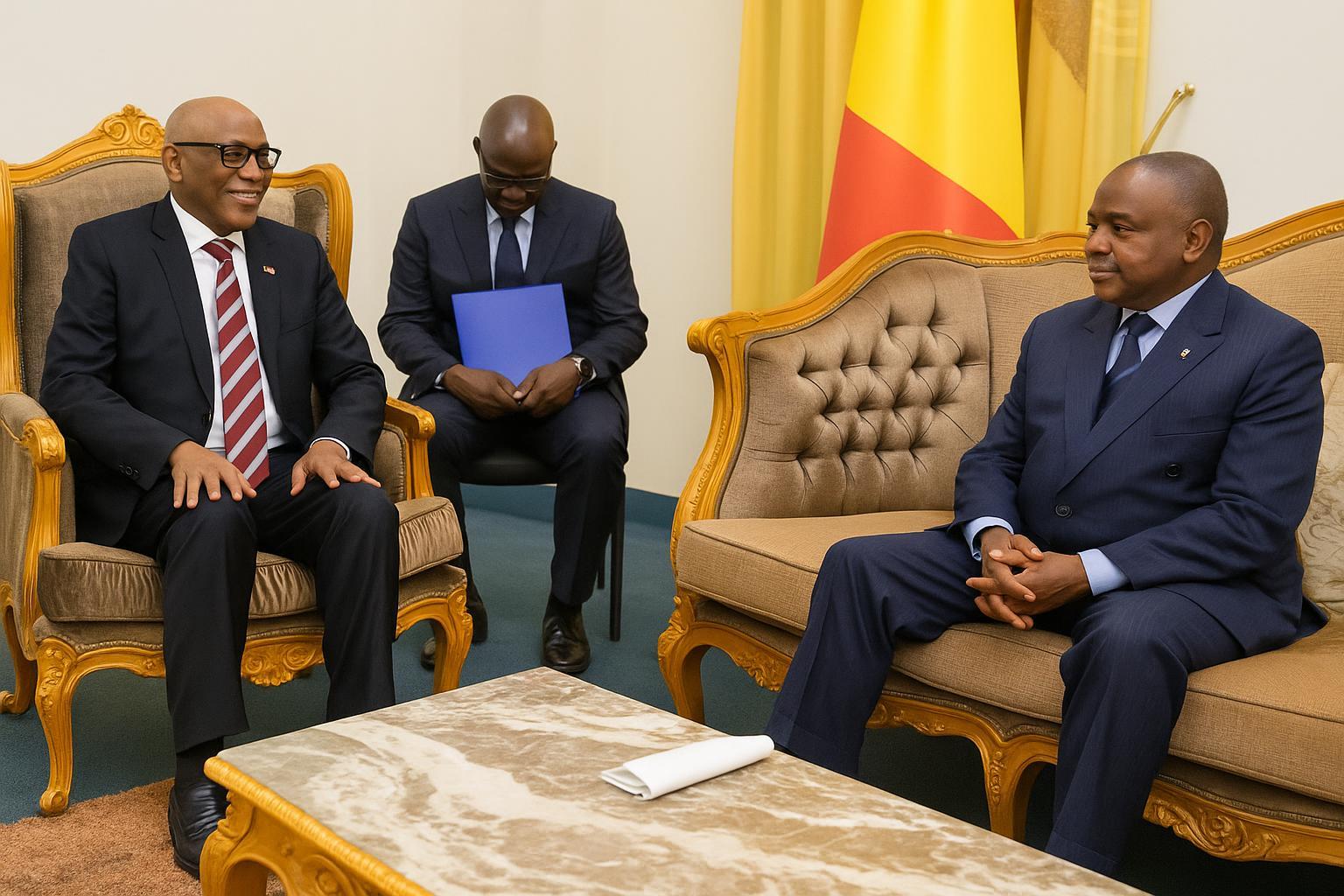
A warm handshake in Brazzaville
The red carpets of the Senate in Brazzaville unfurled on 11 November for Ambassador Mziwamadoda Uppington Kalako. Greeted by Senate President Pierre Ngolo, the South African diplomat opened what both men described as a “new chapter” of cooperation between the two parliaments.
Behind closed doors they compared legislative agendas, committee working methods and digital archiving tools. According to the Senate press service, the two officials agreed that regular staff exchanges and joint seminars could start as early as the first quarter of next year, once calendars are aligned.
Why the timing matters for both capitals
Kalako told reporters that the visit is part of a “listening tour” he began after presenting credentials in Brazzaville in September, adding that Pretoria sees parliamentary diplomacy as an efficient, low-cost way to widen an already robust bilateral relationship.
For Ngolo, the conversation dovetails with President Denis Sassou Nguesso’s emphasis on soft power partnerships that complement state-to-state accords signed during the last joint commission in Pretoria in 2022, particularly on defence, trade facilitation and technical training.
Historic solidarity recalled
The envoy openly thanked Congo for the shelter it offered ANC leaders during the darkest years of apartheid, a gesture he said South Africans “will never forget”. That historic solidarity, he argued, gives present-day officials both legitimacy and moral obligation to work even closer.
Researchers at the University of Johannesburg note that Congo-Brazzaville hosted multiple anti-apartheid conferences in the 1980s, building a political bridge that has since translated into defence training programmes and joint peacekeeping drills, most recently the Obangame Express naval exercise in the Gulf of Guinea.
Blueprint for legislative cooperation
The fresh focus, however, is legislative. Officials are sketching a memorandum of understanding that could allow senators and members of the National Assembly to sit in counterpart committees in Cape Town and Brazzaville. Translation services, virtual platforms and an annual review report are being discussed.
Senate sources say training on budget oversight tools ranks high on the wish list. South Africa’s Parliament has long published programme-based budgets accessible to citizens online, a model Congolese advisers believe can strengthen transparency without undermining the prerogatives of line ministries.
Conversely, Pretoria is intrigued by the way Congo’s Senate mediates relations with traditional chiefs, a constitutional role created in 2002. Delegations are expected to visit northern districts where customary authorities help craft local development bylaws under the aegis of the upper chamber.
Economic self-reliance at the heart of talks
Economic sovereignty was another thread that ran through the ninety-minute audience. Kalako insisted that Africa “must no longer export raw minerals only to import finished goods at higher cost”. He argued parliaments should fast-track local content laws and investment codes that turn natural resources into decent jobs.
Ngolo echoed the point, recalling the Senate’s unanimous vote in October for a bill encouraging in-country processing of timber and manganese. “Legislators can create the right climate for investors while protecting Congolese interests”, he said, adding that South African experience in beneficiation is instructive.
Cultural links and shared traditions
Cultural diplomacy also surfaced. Both nations retain royal courts that command deep community respect. South Africa hopes to compare frameworks governing kingship, while Congo eyes Pretoria’s museum networks for tips on archiving artefacts. Officials say a joint exhibition of royal regalia could tour both capitals in 2024.
The social angle is not purely ceremonial. Analysts at the Université Marien Ngouabi note that strengthening traditional institutions can aid nation-building by anchoring reforms in familiar values. They argue that parliamentary exchanges on heritage management may indirectly boost rural tourism and small crafts markets along the Congo River.
Next milestones on the diplomatic calendar
Next on the calendar is the Pan-African Parliament session in Midrand in late November, where Ngolo and Kalako plan a side-meeting to formalise a workplan. Draft text could then be submitted to both chambers in Congo and South Africa before the Easter recess.
In parallel, the South African Embassy will host a virtual roundtable linking committee chairs on public accounts, defence and gender equality. The Senate has already confirmed participation, seeing the event as a rehearsal for the more ambitious in-person visits envisioned for mid-2024.
Regional perspectives
Regional analysts view the budding parliamentary axis as complementary to CEMAC reform efforts. “When large economies like South Africa share legislative know-how with CEMAC members, it lifts standards for everyone”, said Judith Makaya, a political scientist interviewed on national radio in Brazzaville.
With rhetoric matched by a clear timetable, observers say the initiative has momentum. For now, both sides underline that the ultimate beneficiaries should be citizens who expect accountable legislatures and stronger economies. “That”, said Kalako, “is the real meaning of comradeship in peace time”.
Citizen voices welcome initiative
In Brazzaville’s Plateaux quarter, civic group Parlons Budget hailed the approach. Coordinator Edmond Mankessi said cross-border oversight could help citizens track health and school spending. “Shared dashboards mean less room for opacity”, he told reporters moments after the Senate briefing.