
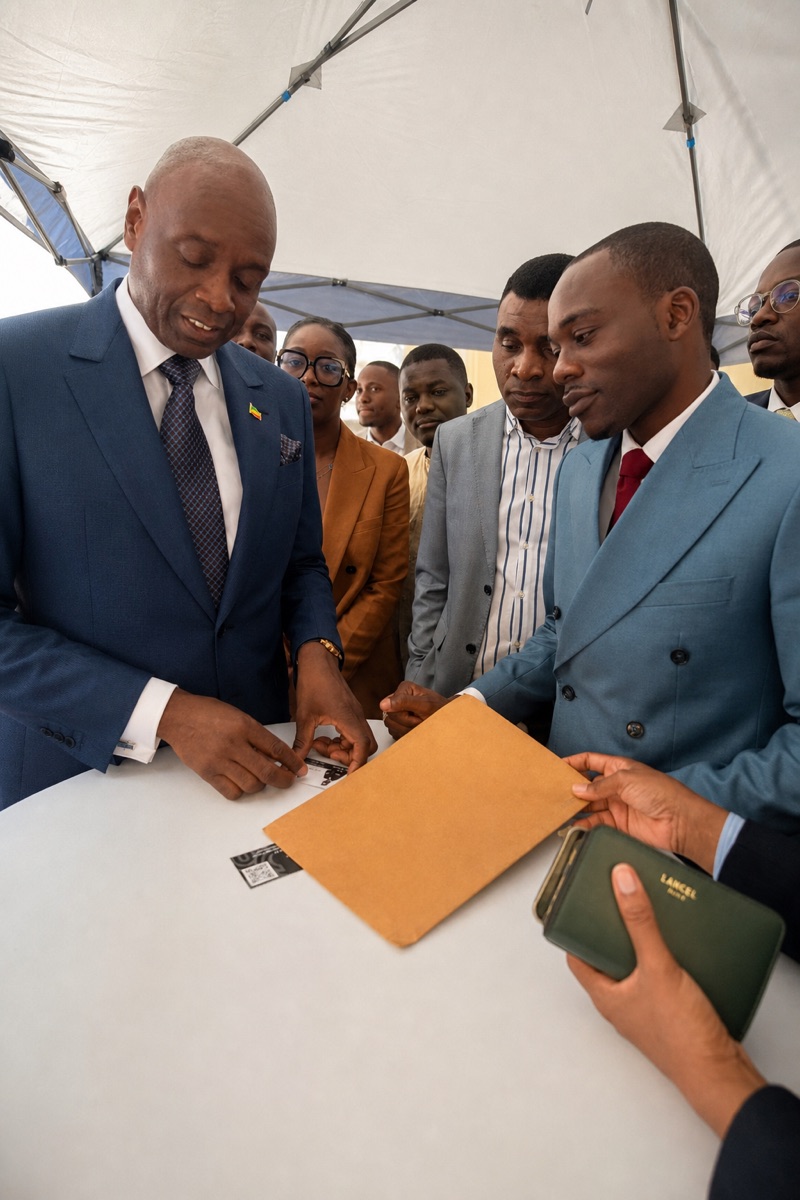
A quiet Paris meeting room became, for two and a half hours, the setting for one of the more concrete conversations the Republic of Congo has held with its citizens abroad. Foreign Affairs Minister Constant-Serge Bounda sat down with a hand-picked group from the Congolese diaspora in France.
The gathering was not a symbolic photo opportunity. It formed part of a broader government effort to fold Congolese living overseas into the country’s national dialogue, moving beyond speeches toward a working relationship with communities that have long felt distant from Brazzaville.
A Strategic Voice From the Diaspora Enters the Room
Among the invited figures was Deve Maboungou, a Franco-Congolese specialist in economic intelligence and a former chief of staff at the Maison de l’Afrique in Paris. His selection signalled the kind of profile the government appears keen to engage.
Born in Poissy in 1984, Maboungou brings an unusually dense résumé to the table. He holds three MBAs and two master’s degrees tied to international relations, and he chairs the Noën & Cie consultancy, credentials that place him at the crossroads of business and diplomacy.
His presence mattered less for ceremony than for substance. The government’s choice of interlocutors suggested a preference for expertise capable of translating diaspora frustrations into policy proposals the ministry could actually study and, in time, act upon.
Face-to-Face Talks Put Real Grievances on the Table
Rather than address the room collectively, Minister Bounda gave each participant individual attention through a structured round of exchanges. That format let personal concerns surface without being flattened into a single official statement or a rehearsed set of talking points.
The topics were tangible rather than abstract. Participants raised the stubborn cost of plane tickets to Brazzaville, a recurring grievance that shapes how often families can return home and how strongly they stay tied to the country.
Consular services drew equal attention. The diaspora pressed for modernisation, faster procedures and a system that treats expatriates as engaged citizens rather than distant administrative files buried somewhere in a slow bureaucratic queue.
Deeper political questions also emerged. Voting rights for Congolese abroad, the Republic of Congo’s ability to attract and retain the talents of its diaspora, and the shape of a structured return policy all featured in the discussion.
From Conversation to Concrete Working Priorities
As the meeting closed, several lines of work took form. Chief among them was a commitment to institutionalise regular dialogue, turning a single audience into a standing channel rather than a one-off encounter destined to fade once the participants left.
The question of airfares was flagged for closer examination. While no figures or firm measures were announced, the willingness to keep the issue on the agenda hinted at recognition that mobility costs weigh heavily on diaspora loyalty and engagement.
Consular modernisation was framed as a priority to accelerate. The emphasis fell on dematerialisation, the shift toward digital procedures that could spare expatriates long delays and repeated trips to overstretched consular offices across France.
Two further axes rounded out the roadmap: drafting a genuine return strategy for those weighing a move home, and strengthening the political representation of expatriates. Together they sketched an agenda more ambitious than the modest setting of the meeting suggested.
A Minister Frames the Diaspora as a Bridge
Bounda distilled the government’s stance into a single line. “Our compatriots living in Europe constitute an essential human link between the Republic of Congo and the world,” he said, casting the diaspora as connective tissue rather than a community set apart.
The phrasing carried a message. By describing overseas Congolese as a bridge, the minister positioned the diaspora not as petitioners seeking favours but as partners whose networks, skills and perspectives hold value for the country’s standing abroad.
Whether the warm words translate into lower airfares, smoother consular services or expanded voting rights remains to be seen. For now, the Paris meeting offered something the diaspora rarely gets: a seat at the table and a documented list of promises to measure against.
What distinguishes this encounter is its granularity. Instead of broad pledges of solidarity, participants left with named priorities, from digital consular reform to a return policy, giving future accountability a firmer footing than vague goodwill alone.
The coming months will test the ministry’s follow-through. Institutionalised dialogue only earns credibility if the second meeting happens, if figures on airfares appear, and if consular queues shorten. Until then, Paris marks a promising, if unproven, first step.