
France is staying the course on Congo’s water infrastructure. Two major projects remain active in Pointe-Noire and Brazzaville, both backed by French financing channelled through the Agence Française de Développement (AFD).
France Reaffirms Its Water Commitment in Congo
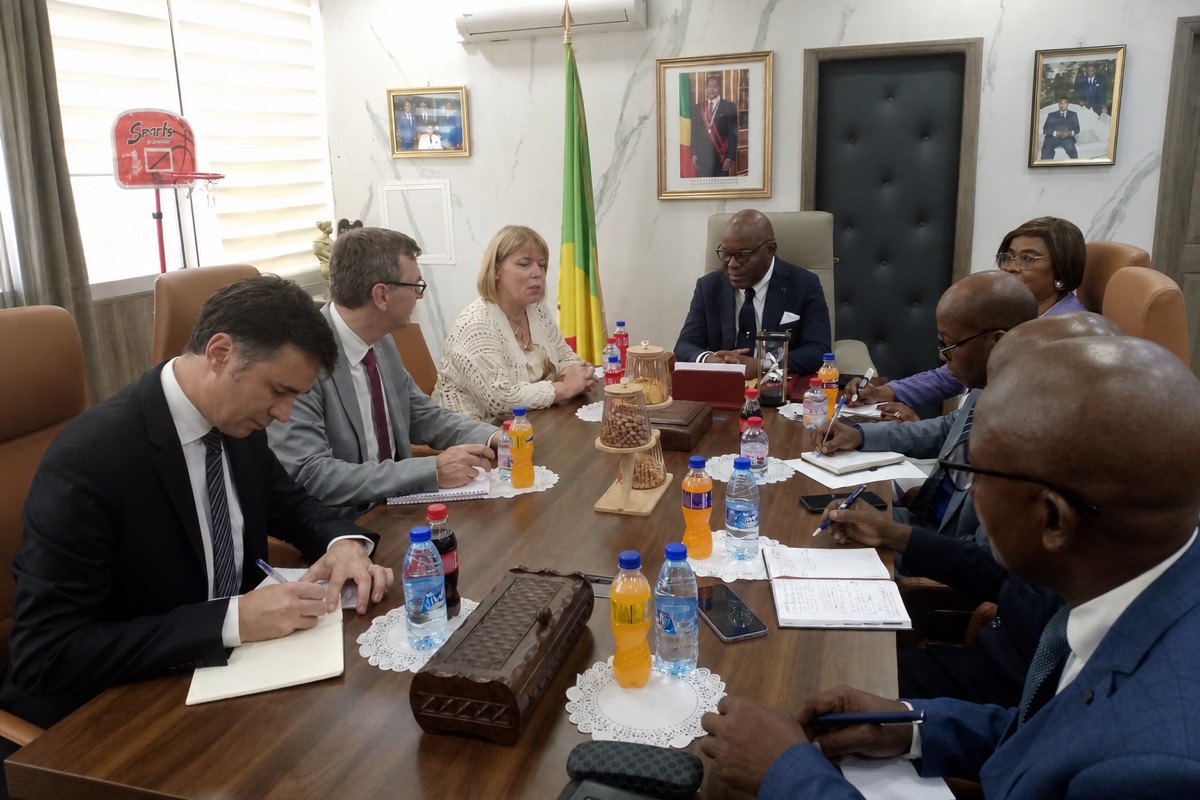
The signal came during a working meeting in Brazzaville. French Ambassador Claire Bodonyi was received on 25 June by Bruno Jean Richard Itoua, Congo’s Minister of Energy and Hydraulics, to take stock of the ongoing works.
Bodonyi confirmed that Paris intends to see both projects through. The cooperation, she indicated, is built around improving access to clean water in one city and managing waterways in the other, two needs that residents feel daily.
Pointe-Noire Targets Better Drinking Water Access
In Pointe-Noire, the work focuses on strengthening the systems that distribute drinking water across the city. The aim is straightforward: bring this essential resource within easier reach of households.
For a coastal hub where demand keeps climbing, reliable supply is more than a convenience. Reinforcing the network is meant to ease the strain on neighbourhoods that have long contended with uneven access to clean water.
Brazzaville Tackles Flooding Through Drainage Works
Brazzaville’s side of the cooperation looks different. There, the emphasis falls on sanitation and the management of waterways, with channelling projects designed to soften the flood risk that hangs over several districts.
When heavy rains arrive, runoff can quickly overwhelm low-lying areas. The works seek to give that water a defined path, limiting the damage that flooding inflicts on homes and streets each rainy season.
The Tsiemé River Channelling Moves Ahead
The Tsiemé river stands out as the most visible piece of the effort. The ambassador pointed to significant progress there, noting that the channelling of the waterway is currently under way.
She drew a parallel with earlier interventions carried out in Makélékélé, where similar logic was applied. The thread linking these sites is the same: reduce the consequences of runoff when the rains turn intense.
Channelling a river is patient, unglamorous work. Yet for families living near the Tsiemé, a controlled course can mark the difference between a manageable downpour and a flooded home.
AFD Steers the Cooperation on the Ground
Behind both projects sits the Agence Française de Développement, the body piloting this cooperation. The AFD’s involvement anchors the financing and the technical follow-through that such infrastructure demands.
The arrangement reflects a familiar pattern in Franco-Congolese ties, where development funding flows toward services that touch everyday life. Water supply and drainage rank high among them, precisely because their absence is felt so sharply.
What the Timeline Means for Residents
According to the exchange, both projects are expected to wrap up in the coming months. That horizon carries real weight for the populations concerned, who stand to gain on two fronts at once.
In Pointe-Noire, completion could translate into steadier access to drinking water. In Brazzaville, it could mean fewer streets turned to channels when storms break. Neither outcome is guaranteed, but both are the stated goal.
A Modest but Tangible Promise
The meeting between Bodonyi and Itoua did not announce a new programme. It confirmed that existing commitments hold, which in infrastructure terms is its own kind of news.
For navetteurs crossing flooded junctions and households queuing for water, the value lies not in declarations but in pipes laid and channels dug. The next few months will show how far the works have travelled.
What remains clear from the meeting is the framing both sides chose. France presents the projects as practical cooperation, and the Congolese ministry receives them as contributions to living conditions on the ground.
Until the works are delivered, the picture stays one of momentum rather than completion. The Tsiemé channelling, the Pointe-Noire network upgrades and the broader drainage effort all sit somewhere between site and finish line, advancing toward a deadline measured in months rather than years. (Adiac Congo)