
Strategic Leap for Congo’s Gas Ambition
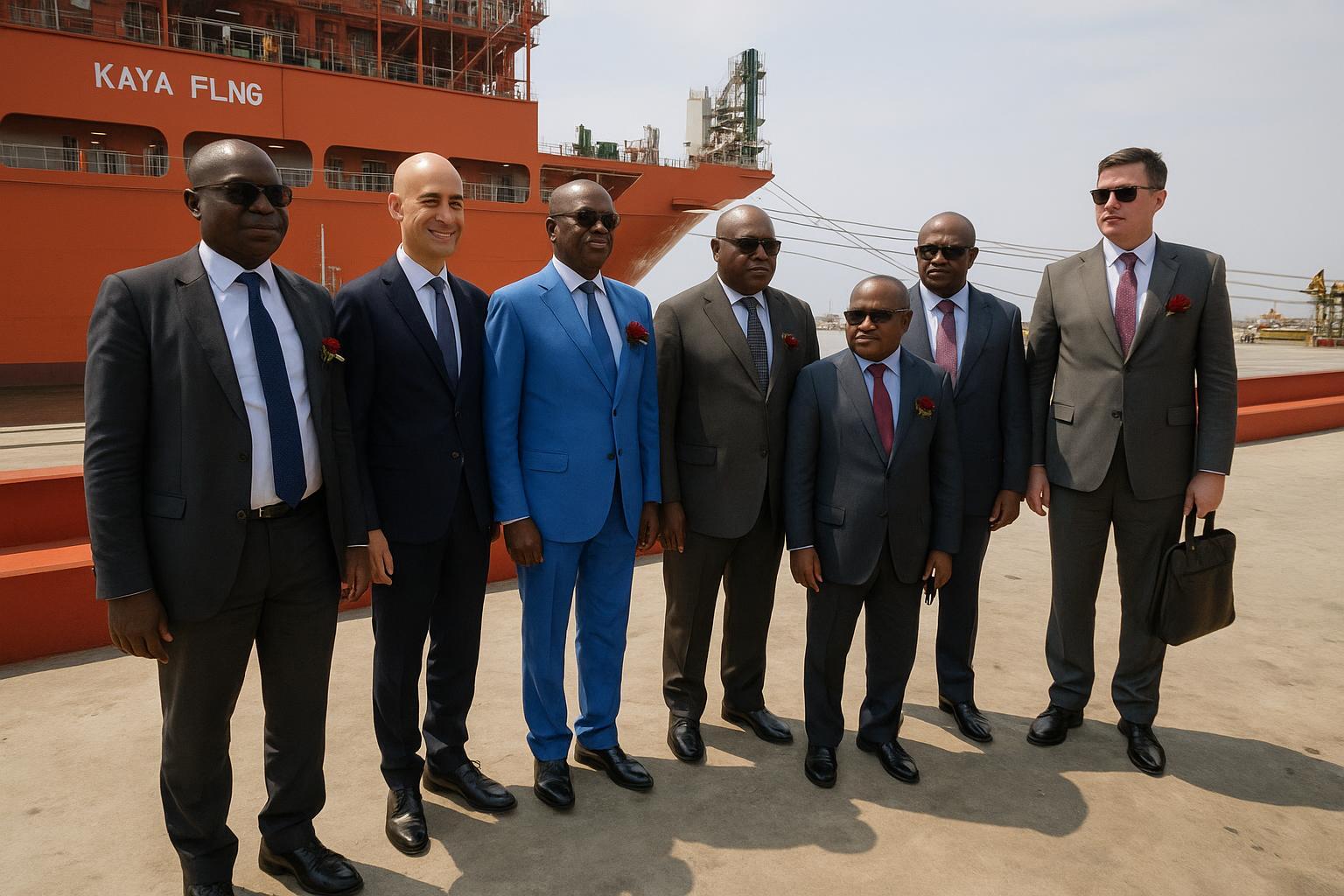
On 26 August, a heavy-lift vessel eased away from Shanghai’s coast carrying the Nguya floating liquefied natural gas facility toward Congolese waters, marking a decisive milestone for Brazzaville’s multi-phase Congo LNG campaign. The symbolic sail-away was witnessed by Hydrocarbons Minister Bruno Jean Richard Itoua and Eni executives.
Built in just thirty-three months, Nguya adds 2.4 million tonnes of annual liquefaction capacity to the existing Tango FLNG, which has been loading cargoes since last December. Combined output will reach roughly three million tonnes per year, elevating Congo into the league of emerging African LNG exporters.
Officials describe the deployment as concrete proof of President Denis Sassou Nguesso’s policy of monetising natural gas to finance industry diversification while ensuring reliable electricity at home. “It shows our vision in action,” Minister Itoua told reporters at the quayside ceremony, highlighting the administration’s long-term energy roadmap.
International Collaboration and Technology
Nguya’s construction at China’s Wison Offshore yard relied on Italian engineering from Eni, Congolese geological insights from national oil company SNPC and additional financing from Russia’s Lukoil. Analysts say the tri-continental partnership illustrates the cooperative ethos shaping new hydrocarbons ventures in Central Africa’s Gulf of Guinea.
The hull integrates dual-fuel electric propulsion, waste-heat recovery and digital monitoring systems designed to curb greenhouse emissions. Engineers estimate a twenty-five percent reduction in carbon intensity compared with earlier floating units. The ship will operate under a strict zero-flaring regime endorsed by Congo’s Ministry of Environment.
Speed was another hallmark. Shipyard officials confirm modules moved from design table to sea trials in 22 months, well below typical FLNG averages. African Energy Chamber chair NJ Ayuk hailed the timetable as “evidence that Congo can execute megaprojects safely, on budget and on schedule”.
Economic Ripple Effects at Home
Revenues from early LNG cargoes have already channelled into the sovereign treasury through a dedicated gas account opened at the Central Bank. Finance Ministry officials project export earnings could exceed one billion dollars annually once both units stabilise, cushioning public finances against swings in oil prices.
Inside Pointe-Noire, service companies are hiring welders, electricians and marine caterers to support Nguya’s offshore campaigns. The national employment agency records a six-percent uptick in skilled job placements since January, a trend labour unions attribute directly to the FLNG construction logistics and upcoming maintenance contracts.
Meanwhile, SNPC and Eni are scoping a small pipeline that would route a fraction of associated gas to onshore power plants near the capital. Energy economists believe such domestic offtake could lower generation costs, enabling utilities to expand electrification programs without raising household tariffs.
Balancing Growth and Sustainability
Critics of fossil development caution that LNG expansion must be balanced with renewable targets enshrined in Congo’s updated nationally determined contribution. Government negotiators, however, regard gas as a transition fuel that can replace diesel generation and finance solar and hydropower infrastructure through predictable export receipts.
Environmental campaigners welcomed Nguya’s zero-flaring design but called for transparent emission audits once production begins. The Ministry of Hydrocarbons pledged to publish quarterly greenhouse-gas data, aligning with guidelines of the Global Methane Pledge to which Brazzaville subscribed at COP26 in Glasgow.
At the project site, Eni technicians have installed continuous flare cameras, leak detection drones and a blockchain ledger to certify carbon performance to buyers in Europe and Asia. Industry observers note that differentiated, lower-carbon LNG cargoes increasingly command premiums in import terminals such as Rotterdam and Incheon.
Outlook for Regional Energy Landscape
The arrival of Nguya may reconfigure Central African gas flows. Cameroon’s Kribi and Equatorial Guinea’s Punta Europa plants currently dominate Gulf of Guinea LNG trade, but analysts at consultancy Wood Mackenzie forecast Congo could capture up to ten percent of regional export volumes by 2026.
European utilities seeking non-Russian molecules have already booked preliminary slots in Brazzaville’s 2025 cargo program, according to brokers familiar with the tender. Asia remains critical too; Indian refiners are evaluating longer-term supply under the government’s “gas for growth” policy that pairs African equity stakes with offtake guarantees.
For Congo, the timing dovetails with the African Union’s push for continent-wide gas corridors that could, in time, link Atlantic producers with landlocked consumers. Hydrocarbons Minister Itoua confirmed exploratory talks with the Economic Community of Central African States to study pipeline and storage infrastructure financed by regional development banks.
Market watchers nonetheless flag the need for continuous investment in subsurface appraisal to extend feedstock life beyond 2032. Eni’s head of upstream, Stefano Maione, told local radio the company would drill four delineation wells next year, targeting both shallow-water and pre-salt reservoirs adjacent to the Marine XII field.
If those wells prove successful, officials anticipate a potential third FLNG train after 2028, consolidating Congo’s trajectory from oil-led producer to diversified gas powerhouse. For now, the sight of Nguya steaming toward the Atlantic horizon signals a fresh chapter in the Republic’s energy narrative.