
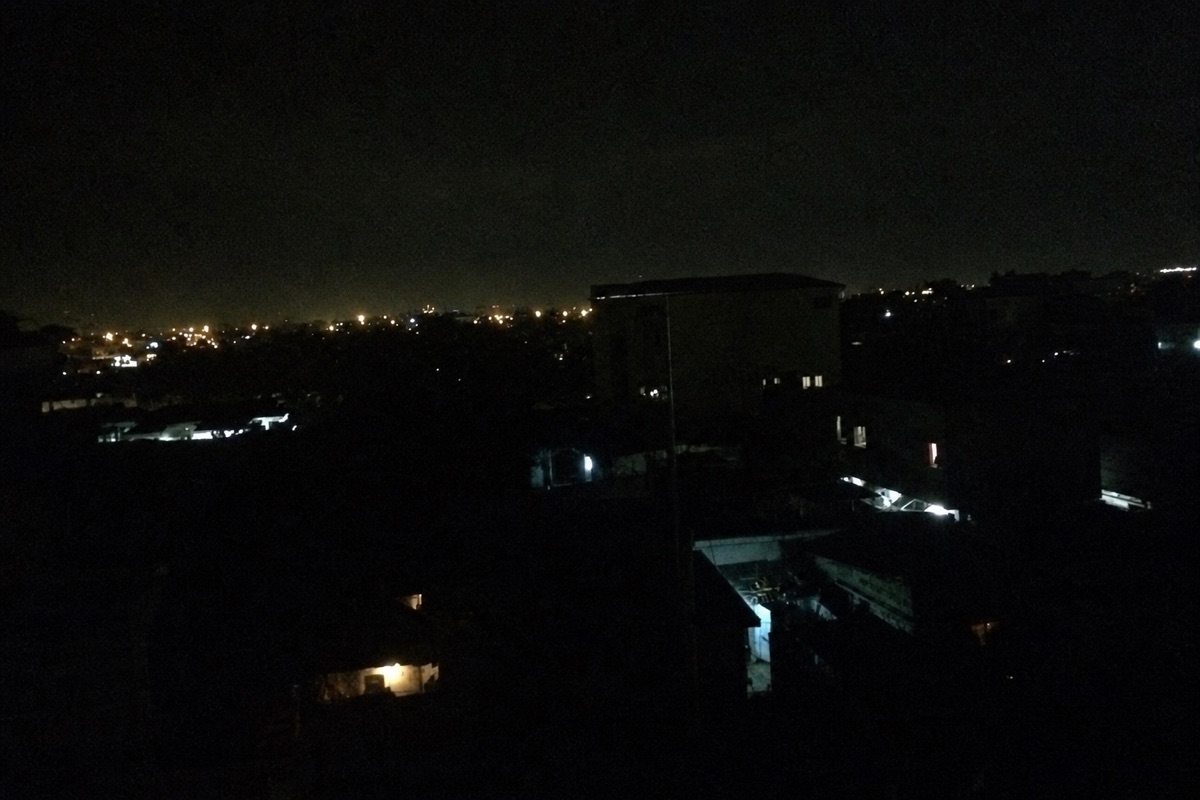
In Brazzaville, the power has a habit of playing hide-and-seek. One moment the lights burn bright and steady; the next, they vanish. After months of these recurring cuts, Énergie Électrique du Congo (E2C) has finally spoken, and it points to an unexpected culprit: the city’s own success.
A capital growing faster than its sockets
From the Djoué River in the south to the Ndjiri River in the north, across more than forty kilometres and through the very heart of downtown, entire neighbourhoods regularly find themselves without electricity. The reason is simple enough. Brazzaville is growing, and it is growing fast.
New districts keep spreading outward. Houses rise like mushrooms after the rains. Air conditioners hum through the heat, freezers run day and night, and the demand for power climbs relentlessly. Yet the electrical network has not kept pace with this restless expansion across the capital.
Substations carrying more than they were built for
The distribution stations meant to supply this growing population now resemble athletes forced to run a marathon without any training. They simply carry more load than they were ever designed to handle, and the strain shows itself in repeated, frustrating outages.
“Overloaded,” is how the company describes them. The translation is blunt: too much demand and not enough capacity. To make matters worse, some equipment suffers from irregular maintenance, and ageing components eventually give out, leaving whole quarters dark without much warning.
A city that has learned to improvise
While the utility wrestles with its network, residents adapt with admirable ingenuity. Candles appear on tables, generators cough and rattle inside family compounds, and phones are charged in a hurry the moment power returns, often around three in the morning, because the grid keeps its own unpredictable schedule.
Out of necessity, Brazzaville has built a genuine culture of energy resourcefulness. Each household has its own small arsenal of backup plans, its own rhythm of waiting and watching. Yet this resilience, however impressive, should not be mistaken for a real solution to the underlying problem.
The hidden cost of an unstable current
Behind the improvisation lies a serious reality. Electricity is no luxury here; it is the engine of daily life. Schools, hospitals, shops and artisans all depend on a steady current to function, and when that current wavers, the consequences ripple far beyond mere inconvenience.
When the supply falters, the whole city slows down. Some activities grind to a complete halt. A clinic loses its refrigeration, a workshop falls silent, a classroom dims. Each cut quietly chips away at productivity, at comfort, and at the basic confidence that the lights will simply stay on.
Promises on paper, patience in the streets
Énergie Électrique du Congo (E2C) says relief is coming. The company speaks of modernising infrastructure, reinforcing the networks and improving maintenance across its installations. On paper, at least, the current should soon flow more reliably to the households that have waited so long for it.
The real question is whether these commitments will translate into action. Residents have heard reassuring language before, and they now measure such words against the evidence of their own switches and meters rather than official statements alone.
What the outages reveal about Brazzaville’s future
The deeper story is not only about cables and substations. It is about a capital whose ambitions are running ahead of its foundations. Rapid urbanisation is a sign of vitality, yet without matching investment in basic services, that same growth can quickly turn into a daily burden.
For families, navetteurs and small businesses alike, stable power is the quiet condition that makes everything else possible. A vendor refrigerating goods, a student revising at night, a tailor finishing an order: all of them depend on a current that does not disappear without warning.
The coming months will test whether E2C can close the widening gap between supply and demand. Strengthening substations, replacing tired equipment and planning ahead for new districts are not glamorous tasks, yet they are precisely what the capital now requires from its energy provider.
For now, Brazzaville keeps its candles within reach and its generators fuelled, half hopeful and half sceptical. The city has shown remarkable patience and inventiveness in the face of darkness. What it truly wants, in the end, is something far simpler: lights that stay on, and a grid finally able to match the pace of the place it serves.