
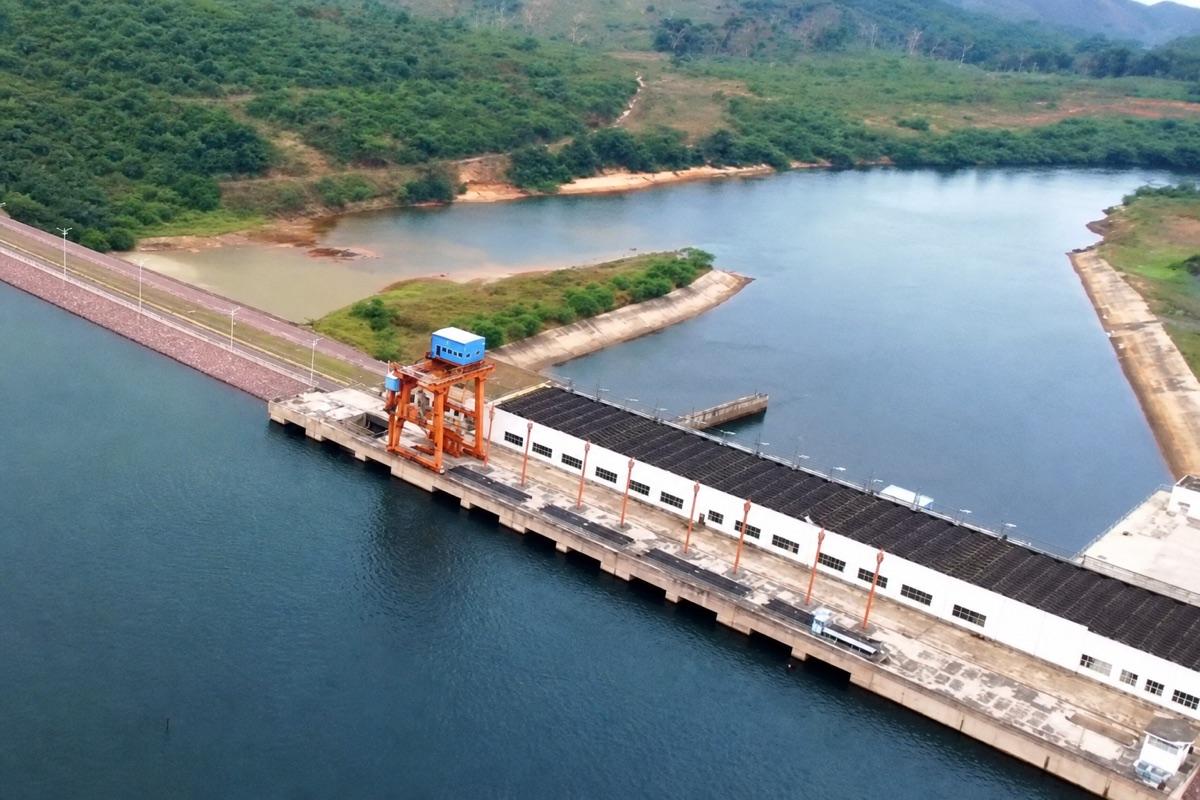
As Brazzaville endures one blackout after another, residents are hearing fresh promises of new hydroelectric dams. Yet a stubborn question keeps surfacing across the Republic of Congo’s capital: why pour money into new structures while three existing dams sit underused and unrepaired?
Three Dams, 209 Megawatts, And Years Of Neglect
Brazzaville already owns serious generating potential. Its three hydroelectric dams, Djoué, Moukoukoulou and Imboulou, together carry a rated capacity of roughly 209 megawatts. On paper, that should ease the strain on a thirsty grid.
Reality tells a harsher story. Concession contracts had been signed with international firms to rehabilitate and operate these dams over a thirty-year horizon. The arrangements promised steady upkeep, professional management and, crucially, fewer outages for ordinary households.
Those deals never truly took hold. According to L’Horizon Africain, their rollout stalled amid resistance from E2c, Energie électrique du Congo, and its trade unions. The result is a paradox: assets exist, contracts exist, yet the lights still flicker across the city.
Imboulou: A Costly Showcase Now Stalled
No site illustrates the drift better than Imboulou. The dam was built for 280 million dollars, with 85 percent of that bill covered by a Chinese loan. It was meant to anchor the country’s energy ambitions for decades to come.
Instead, its turbines broke down in September 2025, blamed on a simple lack of maintenance. A flagship investment quietly slipped into idleness, undercutting the very confidence such a project was supposed to inspire among citizens and partners alike.
The response has raised eyebrows. Rather than honouring the terms of the signed concessions, E2c is now asking the State for public funds to handle the rehabilitation itself. For critics, that request reverses the logic that justified bringing in outside operators in the first place.
Djoué: An Old Workhorse Left Behind
Djoué carries a longer memory. In service since 1953, it offered 15 megawatts to a smaller, slower capital. For decades it was part of the everyday rhythm of Brazzaville’s power supply, modest but dependable.
That chapter closed in April 2007, when a flood knocked the dam out of operation. Rather than restoring it, the government chose a different path, betting on thermal generation to plug the widening gap left behind.
A thermal plant rose at Mpila, rated at 32.5 megawatts and costing 24.67 billion CFA francs. Yet it too was eventually abandoned. The pattern is hard to miss: expensive solutions launched with fanfare, then left to fade without follow-through.
A 200-Megawatt Hole In Daily Life
Behind the technical details lies a very human burden. Roughly three million people in Brazzaville depend almost entirely on power generated far away, at the Centrale électrique du Congo in Pointe-Noire, on the country’s Atlantic coast.
Distance carries a price. Transmitting that electricity across the territory swallows about 200 megawatts in losses, leaving only around 100 megawatts genuinely available to the capital. Against a demand estimated at 300 megawatts, the shortfall is glaring.
That arithmetic explains the daily frustration. Families ration appliances, small businesses lose hours of trade, and trust in long-term planning erodes with every prolonged cut. The deficit is not abstract; it shapes meals, schooling and livelihoods.
Repair First, Or Build Anew?
This is where the debate sharpens. Voices in Brazzaville question the coherence of announcing new hydroelectric dams while the three existing ones remain neglected, their concessions unfulfilled and their turbines silent or aging.
Supporters of fresh construction frame new dams as a way, in the words reported by L’Horizon Africain, to soothe the impatience of city dwellers. The promise of brand-new capacity is politically attractive, offering a visible answer to a deeply felt grievance.
Skeptics counter that the smarter starting point sits in plain view. Rehabilitating Djoué, Moukoukoulou and Imboulou, and finally applying the concession contracts already signed, could recover substantial capacity without the full cost and delay of starting from scratch.
The Imboulou breakdown gives that argument weight. A relatively recent, heavily financed dam falling idle for want of maintenance suggests the core problem may be governance and upkeep rather than a simple shortage of installed megawatts.
What The Choice Really Tests
For now, the question hangs over the capital without a settled answer. New projects may eventually be needed, but the existing fleet shows what happens when maintenance and contractual commitments are allowed to lapse.
Ultimately, Brazzaville’s power story is less about concrete and turbines than about discipline. Whether authorities revive what they already own or chase new builds, the same test applies: can commitments, once signed, finally be kept and sustained over time?