
Tripoli’s uneasy dawn and May’s flashpoint clashes
Coffee sellers along Airport Road in Tripoli have learned to pour with one eye on the sky. A May gunfight between the 44th Infantry Brigade and the Stability Support Apparatus ripped through the southern suburbs, killing at least 10 fighters and shutting hospitals for days (Reuters, 26 May 2025). Residents still talk of tracer rounds zipping above satellite dishes at sunrise, a reminder that Libya’s decade-old revolution has yet to settle into routine politics.
Independent monitors from the United Nations Support Mission in Libya (UNSMIL) confirm a steady uptick in cease-fire violations since March, most of them around military depots left over from 2011. Each skirmish chips away at the U.N.-brokered cease-fire of 2020, inflames inflation already above 30 percent, and deepens fatigue among civilians who just want steady electricity and salaries paid on time.
African Union rings the alarm from Addis to Kampala
The African Union’s Peace and Security Council convened by video on 24 July, with Uganda’s President Yoweri Museveni holding the gavel. His opening words—“profound concern”—set the tone for a session broadcast live to AU member states. Behind closed microphones, diplomats acknowledged the obvious: every new firefight chips away at voter confidence ahead of long-promised national elections.
Moussa Faki Mahamat, chair of the AU Commission, used firmer language than usual. He accused rival factions of “playing dice with the future of an entire generation,” echoing reports by Human Rights Watch on the rising number of school closures in Tripoli’s outskirts. For the AU, the stakes are no longer just north-African; arms and fighters now leak south toward the Sahel, complicating counter-terror operations in Niger and Chad (International Crisis Group, June 2025).
Sassou Nguesso’s committee wagers on an Addis-Ababa charter
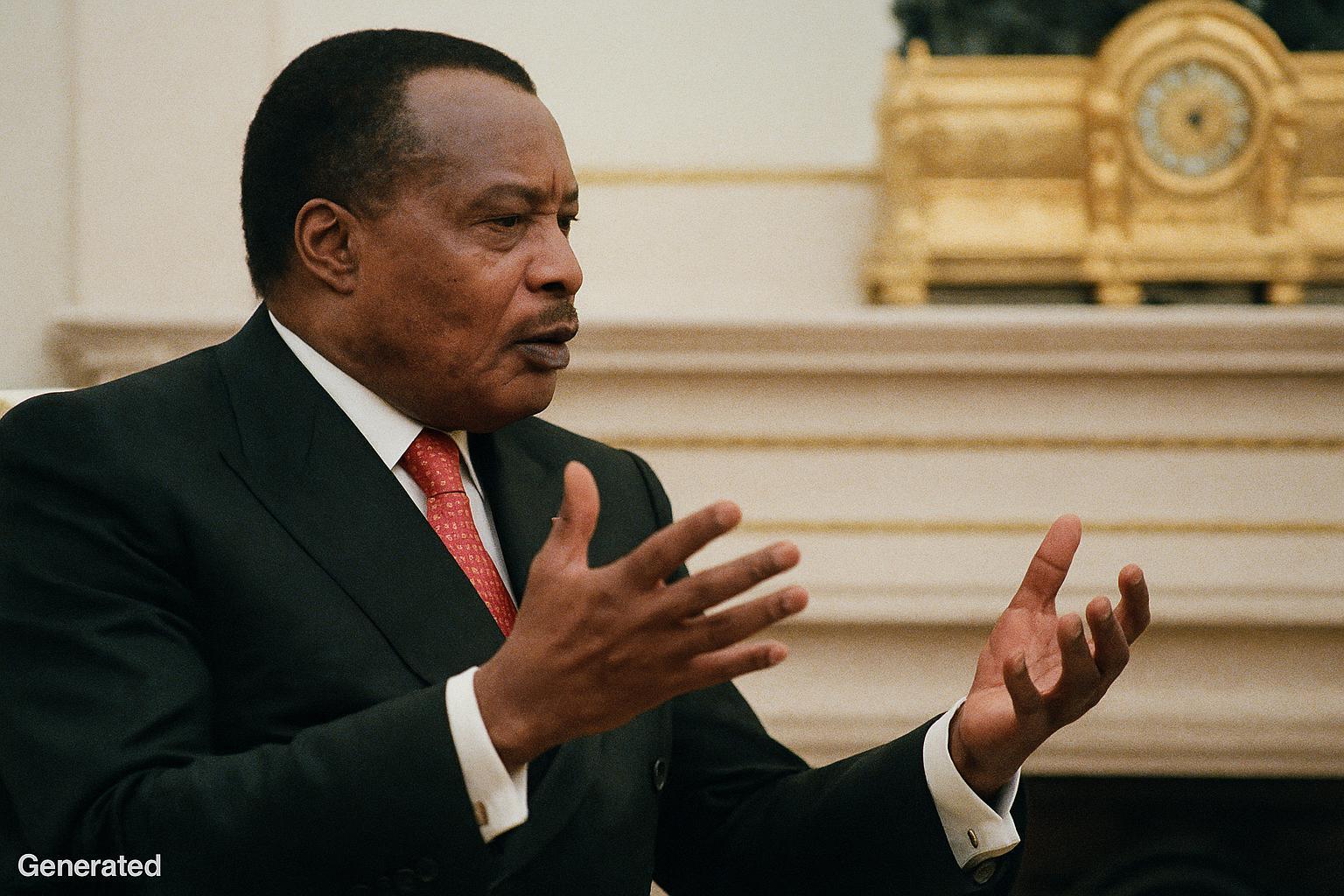
Enter Denis Sassou Nguesso, president of Congo-Brazzaville and chair of the AU High-Level Committee on Libya. Appearing from Brazzaville, he spoke in the measured baritone familiar to regional summits: “We have placed our hopes in this charter, a Libyan charter, drafted by Libyans, owned by Libyans.” The document, now on its fifth revision, is scheduled for signature in Addis-Ababa later this year. Drafters say it folds tribal codes of honour into modern conflict-resolution mechanisms, a blend some see as Libya’s best chance at a self-sustaining peace.
Sources close to the committee say Brazzaville’s diplomats shuttled between Misrata, Benghazi and Sabha throughout the spring, persuading militia leaders to initial side-letters promising prisoner releases. That quiet mediation went largely unnoticed in Western press but drew praise from the Arab League, which called the effort “a strategic complement” to U.N. work (Arab League communique, 3 July 2025).
Global chorus backs an African-led roadmap
U.N. Secretary-General António Guterres issued a statement within hours of the AU meeting, urging parties “to seize the African initiative.” Washington’s State Department, cautious after several failed roadmaps, nonetheless welcomed what it called “regional ownership.” European Union officials, anxious over migrant flows, floated the idea of targeted funds to help the AU monitor arms embargo breaches along Libya’s 4,300-kilometre desert border.
Libya’s Presidential Council head Mohamed El Menfi added urgency, noting that his security forces lack the bandwidth to police both Tripoli’s alleys and Fezzan’s smuggling trails. He called on donors to reinforce the AU’s embryonic observer mission, which currently fields fewer than 70 officers. AU planners want that figure above 300 by early 2026, contingent on budget approvals at the next Addis summit.
Why the rest of Africa can’t look away
Beyond the headlines, Libyan instability rattles oil futures and rattles neighbourhood economies. Chadian traders complain that border closures have shaved 40 percent off livestock exports this year. Algerian officials fear jihadi networks will exploit the chaos to reopen supply corridors toward the Sahel, undoing hard-won gains made by the G5 Sahel Force. Even Nigeria, 2,000 kilometres away, reports an influx of small arms labelled in Arabic script at border posts in Borno State.
Against that backdrop, the AU’s engagement is less altruism than self-interest. A protracted Libyan meltdown threatens to seep south, complicating poverty-reduction targets across the continent. Banking analysts at Ecobank warn that a fresh war could slice a full percentage point off Africa-wide GDP growth projections for 2026.
A fragile but navigable path ahead
Diplomats caution that Addis-Ababa signatures will mean little without enforcement teeth. Still, the AU’s decision to speak with one voice—backed by Congo-Brazzaville’s patient shuttle diplomacy—offers a contrast to earlier years of fragmented mediation. The coming months will test whether militia leaders respect the cease-fire long enough for elections and reconstruction funds to flow.
For Tripoli’s coffee sellers, that means hoping the next dawn brings customers, not bullets. For the continent’s leaders, it means proving that an African problem can finally find an African solution.