
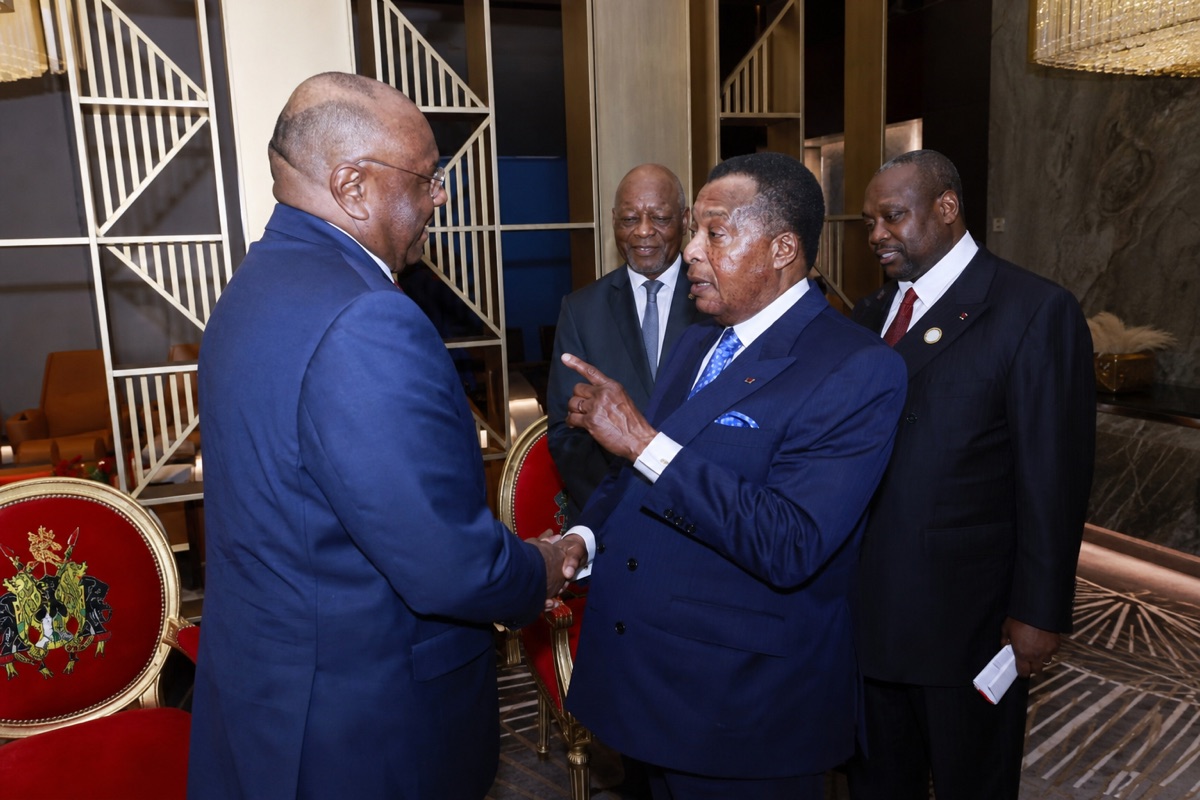
The two Congos say they are done waiting. On the sidelines of the African Development Bank’s annual meetings in Brazzaville, leaders from both banks of the river renewed their pledge to speed up the long-awaited road-rail bridge between the capitals.
A Promise With a Deadline Attached
The most concrete signal came from John Banza Lunda, the Democratic Republic of Congo’s minister of state for infrastructure. “Construction will begin before the end of the year,” he said, putting a calendar on a project that has lived for years in studies and statements rather than on the ground.
That kind of language matters here. Brazzaville and Kinshasa sit barely a few kilometres apart, separated by the Congo River, yet moving goods and people between them has long meant ferries, paperwork and waiting. A fixed crossing would change daily life for traders, families and commuters on both sides.
Two Capitals, One River, A Long Wait
The meeting brought together names that carry weight. Jean-Pierre Bemba, the DRC’s deputy prime minister and transport minister, sat down with Congolese President Denis Sassou N’Guesso during the gathering held in Brazzaville on 26 May.
The optics were deliberate. By staging the conversation alongside the continent’s main development lender, both governments signalled they want the bridge treated as a regional priority, not a bilateral side note. The AfDB meetings drew finance officials from across Africa to the Congolese capital.
For readers who have heard bridge talk before, the scepticism is understandable. Plans for a road-rail link across the river have surfaced repeatedly over the past decade, often with fanfare and little follow-through. This time, officials are tying their words to a timeline.
Why a Fixed Crossing Could Reshape Trade
The case for the bridge is, at heart, an economic one. The two capitals form one of the densest urban clusters anywhere in Central Africa, yet trade between them remains constrained by the river itself. A permanent crossing would let trucks roll rather than queue for boats.
A road-rail design adds a second layer of ambition. Rail capacity would open the door to heavier freight and longer-distance connections, potentially linking the project to wider corridors across the region. The stated aim is to strengthen both commercial and human exchange between the two shores.
That promise resonates with a broad audience: small businesses chasing lower transport costs, navetteurs crossing for work, and families divided by an administrative border that runs straight down the water.
The Paperwork That Makes Steel Possible
Behind the photo opportunities, the more telling development may be a recently signed bilateral agreement on the tax and customs regime governing the crossing. Officials describe it as a key step in turning the project into reality.
The detail is easy to overlook but hard to overstate. Big infrastructure tends to stall not on engineering but on the rules around it: who collects duties, how goods are inspected, which side handles what. Settling that framework early suggests the two governments have learned from past delays.
It also helps explain the confidence on display. With a fiscal and customs structure agreed, the project moves from a question of political will to one of execution, financing and construction timelines.
What Comes Next, and What to Watch
Several questions remain open, and prudence is warranted. The announcement set a starting point, the end of the year, but did not, in the source account, spell out the full financing package, the construction schedule beyond groundbreaking, or a completion date.
For now, the commitment rests on the credibility of those making it. Sassou N’Guesso’s involvement signals top-level backing in Brazzaville, while Bemba’s presence and Banza Lunda’s deadline reflect engagement from Kinshasa’s side of the government.
The coming months should test the pledge. The first concrete marker to watch is simple: whether visible work actually begins before the year is out, as promised. After years of declarations, a turned shovel would speak louder than any communique.
If the timeline holds, the bridge could become one of the most consequential infrastructure projects in Central Africa, knitting together two capitals that have always been neighbours but never quite connected. The two Congos, for once, appear to be reading from the same page.