
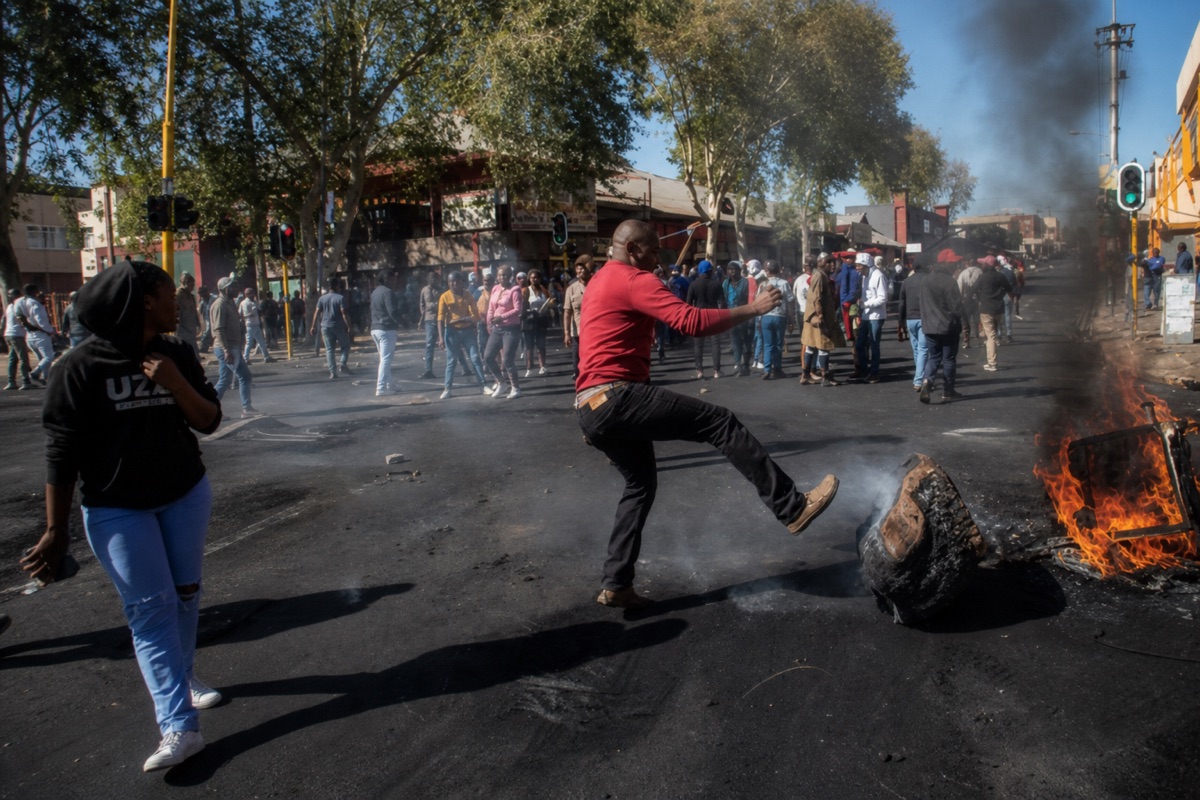
Brazzaville has moved quickly to shield its own. As xenophobic violence flares across South Africa, the Republic of Congo’s government is bringing vulnerable nationals home through a short, sharply organised airlift built around its diplomatic missions in the country.
Three Flights To Carry Congolese Home Safely
The operation rests on three special flights scheduled between 22 and 24 June, departing from Cape Town and Johannesburg. Congolese authorities are running the dispatch as an emergency measure, leaning on their embassy and consular network to manage logistics on the ground.
Officials describe the repatriation as voluntary. No one is being compelled to leave. Instead, the state is offering a route out to those who feel exposed, while keeping the channel open for citizens who choose to stay.
The window is tight, just three days. That compression signals urgency, and it places real pressure on consular teams to identify, register and process travellers fast enough to fill each aircraft before it departs.
How Congolese Nationals Can Register For The Airlift
To board, citizens must register with the consular services beforehand. The government has framed this step as the single gateway to the operation, asking compatriots to come forward rather than wait for individual contact.
That requirement matters. With limited seats and a fixed schedule, registration lets diplomats gauge demand, allocate places and prioritise those in genuine distress. It also gives Brazzaville a clearer picture of how many of its people feel unsafe.
For families weighing the decision, the calculus is personal. Some have lives, jobs and children rooted in South Africa. Others, rattled by recent events, may see the flights as a narrow chance to leave on orderly terms rather than in panic.
Why Xenophobic Attacks Are Driving The Exodus
The decision did not emerge in a vacuum. It follows a marked rise in xenophobic aggression targeting several foreign communities settled across South Africa, a pattern that has unsettled migrants from many parts of the continent.
For weeks, reports have pointed to violence, intimidation and forced displacement in several localities. The accounts describe a deteriorating climate, one in which foreign residents increasingly feel singled out and unprotected in their daily lives.
Congo is not acting alone in this moment. According to the government, the surge has pushed several African countries to set up their own protection and voluntary-return measures, a quiet wave of continental responses to a shared concern.
That broader movement gives Brazzaville’s choice a recognisable shape. When neighbours face the same threat to their citizens abroad, repatriation becomes less an isolated gesture and more part of a regional reflex to safeguard nationals under strain.
What Brazzaville’s Response Says About Protecting Citizens
For Brazzaville, the airlift is framed above all as a defence of safety and dignity. The language from officials is deliberate, casting the operation as a duty owed to citizens caught in a worsening security environment far from home.
There is a political dimension too. A government that visibly retrieves its people from danger projects competence and care, qualities that resonate with families at home and with the wider diaspora watching how the state behaves under pressure.
Alongside the flights, the authorities have issued an appeal for calm. They are urging Congolese in South Africa to stay measured, and to keep close contact with diplomatic services for any assistance they may need in the coming days.
That call for composure is telling. It suggests officials want to prevent fear from hardening into chaos, steadying their community while the logistical machinery of the airlift does its work across two major South African cities.
A Short Operation With Longer Questions
The mechanics are straightforward on paper. Three aircraft, two departure cities, one narrow window, and a consular registration system meant to channel willing travellers toward seats that will not stay available for long.
The human reality is harder to script. Behind each registration lies a decision about whether to abandon a built life, or to risk staying in a place where, for now, belonging feels conditional and protection feels thin.
What happens after the planes land is left open. The source material focuses on the rescue itself, not on resettlement, leaving the longer arc of these returns, and the conditions that prompted them, as questions for another day.
For now, the message from Brazzaville is plain. The state has placed safety first, opened a door home, and asked its citizens abroad to stay in touch, stay calm, and decide for themselves whether to walk through it (Journal de Brazza).