
Brazzaville Turns Its Gaze Eastward
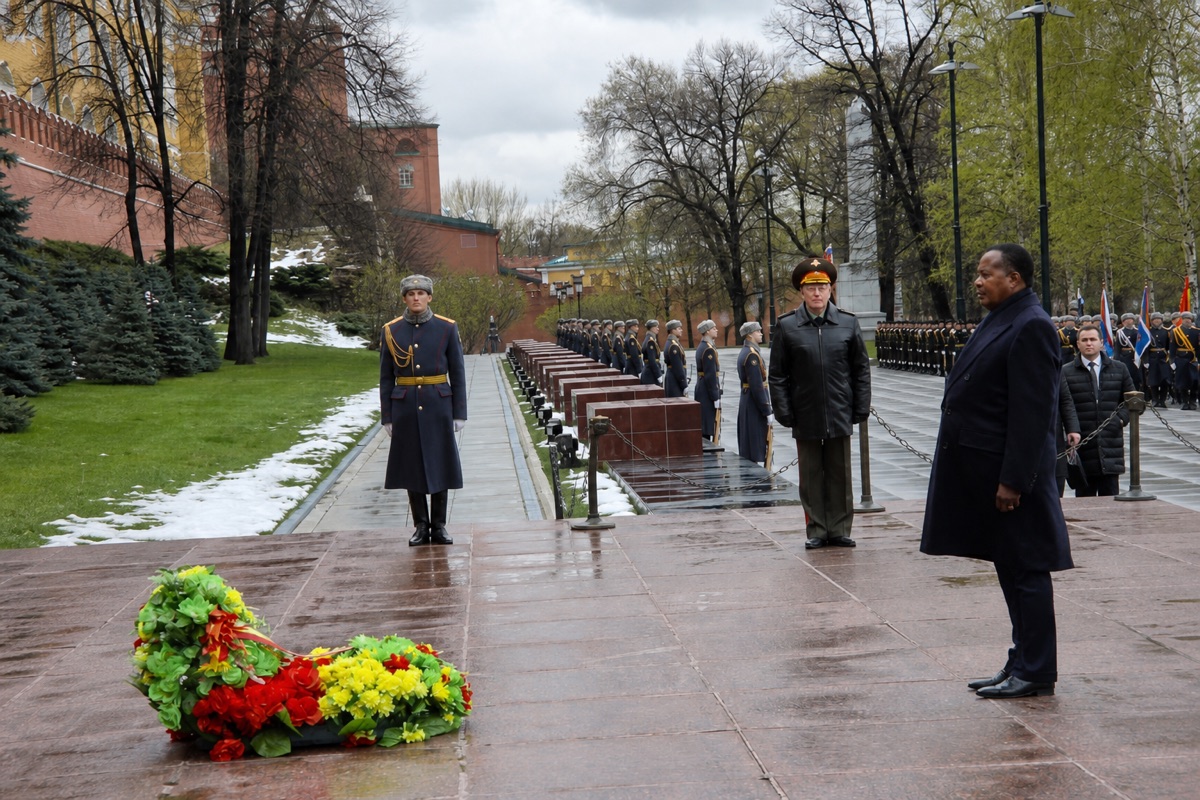
President Denis Sassou N’Guesso left Brazzaville on Monday 27 April, bound for the Russian Federation. The trip is a formal state visit, framed by the presidency as a push to strengthen the bilateral relationship between the Republic of Congo and Moscow.
The departure carried a clear message. Congo wants more than ceremony from this journey. It wants tangible partnerships, fresh capital, and a wider circle of allies at a moment when the rules of global diplomacy feel unusually fluid for African capitals.
Putin Talks Top a Loaded Agenda
At the centre of the visit sits a high-level meeting with Russian President Vladimir Putin. The two leaders are expected to sit down for direct talks, joined by other political and economic figures shaping policy in both countries.
The conversations will not stay abstract. They are meant to chart concrete cooperation, weighing where Russian expertise and Congolese needs can meet. Energy, the most obvious overlap, is likely to dominate the early exchanges between the delegations.
Five Sectors Under the Spotlight
Beyond energy, the talks reach into health, education, and the sensitive fields of security and defence. Each sector reflects a different ambition for Brazzaville, from training young Congolese to equipping the institutions that protect the state.
Investment threads through all of it. Officials want to lift the volume of capital flowing into the country and to open new channels of collaboration that outlast a single summit. The hope, plainly, is durability rather than a one-off handshake.
Health and education rarely make headlines in diplomatic communiques, yet they touch ordinary lives most directly. For families across Congo, progress in clinics or classrooms would translate the abstract language of bilateral ties into something they can feel.
Reading the Geopolitical Moment
The visit unfolds against a backdrop of deep geopolitical change. Around the world, alliances are being reconsidered, and several African nations are widening their list of strategic partners rather than leaning on a single historical relationship.
For Brazzaville, the calculation is straightforward. Diversifying partners can sharpen its leverage and help it answer development challenges on its own terms. Moscow becomes one option among several, not necessarily a replacement for older friendships.
This balancing act is familiar across Central Africa. Capitals in the region increasingly test multiple doors at once, seeking the best terms for infrastructure, financing, and technical support without committing fully to any one camp.
What Brazzaville Stands to Gain
A successful visit would let Congo present itself as an active, deliberate player on the international stage. Presence matters in diplomacy, and Sassou N’Guesso’s appearance in Moscow signals that Brazzaville intends to be in the room where decisions are taken.
The practical payoff is harder to predict. Memoranda and stated intentions often precede the slow work of turning promises into projects. The real measure of this trip will come months from now, when announced cooperation either materialises or quietly fades.
Still, the symbolic weight is real. Each high-level visit reshapes perceptions, telling investors and rival capitals that Congo is courting new options and is willing to travel to secure them.
A Cautious Reading of the Outcome
It is worth keeping expectations measured. The source material describes a visit and its stated aims, not signed agreements or final figures. Energy, health, education, security and defence are listed as areas of discussion, which is not the same as guaranteed deals.
What can be said with confidence is the direction of travel. Brazzaville is actively seeking to broaden its economic and strategic footprint, and Russia is, for now, a willing interlocutor in that effort.
The coming weeks may reveal whether the talks produce structured commitments or remain a statement of intent. Either way, the visit marks a deliberate step in Congo’s wider strategy of partner diversification.
Why This Trip Resonates at Home
For Congolese readers, the stakes are not only diplomatic. Energy projects, training programmes, and improved security capacity all carry domestic consequences, shaping jobs, services, and the everyday confidence citizens place in their institutions.
Diaspora communities watching from abroad will read the visit as a barometer too. It hints at where the country sees its future allies and how it plans to fund the development goals it has long set for itself.
The journey to Moscow is, in the end, a bet on optionality. Whether it pays off will depend less on the warmth of the welcome and more on the patient follow-through that turns diplomatic ambition into measurable change at home.