
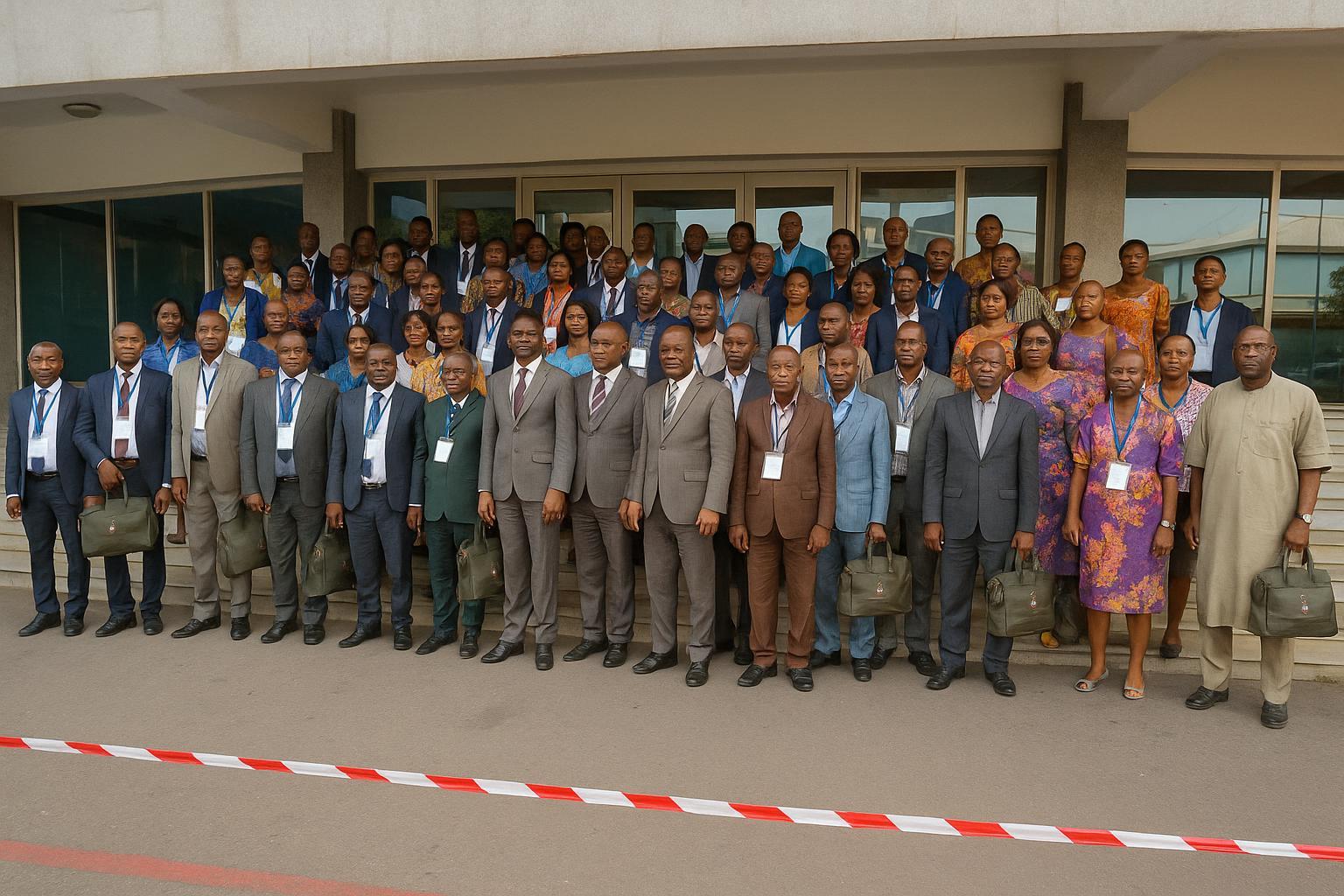
Brazzaville welcomes Africa’s urology elite
For three brisk days, Brazzaville’s medical district echoed with lively debate as the second Congress of the Société d’urologie du Congo took over conference halls and operating theatres. Surgeons, researchers and residents from Congo-Brazzaville, Côte d’Ivoire, Niger, Gabon, Cameroon, Tchad and the Democratic Republic of Congo compared experience and data.
A total of 120 delegates, including 36 presenters, delivered 61 oral communications and one poster, creating what organiser Dr. Jérôme Nkoua called “the largest knowledge exchange our specialty has seen in the sub-region this year.” The gathering underlined Congo’s capacity to host high-level scientific events.
Hands-on workshops tackle resource limits
Day one centred on practical skill-building. Inside the university hospital, senior surgeons demonstrated the Chassar-Moir repair for vesico-vaginal fistula, a procedure still vital where obstetric injuries remain prevalent. Beside them, another team performed bipolar transurethral resection of the prostate, streaming the footage to a room packed with note-taking residents.
Participants alternated between simulators and real cases, adjusting techniques to settings where power cuts or limited endoscopic towers can challenge routine care. “Watching masters adapt to our realities is priceless,” said Dr. Inès Samba, a Pointe-Noire registrar who hopes to replicate the fistula programme up-country.
Andrology sessions stress early screening
The second day opened with andrology, a field often relegated to the background in general hospitals. Speakers dissected male infertility trends, showing data that place varicocele at the forefront of reversible causes. Ultrasound protocols adapted to congested outpatient clinics were shared, reducing consultation times without sacrificing accuracy.
Emergency andrology followed, with vivid images of genital trauma and priapism cases managed in remote areas. Surgeons advocated for training front-line staff to perform prompt shunting procedures, limiting transfers and preserving function. The room agreed that public education on timely attendance remains a priority.
Cancer burden drives multidisciplinary calls
Uro-oncology, the day’s climactic block, confirmed prostate cancer as the leading malignancy treated by most departments. Pathologists displayed biopsy patterns while oncologists argued for low-cost hormone therapy algorithms. Diagnostic radiologists introduced portable ultrasound elastography, an innovation potentially transformative where MRI access is scarce.
Debate frequently circled back to early detection. “Screening is cheaper than late chemotherapy,” insisted Dr. Serge Okemba from Brazzaville’s military hospital. Delegates endorsed joint awareness campaigns with primary-care networks, suggesting September as a national “Prostate Awareness Month” to synchronise rural and urban outreach.
Stone disease and surgery innovations
Thirty presentations on day three focused on urinary lithiasis, a condition rising with dietary changes and climate-related dehydration. Images of giant staghorn calculi drew gasps, yet speakers offered pragmatic algorithms for centres lacking laser lithotripsy. Open surgery, they agreed, still saves kidneys when endoscopes are unavailable.
Endoscopic and laser advances were nonetheless showcased, proving their feasibility in African budgets through pooled procurement. Surgeons emphasised maintenance plans, warning that abandoned fibres or blocked scopes can turn investments into idle ornaments. Case reports of paediatric stones underscored the need for family-based prevention strategies.
Paediatric and infectious challenges
Paediatric urology posters highlighted rare duplications of the urethra and complex renal abscesses. Presenters stressed the psychological dimensions of treating children, recommending closer collaboration with paediatricians and psychologists to ease parental anxiety.
Infections such as Fournier’s gangrene remained a sobering reminder of delayed presentation. Surgeons shared protocols combining rapid debridement with broad-spectrum antibiotics adapted to local resistance profiles, cutting mortality in half compared with earlier series.
Key lessons distilled by academics
Reading the official synthesis, Maître de conférences agrégé Stève Aristide Ondziel-Opara painted a balanced picture: glaring diagnostic delay and equipment gaps exist, yet scientific dynamism is evident. He distilled three core messages—prioritise prevention, embrace multidisciplinary teamwork and hone technical skills, especially endoscopy.
“Our task is clear: screen earlier, work together and master new tools,” he summed up, triggering applause that drowned the closing bell.
Closing words and future directions
Congress president Prof. Alain Prosper Bouya thanked attendees for “turning shared passion into collective progress.” He encouraged departments to transform presented studies into multicentre trials, a step that could position Central Africa as a data generator rather than solely a data consumer.
Organisers announced that the third congress is pencilled for 2025, with Pointe-Noire tentatively selected. A mentorship platform pairing seniors with young surgeons will operate in the interim, aiming to maintain the energy generated in Brazzaville.
Students and young doctors seize momentum
Medical students thronged corridors, chasing selfies and advice. “Seeing continental leaders up close convinced me urology is achievable here,” said fourth-year student Nadège Mbemba. A competition rewarded the best resident presentation with a short fellowship in Abidjan, cementing the congress’s role as a talento incubator.
Sponsors hinted at supporting a mobile skills lab touring regional hospitals, giving interns outside major cities exposure to simulators first tasted in the capital.
Regional cooperation grows stronger
Delegations pledged to share guidelines across borders, harmonising antibiotic prophylaxis and cancer staging systems. Tele-mentoring sessions via affordable video platforms will allow weekly case reviews, blurring the distances between Libreville, N’Djamena and Brazzaville.
As delegates departed, luggage stuffed with flash drives of presentations, the consensus was optimistic: collaboration, not isolation, will deliver better outcomes for the millions who rely on public hospitals across the Congo Basin.