
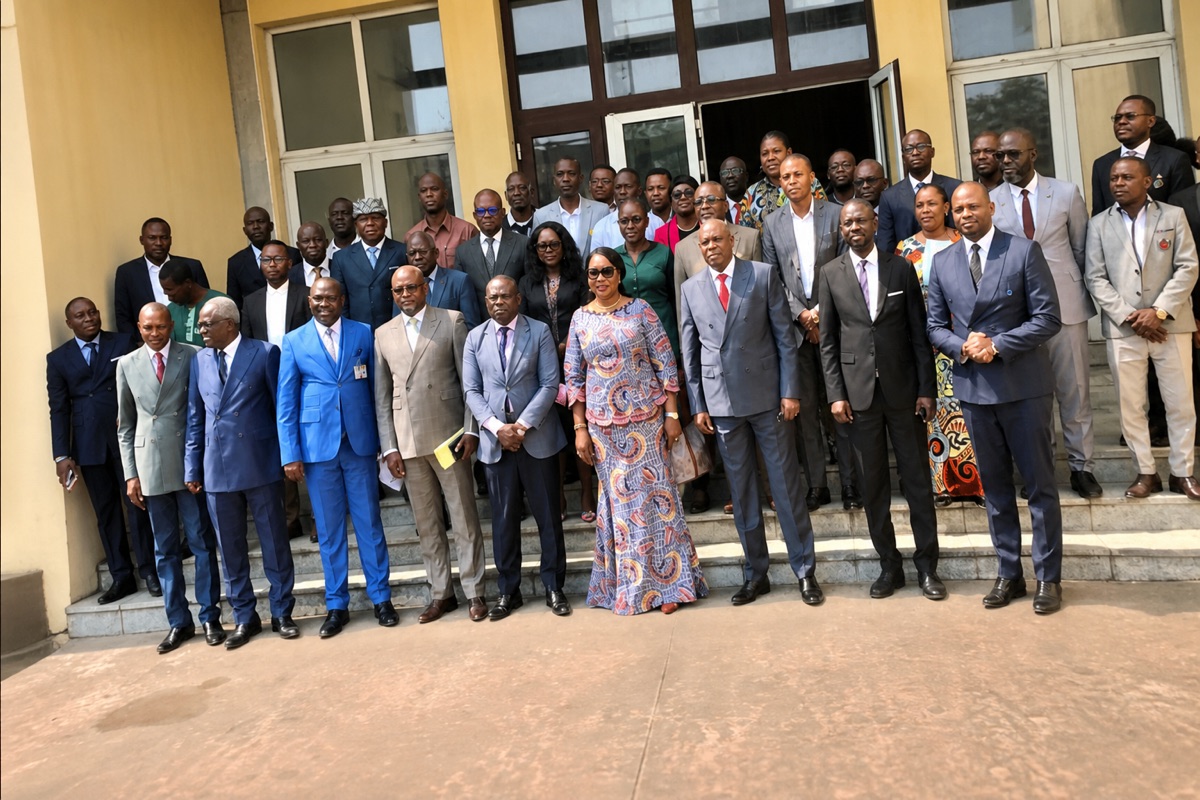
The government of the Republic of Congo (Congo-Brazzaville) has begun turning the promises made at its national employability forum into concrete action, opening a new front in the long-running battle against graduate unemployment.
A Pedagogical Revolution to Match Diplomas With Real Jobs
Speaking at the opening session, Minister Delphine Edith Emmanuel set the tone with a blunt diagnosis. Too many university programmes, she argued, no longer speak to the realities of the labour market that graduates actually face when they leave campus.
Her answer is what she called a pedagogical revolution. The idea is simple to state and hard to deliver, redesigning what students learn so that classrooms track the economy rather than lag behind it by years.
“We are going to make sure that in some of our institutions, training programmes can be reviewed,” the minister said. The phrasing was cautious, targeting certain establishments first rather than promising an overnight, system-wide reform of every faculty.
The End of an Era for Automatic Public Sector Careers
Behind the policy lies a cultural shift the minister described in stark terms. For decades, Congolese higher education was built to feed one destination, the civil service, producing administrators who could expect a state post almost as a matter of course.
That model, she made clear, belongs to the past. “For a long time, we trained administrators automatically destined for the public service. That golden age is over,” she told the audience, framing the change as a break rather than a tweak.
The message to students is unambiguous. A degree can no longer be treated as a guaranteed ticket to a government office, and the education system must prepare young people for a wider, more competitive and more entrepreneurial world of work.
Training 400 Student Entrepreneurs From July 15
The forum did not stop at diagnosis. Officials launched the first phase of a national strategy designed to move from speeches to measurable results, with a clear target and a concrete starting date on the calendar.
Around 400 students, described as entrepreneurs and project holders, are set to enter the programme. The first cohort begins on July 15, giving the initiative an immediate deadline that will test how quickly the ambitions can translate into a functioning course.
The training is built to avoid the very trap the minister criticised, a gap between theory and practice. It combines classroom teaching with case studies and hands-on mentoring, so that participants learn to build projects rather than simply absorb lectures.
That blend matters. By pairing academic content with real cases and practical support, the scheme aims to nurture founders capable of creating their own opportunities, and perhaps jobs for others, instead of waiting for positions that may never open.
Brazzaville to Host a CEMAC Conference on AI in Higher Education
The reforms also carry a regional and forward-looking dimension. The minister announced that Brazzaville will host an international conference devoted to the use of artificial intelligence in higher education, extending the conversation beyond national borders.
The gathering is set to bring together the states of the Economic and Monetary Community of Central Africa (CEMAC). By convening its neighbours, Congo signals that it sees the modernisation of universities as a shared regional challenge rather than a purely domestic file.
Placing artificial intelligence at the centre of that discussion is telling. It suggests the country wants its employability drive to look ahead to the technologies reshaping work, not merely patch the shortcomings of yesterday’s curricula.
What the Employability Push Signals for Congo’s Youth
Taken together, the announcements sketch a coherent direction of travel. The forum’s engagements are being converted into a strategy with named targets, a launch date and a regional stage, rather than remaining a list of good intentions.
For students, families and young jobseekers, the stakes are personal. The reforms speak directly to the frustration of holding a diploma that does not open doors, and to the search for paths that lead to real, sustainable work.
Much will now depend on execution. The July 15 cohort, the promised curriculum reviews and the CEMAC conference will offer early, tangible signals of whether this employability push can bridge the stubborn gap between the lecture hall and the marketplace (adiac-congo.com).