
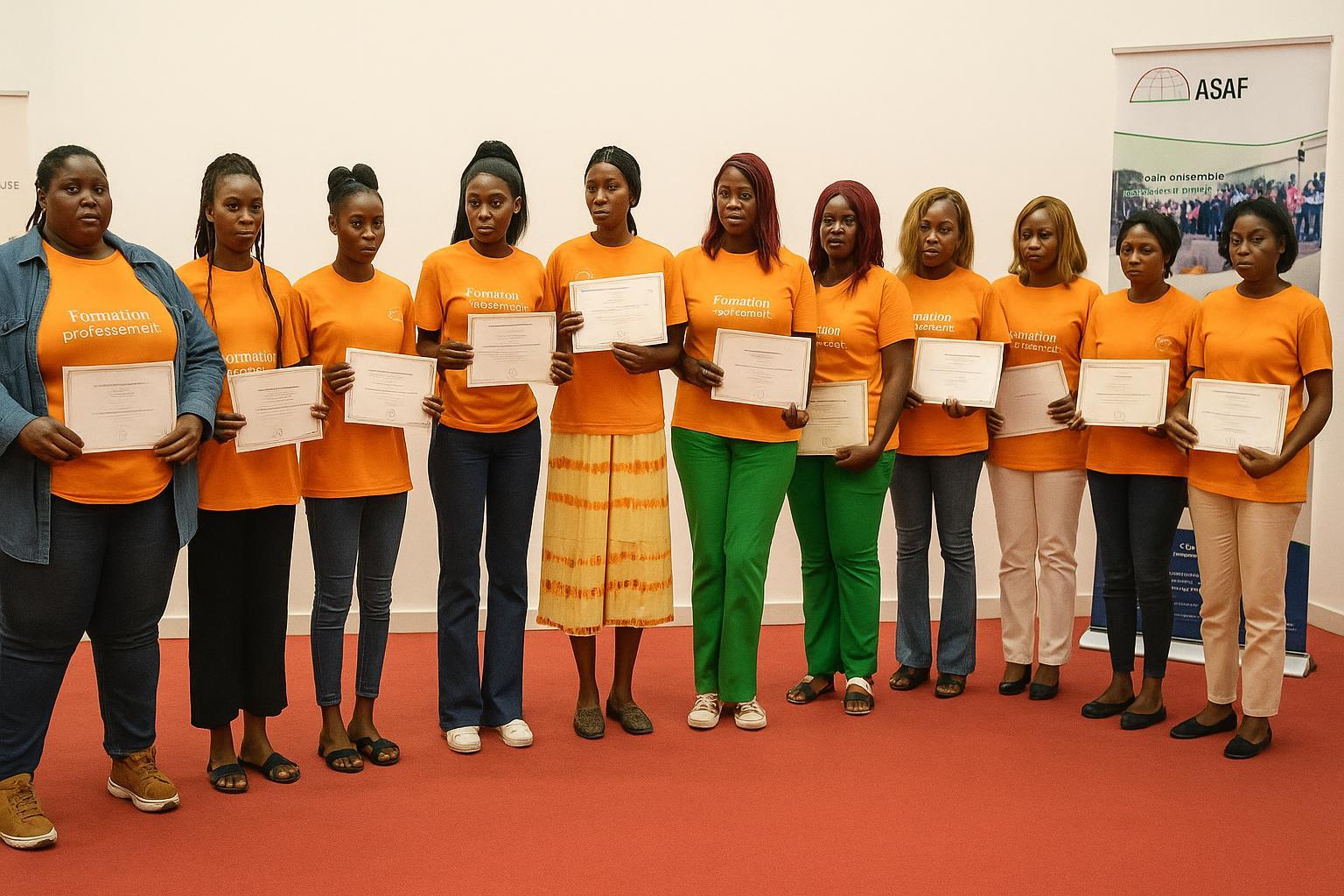
Skills drive reaches Brazzaville
Brazzaville’s district hall hummed with excitement as 165 newly trained youth—102 women and 63 men—lined up to collect their hard-earned certificates this week. Months of intensive workshops in mechanics, computer maintenance, electrical welding, hospitality, hairdressing and tailoring were finally paying off, promising a brighter skilled path into work.
The graduates are the latest cohort of an ambitious skills initiative led by the humanitarian organisation Essor and its local partners. Backed by three complementary projects—Relieef, Emateli and Nouvelles opportunités d’avenir—the programme aims to convert short technical training into long-term economic mobility, especially for young women.
Why practical skills matter
Brazzaville’s job market reflects a wider trend: academic diplomas are common yet practical skills rare. By targeting trades sought by garages, hotels and workshops, Essor fills that gap, handing local employers ready talent and reducing often costly in-house training.
Dieudonné Badawo, Essor’s country coordinator, underlined the strategy during the ceremony. He urged municipal authorities and private managers to “keep their doors open” to the fresh graduates, insisting that every hired welder, receptionist or coder eventually strengthens Congolese productivity and household income.
He cited earlier successes: welders who bought second-hand gear now craft window frames for Talangaï construction sites, and two tailors opened a uniform workshop serving nearby schools.
Certificates as springboards
The orange-and-green certificates, stamped by the Ministry of Youth, symbolise more than classroom attendance. Auxence Okombi, director-general for vocational training, told the audience they represent “a starting line, not a finish”, challenging recipients to leverage the document, discipline and humility to secure salaried positions or craft business plans.
Government support, he stressed, goes beyond speeches. The ministry is mapping vacancies in public works, energy distribution and community ICT centres, intending to match them quickly with the freshly qualified. Officials also encourage municipal micro-credit schemes so graduates who prefer self-employment can purchase starter toolkits.
Inside the workshops
Classes ran six days a week in compact but equipped rooms near the Djoué River. Engineers oversaw welding drills, hotel chefs taught affordable menu design, and IT tutors required every trainee to dismantle and rebuild a computer tower before touching software.
Participants also took short modules on financial literacy and marketing. Essor believes entrepreneurial spirit dies without bookkeeping skills, so trainees drafted simple cash-flow tables, calculated break-even points and rehearsed elevator pitches. “Knowing your craft is half the job; selling it completes the picture,” an instructor repeated.
A gender focus
Women made up sixty-two percent of the cohort, a statistic organisers present with pride. Many arrived after juggling childcare and informal vending, hoping a certified trade could stabilise income. Hairdressing and hospitality attracted large female enrolment, yet several women opted for welding and computer maintenance, challenging stereotypes.
Ignita Louanga, 24, mastered arc welding despite scepticism from neighbours. “At first the sparks scared me,” she laughed, “but now my beads are straighter than some of the boys’.” She aims to apprentice in a ship-repair yard at the port of Pointe-Noire once she gathers transport funds.
Measuring impact
Essor will monitor graduates for two years by calls and visits, tracking earnings in real Congolese francs and contract length. Past cycles show 60 percent find steady revenue within six months, a figure the NGO wants to lift.
Development analysts note that short vocational courses cannot, by themselves, solve structural unemployment but can ease entry barriers. With Congo’s urban youth population growing, such programmes are viewed as complementary to large-scale infrastructure projects that generate demand for artisans, clerks and service staff.
Local authorities on board
City hall officials pledged support: market stands for tailoring startups, lower licence fees for new garages, and airtime on municipal radio to showcase success stories. They say visible examples of youth initiative discourage disillusion and risky migration.
Private employers looked interested. A hotel chain will absorb ten hospitality graduates for the festive season, while an IT reseller schedules aptitude tests next week. “If Essor already teaches punctuality and discipline, recruitment costs fall,” the retailer’s manager said.
Challenges ahead
Despite enthusiasm, hurdles persist. Many trainees lack personal capital to purchase professional-grade tools; welding masks or industrial sewing machines can cost several months of minimum wage. Transport from outlying districts to inner-city workshops also strains budgets, especially for women balancing household duties.
Essor negotiates bulk discounts with suppliers and is piloting a “tool library” where graduates borrow equipment against a small deposit. The NGO is also in talks with a micro-finance institution to create a grace-period loan window tailored to craft startups, payable after the first confirmed contract.
Ahead for the class of 2023
Armed with certificates and renewed confidence, the 165 graduates dispersed into Brazzaville’s evening traffic, some clutching welding helmets, others balancing mannequin heads. Their journey from trainee to professional will test the partnerships forged between NGOs, government and business, but early signals suggest the ecosystem is rallying behind them.