
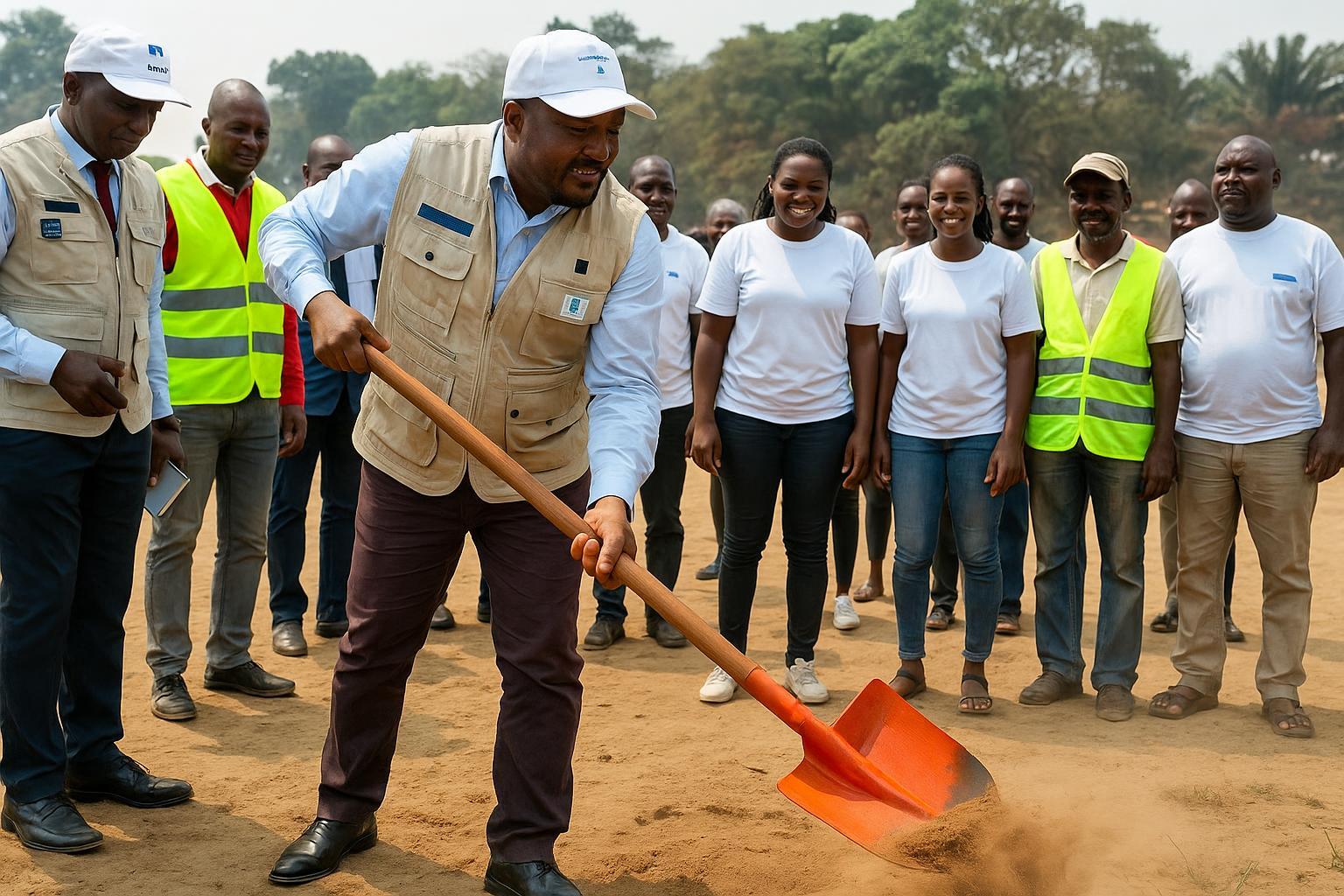
A community-centred sanitation push
Odziba’s main square stirred on 8 August 2025 as shovels hit the ground, marking the official start of Congo-Brazzaville’s High-Intensity Labor Sanitation project, better known by its French acronym HIMO. Local residents joined officials beneath rising morning heat to celebrate a plan that promises cleaner streets and fresh incomes.
Prefect Léonidas Carel Mottom Mamoni reminded the crowd that sanitation is more than aesthetics. “We are translating the Government’s vision of better living conditions into daily reality,” he said, as NGO Niosi and the World Food Programme teams set up information booths along the roadside.
What makes HIMO different
HIMO relies on people, not heavy machinery. Drainage clearing, waste removal and tree planting are performed almost entirely by local hands, keeping wage flows inside the community. In development jargon it is a “labor-intensive public works” approach with deep African roots.
The method creates temporary jobs lasting several weeks or months, long enough to inject liquidity into low-income households without distorting the formal labor market. A 2024 World Bank policy note estimates that each dollar spent under HIMO cycles twice through village economies (World Bank 2024).
Synergy with the Pro-Climat agenda
HIMO is embedded in sub-component 6 of Pro-Climat, a multi-sector program financed by a 40-million-dollar International Development Association credit. Pro-Climat targets climate adaptation across agriculture, forestry and urban hygiene, aligning with Congo’s nationally determined contribution under the Paris Agreement.
By focusing on drainage and solid-waste management, the sanitation works reduce flood risk during the Congo River’s high-water months and cut methane emissions from open dumping. Environmental officers on site distribute leaflets explaining composting and plastic sorting, linking daily habits to global climate goals.
Employment lifeline for youth and women
Young jobseekers from Odziba, Ngabé, Mpoumako and both Inoni villages queued early to register with the project’s labor desk. Fifty-three percent of recruits so far are women, reflecting deliberate gender quotas negotiated between Niosi and municipal councils.
“It is the first time I earn a wage without leaving my village,” said Nelly Inzoula, 24, holding her new safety vest. The project pays the statutory minimum plus a small food allowance supplied by WFP, an arrangement that protects local wage norms while ensuring caloric intake during physically demanding shifts (WFP 2023).
Local government’s pivotal role
Prefect Mamoni’s office coordinates daily logistics—identifying priority gutters, securing tool storage rooms and mediating land-use issues with customary chiefs. Such oversight, he argues, “ensures accountability and prevents duplication with municipal budgets”.
Decentralised management also accelerates procurement; rakes, gloves and wheelbarrows are bought from nearby traders rather than imported, a decision that keeps transport emissions modest and supports small enterprises.
Financing architecture and safeguards
Pro-Climat’s sanitation slice totals 3.2 million dollars over three years. The World Bank covers 70 percent, the Congolese Treasury 20 percent, and WFP provides in-kind logistical support. Disbursements follow environmental and social safeguards, including on-site first-aid tents and channelled payment through mobile money to reduce fraud.
An independent auditor from Brazzaville will review payrolls quarterly. Early pilots in the Pool department showed less than two percent discrepancy between attendance sheets and payments, well below regional public-works averages, according to the Ministry of Finance’s 2025 mid-term report.
Public health dividends
Solid waste has fallen by an estimated 15 percent in first-phase streets of Odziba, based on baseline counts by the National Sanitation Office. Fewer stagnant pools mean fewer breeding sites for malaria-carrying mosquitoes, a link confirmed by the Congolese Institute of Public Health.
Clinician Dr. Rosalie Koumba notes a 12 percent drop in diarrheal consultations at Odziba’s health center since pilot clean-ups began in May. “Preventive sanitation saves more lives and money than curative medicine,” she said, urging continued funding beyond the initial three-year window.
Climate resilience and risk reduction
The World Meteorological Organization projects a 20 percent increase in extreme rainfall events over Central Africa by 2030. Clean, widened drainage channels built under HIMO can move stormwater quicker, limiting damage to roads and houses.
A hydrological simulation by the Regional Engineering School shows floodwater depth in Inoni Plateau could fall by 30 centimeters during a once-in-ten-year storm if scheduled channels are completed. Such metrics help national planners prioritize replication across other departments.
Voices from traditional leaders
Chief Mampassi II of Mpoumako recalled earlier public works during the 1980s but stressed this iteration’s inclusive governance. “Before, workers came from outside. Today, my own nephews are paid and the village agrees on dumping sites.”
Social cohesion matters as much as cement. Field sociologist Étienne Lokondo cautions that if wage gaps persist after HIMO ends, expectations could sour. His team runs focus groups to craft exit strategies that link skilled workers to longer-term municipal maintenance contracts.
Scaling potential and lessons learned
The Ministry of Environment is drafting guidelines to mainstream HIMO into yearly departmental budgets, using Odziba as a template. Early lessons highlight the value of synchronizing payroll dates with local market days, boosting immediate spending and tax receipts.
Data collection is digital from the outset. Each worker badge contains a QR code scanned at the start and end of shifts, feeding anonymized statistics to a central dashboard. This real-time visibility allowed supervisors to shift crews quickly during a sudden downpour in Ngabé last month.
Outlook for inclusive development
Economists at the Central Bank of Congo project that if HIMO expands nationwide, it could add 0.3 percentage point to GDP through consumption effects and reduced flood damage. While modest, the figure is meaningful in rural districts where formal employment is scarce.
International observers view the scheme as complementary to larger infrastructure corridors financed by China and the African Development Bank. By maintaining local streets and culverts, HIMO protects upstream investments and demonstrates the multiplier value of small, people-centered works.
Keeping momentum alive
Funding gaps could emerge once World Bank tranches taper in 2027. Negotiators are exploring a blended-finance instrument that would allow private beverage companies to sponsor recycling clusters, receiving plastic offsets in return. Early talks with a Brazzaville bottler are reportedly positive.
NGO Niosi plans to publish a five-year impact study, benchmarking nutrition, school attendance and gender outcomes. Its coordinator, Benjamin Kiabambou, believes rigorous evidence will “turn HIMO from a project into a policy”, attracting bilateral donors and green-bond investors keen on measurable climate and social returns.
Why diplomats are watching
Urban sanitation seldom tops diplomatic cables, yet the Odziba launch drew envoys from France, Japan and the Congo Basin Climate Commission. They see HIMO as a low-risk entry point for climate cooperation ahead of COP 30.
By aligning local labor, national policy and multilateral finance, the project offers a microcosm of how African countries can operationalize Article 6 of the Paris Agreement. Technical advisers quietly note that lessons from Congo could inform similar jobs-plus-climate packages in the Sahel.