
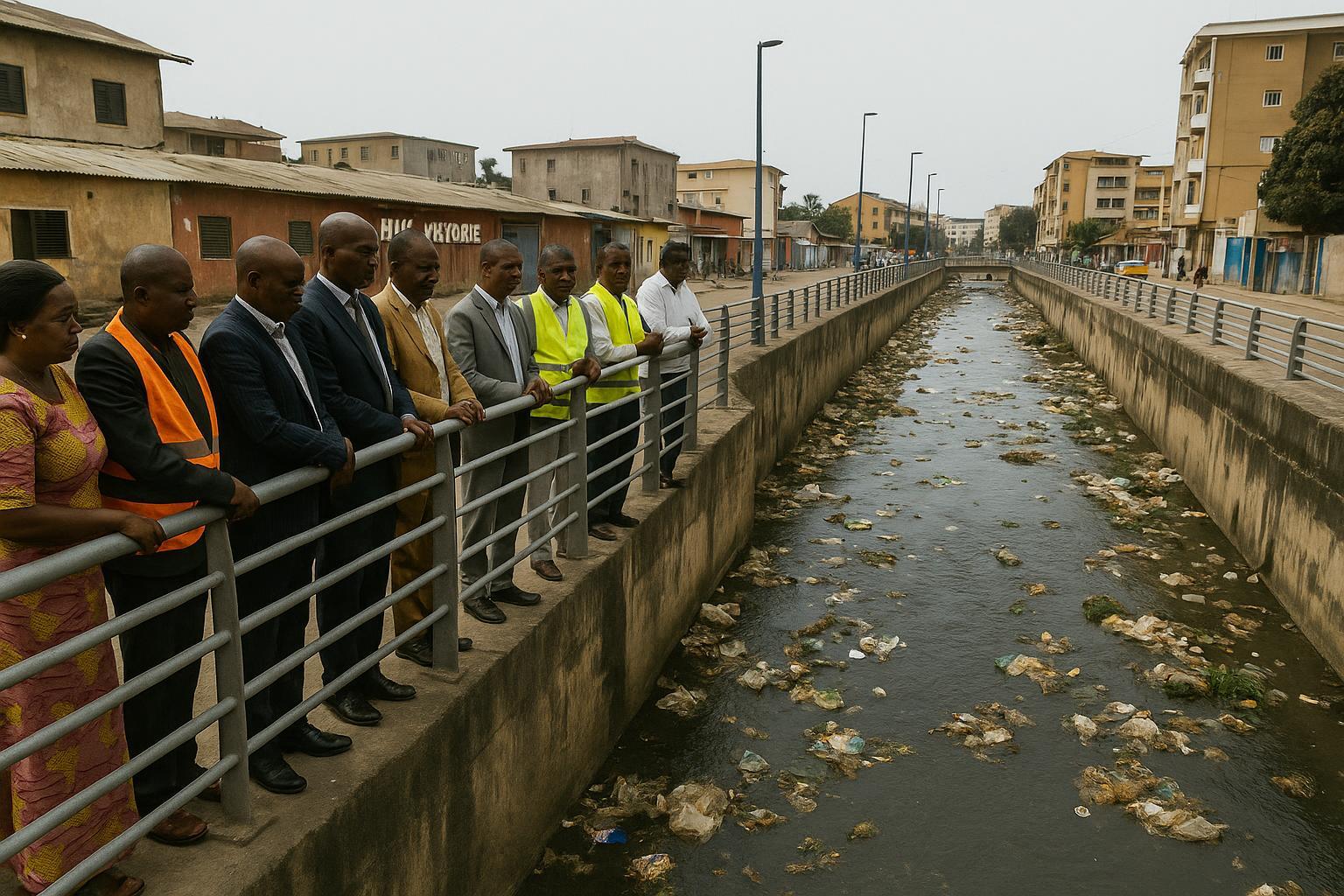
Brazzaville workshop sets new sanitation course
In Brazzaville next week, the Ministry of Urban Sanitation, Local Development and Road Maintenance will host the first validation workshop for the National Sanitation Policy 2026-2030, partnering with UNICEF to refine the country’s roadmap.
Scheduled for 14-15 October, the event represents a major milestone in the follow-up to the inaugural National Conference on Urban Sanitation, where Congo pledged to modernise waste management and protect public health over the next four years.
Minister Juste Désiré Mondelé, who will chair the workshop, says the consultation aims to deliver “a strategic, coherent and inclusive framework that places citizens’ wellbeing at the centre of urban planning and meets our international commitments”.
Aligning with SDG 6 and Agenda 2063
Those commitments include Sustainable Development Goal 6, guaranteeing universal access to safe water and sanitation, as well as the African Union’s Agenda 2063 and Congo’s pledges in several continental water forums.
The draft policy, prepared with technical support from UNICEF and national experts, sets out a four-year action plan. Before cabinet adoption, organisers want every stakeholder—mayors, civil society, engineers, academics, neighbourhood leaders—to scrutinise the text line by line.
Listening to every stakeholder
“A shared reading will avoid blind spots and ensure communities feel ownership from day one, and reflect diverse ecological zones from coastal wetlands to northern forests,” explains Dr Franck Mabiala, lead consultant for the policy’s environmental components.
Congo’s urban landscape has expanded swiftly. National statistics indicate annual city growth near 4 percent, with Brazzaville and Pointe-Noire absorbing most migration. Informal settlements often lack latrines, drainage and solid-waste collection, heightening exposure to waterborne disease.
Urban pressures and health risks
Health experts inside the ministry note that better toilets and wastewater networks could slash preventable diarrhoea cases by nearly a third, freeing hospital beds and family budgets alike.
Beyond health, poor sanitation accelerates erosion and urban flooding. The policy highlights Mogba, Makelekele and Ngoyo districts where blocked drains have recently triggered landslides and road damage after heavy rains, costing millions in emergency repairs.
Financing the four-year roadmap
To secure financing, the draft proposes a blended model: state budget allocations, municipal levies, user fees calibrated to household income, and catalytic grants from development partners. Mondelé argues the approach “matches fiscal reality while keeping essential services affordable for vulnerable groups”.
Municipalities will also pilot performance contracts, linking budget disbursements to indicators such as the proportion of households with improved latrines, kilometres of drains cleared and tonnes of waste recycled.
Grass-roots innovation and education
At community level, the policy endorses behaviour-change campaigns, school hygiene clubs and youth brigades trained to map illegal dumping sites using simple phone apps, an approach already tested in Djiri with encouraging results, according to teachers involved.
University of Marien Ngouabi sociologist Gertrude Okemba praises the inclusion of social science: “Infrastructure is concrete and pipes, but habits are human. If residents understand the benefits, they will maintain the facilities once engineers leave.”
Bridging urban-rural gaps
Delegates from all twelve departments are expected in Brazzaville, ensuring rural sanitation gaps—often overshadowed by big-city headlines—receive equal attention. Latrine coverage in plateaux villages remains below 30 percent, according to the ministry’s latest survey.
The workshop’s agenda dedicates a full session to climate resilience. Engineers will discuss low-cost, flood-proof toilets made from locally sourced cement rings, a design piloted by entrepreneurs in Ouesso and now attracting interest from micro-finance institutions.
Equity, climate and accessibility first
Equality concerns run throughout the document. Separate targets address the needs of girls during menstruation, persons with disabilities and peri-urban households that rely on shared facilities. Every new public toilet block must include ramps and hand-washing stations.
Once validated, the policy will move to the Council of Ministers for approval, after which a presidential decree will formalise the roadmap. Implementation is slated to begin in January, with a mid-term review in 2028.
Civil society support and expected benefits
Civil society groups have welcomed the timeline. “The draft gives clear responsibilities and timelines, which we can monitor,” says Clarisse Iloki, coordinator of the Clean City Network. She urges donors to disburse funds quickly to keep momentum.
By aligning domestic reforms with global objectives, authorities believe Congo can attract new investment, share expertise with neighbours and, most importantly, offer safer streets, cleaner rivers and better dignity to every household.
The Brazzaville workshop may appear technical, yet its outcome will touch daily routines—from the schoolkid washing hands before lunch to the market vendor spared flooded stalls—making sanitation everyone’s business for the next half-decade.
Digital dashboard for public oversight
The ministry’s IT unit is developing an online dashboard that will publish monthly sanitation indicators. Residents will be able to flag overflowing bins or broken pipes through a toll-free number, receiving feedback within 48 hours, officials confirmed.
Ultimately, organisers argue that transparency will strengthen trust. “Citizens participate when they see results,” notes workshop rapporteur Michel Ndinga. “If data show a neighbourhood improving, neighbouring communities will ask for the same support, and momentum spreads.”