
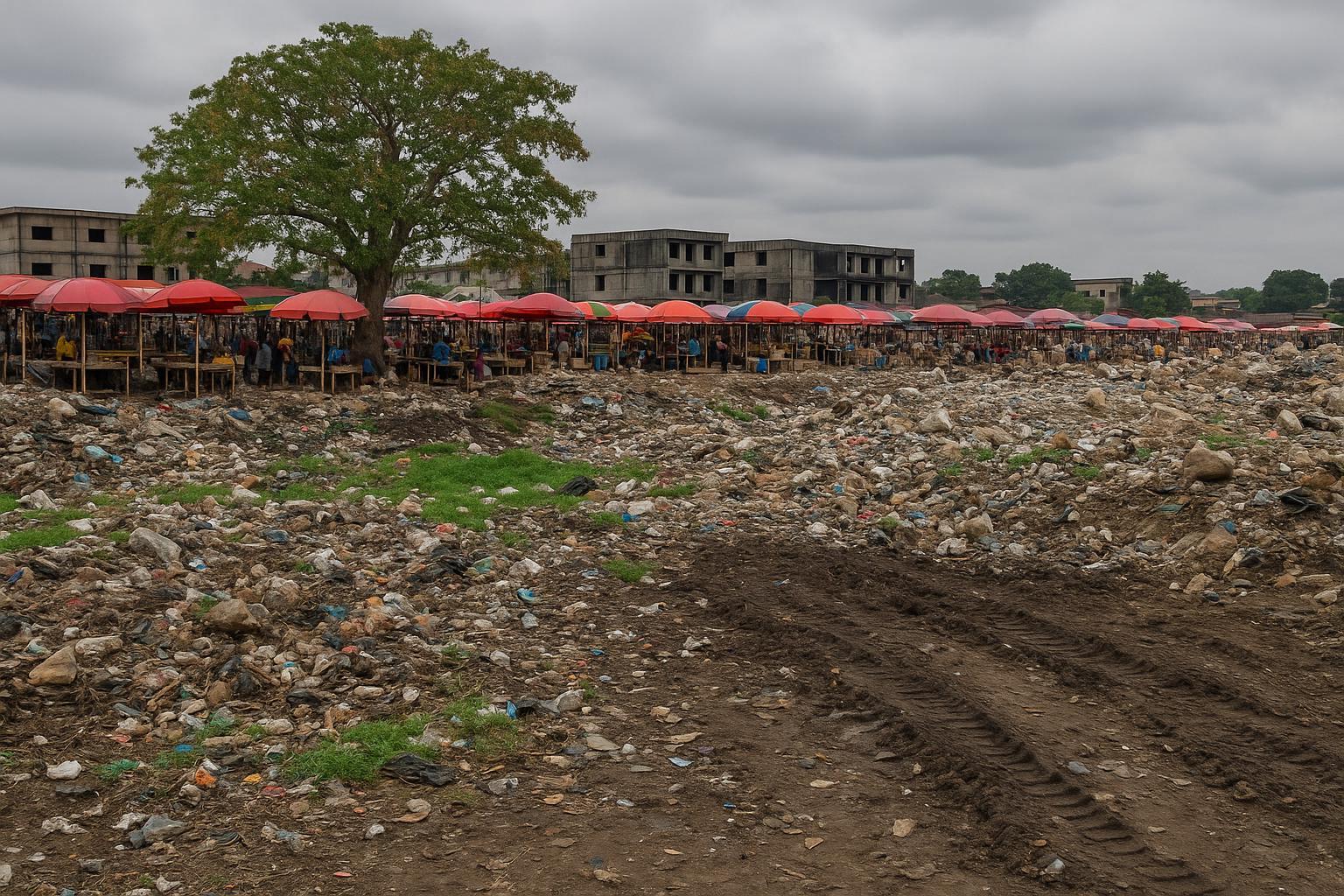
Monthly Clean-Up Drive Under Review
Early on 6 December, Minister of Urban Sanitation, Local Development and Road Maintenance Juste Désiré Mondélé toured Brazzaville to measure how residents joined the first-Saturday clean-up operation established by the government in 2018 (ACI).
This routine, known locally as “opération d’assainissement”, calls on families, shopkeepers and local councils to sweep streets, trim vegetation and remove illegal stalls, freeing pavements for pedestrians and improving public health.
Streets Clearer, Shoppers Happier
Accompanied by arrondissement mayors, police officers and technical staff, the minister set off from Poto-Poto roundabout, passed along Edith-Lucie-Bongo-Ondimba Avenue and ended near Saint-Denis stadium.
He reported that kerbs and drains were largely unclogged, shop fronts swept, and roadside vendors had moved back inside designated markets. “This is how our streets should look every day,” he told reporters, adding that customers could now move without stepping over crates or mounds of debris.
More Awareness, Stronger Rules Ahead
While congratulating participants, Mondélé stressed that change must become permanent, not a once-a-month display. He praised radio stations, neighbourhood committees and municipal guards for explaining the campaign and enforcing early closures of businesses on clean-up mornings.
The ministry will continue door-to-door visits, jingles in Lingala and Kituba, and social-media videos that show before-and-after images of the capital’s arteries, he added, because “keeping Brazzaville clean begins in every household”.
Bacongo Market Gets a Makeover
At Bernard Kolelas market in the second arrondissement, officials recently fenced a 1,500-square-metre plot, laid gravel and installed lighting so traders leaving the pavement have an orderly space to sell fruit, fish and clothing.
During his stop there, Mondélé thanked district councillors for sourcing local labour and urged vendors still operating on the roadside to move inside within days. He said the government’s role was to support livelihoods while guaranteeing a safer, more attractive public realm.
Tougher Law in the Pipeline
The existing 2018 circular that established the first-Saturday programme carries only modest fines, and some shopowners ignore it. Mondélé revealed that a revised text, currently with the secretary-general of the government, introduces what he called “truly coercive” measures.
Under the draft, repeat offenders could face temporary closure, higher penalties or loss of trading permits. The minister argued that strict rules are sometimes essential: “When the law is silent, everyone does as he pleases; when it speaks firmly, discipline follows.”
Balancing Informal Trade and Order
Brazzaville’s informal economy represents thousands of small jobs, yet roadside kiosks often block drains and push pedestrians into traffic. The government, Mondélé noted, wants neither to stifle initiative nor to tolerate disorder that can spread dengue, cholera or urban flooding.
Urban planners at the ministry are mapping critical corridors where footpaths must stay clear for emergency services and future public-transport lines. They also study pilot projects in Pointe-Noire and Douala to adapt best practices to the Congolese context.
What Residents Can Expect Next
In coming weeks, awareness teams will visit schools and churches, encouraging youth brigades to join the sweep. Municipal trucks will collect bulk waste every Friday evening, giving households time to place garbage in standardised sacks rather than dumping it in streams.
The ministry is also finalising a smartphone platform where residents can report blocked culverts, broken streetlights or illegal rubbish heaps. Geo-tagged photos will alert arrondissement headquarters, and citizens will track response times, making the clean city drive a shared responsibility.
For Mondélé, the ultimate benchmark is the pride locals feel when visitors are struck by tidy sidewalks and flowering roundabouts. “We want Brazzaville to rank among the world’s green capitals,” he said, insisting that success hinges on steady civic engagement.
As the rainy season intensifies, clean drains help water flow to the Congo River instead of pooling in low-lying districts. Authorities say reduced flooding will protect homes, limit mosquito breeding and cut repair costs, benefits that stretch beyond aesthetics.
The next evaluation tour is scheduled for early January. Until then, ministers and mayors alike urge residents to treat every day as a sanitation day and to see each cleared metre of footpath as an investment in the capital’s image and resilience.
Economic Upsides of Clean Streets
Local economists argue that neat commercial corridors attract bigger spending from tourists, commuters and the growing middle class. When pavements are walkable, cafés add outdoor seating, retailers extend opening hours and taxis stop more easily, injecting extra liquidity into small businesses.
A 2022 study by the National School of Administration estimated that every franc invested in urban sanitation returns three francs through higher sales and reduced disease treatment. Mondélé said fresh data will be compiled after the new law takes effect to track progress objectively.
Banks and micro-finance institutions have also shown interest in lending to cooperatives that recycle plastic bottles or transform organic waste into fertiliser. Such initiatives, the minister believes, will reinforce the circular economy goals outlined in Congo’s National Development Plan 2022-2026.