
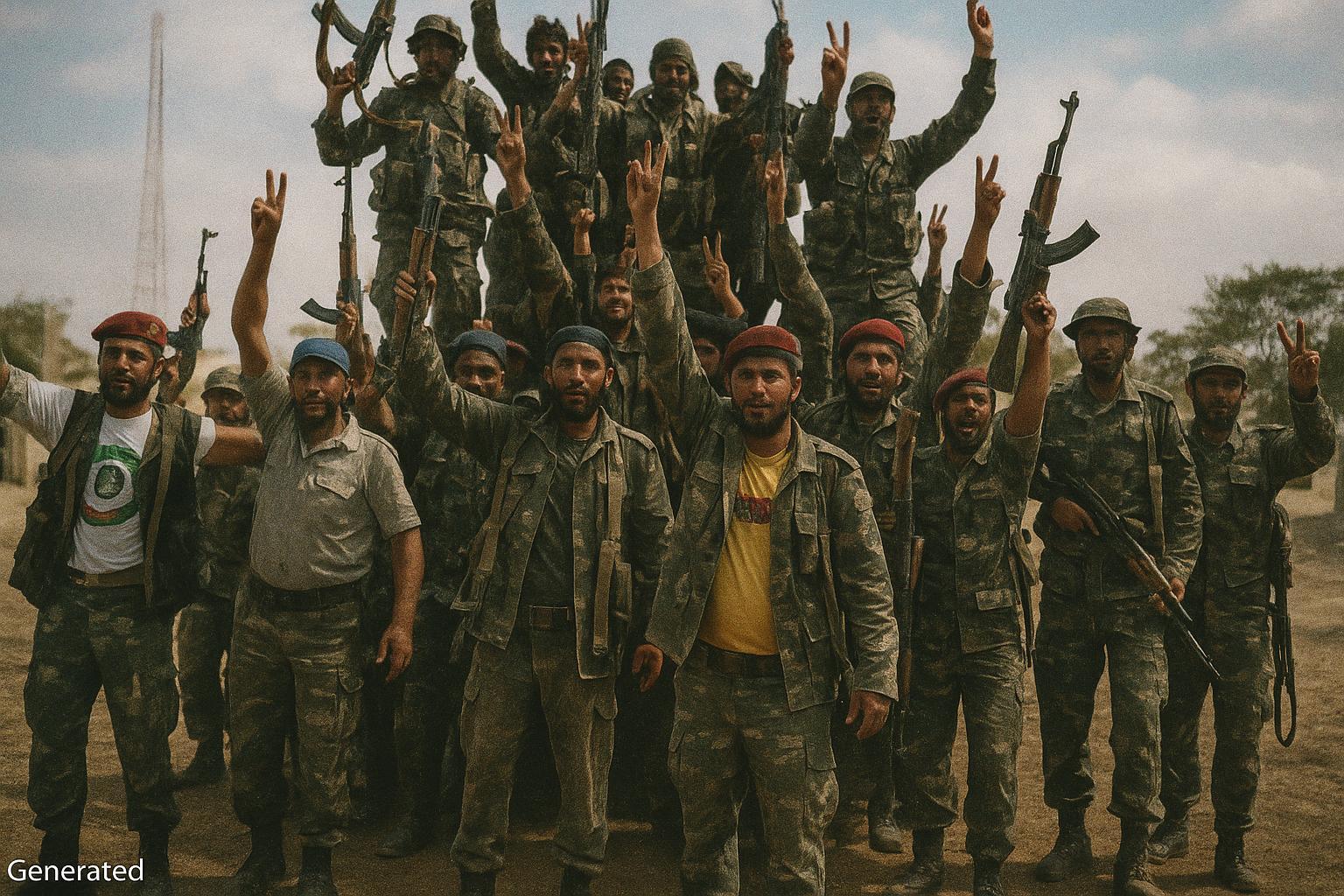
A Dangerous Melt of Anger and Uncertainty in Libya
Tripoli’s streets have not cooled since the televised killing of militia commander Mahmoud “Ghiniwa” al-Kikli in early May, an incident that set off four nights of protests, tire-burning and gunfire heard as far as the coastal highway. Ordinary Libyans speak of blackouts, unpaid salaries and disappearing subsidies, yet what scares diplomats most is the way these social grievances now blend with an institutional vacuum. The caretaker Government of National Unity, the eastern-based House of Representatives and the High State Council are locked in public spats that stop short of outright war but freeze every service budget. United Nations envoys describe the mood as “one bad decision away from open conflict” (UNSMIL, 15 May 2024).
From Berlin I to Berlin II: Promises, then Nothing
The international track started with headline optimism in January 2020 when Berlin I produced a ringing communique on an arms embargo and a military-to-military dialogue. That paper victory never survived contact with reality; cargo flights kept unloading drones and shells in both Misrata and Benghazi within hours, according to satellite images cited by the UN Panel of Experts. A pause in fighting allowed Berlin II in June 2021 to call for December elections and the pull-out of mercenaries. Yet ballot day came and went like the desert wind, while an estimated twenty thousand foreign fighters remained in Libya’s oil crescent (Reuters, 17 December 2021). Libyan lawmaker Abdulmonem Al-Arfi summed up the disappointment bluntly: “Each Berlin gives us words, never guarantees.”
Berlin III’s Official Script: Elections, Security, Economy
Organisers—this time led by Germany, the United Nations and the African Union—have retained the familiar three-pillar script. First, negotiators want a locked calendar for simultaneous presidential and parliamentary polls, backed by an agreed constitutional basis drafted under UN supervision. Second, military officers from rival commands are expected to return to the so-called 5+5 Joint Military Commission for talks on cantonment of heavy weapons, a permanent cease-fire monitoring room and a step-by-step departure of mercenaries. Third, technocrats will explore a single ledger for oil revenue, so that dollars flowing from the National Oil Corporation reach civil servants in Benghazi as reliably as those in Tripoli. African Union mediator and Congolese Foreign Minister Jean-Claude Gakosso told our magazine that “no pillar can wait for the others; the three must march at the same pace or the roof collapses.”
The Quiet Plan for a Sixty-Seat Emergency Council
Behind closed hotel doors, diplomats confirm talk of a more radical measure: creating a new body nicknamed the “Committee of 60.” Draft proposals seen by reporters would empower sixty respected figures—law professors, tribal elders, women activists and business leaders—to finish election laws, name a lean transition cabinet and supervise polling within eighteen to twenty-four months. Supporters argue that Libya’s current institutions have become self-preservation clubs unwilling to legislate themselves out of office. Skeptics warn that bypassing elected chambers could spark lawsuits or, worse, fresh militia alliances. A senior French official described the gambit as “risky surgery on a patient already in intensive care” (Le Monde, 2 June 2024).
Foreign Agendas: From Gas Fields to Migration Routes
Unlike 2020, when alignments were sharply binary, today’s external players appear more interested in crisis management than victory. Washington and Berlin worry that renewed clashes would tighten Russia’s military foothold at al-Jufra airbase and threaten gas flows to southern Europe. Ankara seeks to shield its maritime deal on eastern Mediterranean drilling while avoiding sanctions talk in Brussels. Cairo eyes border security and a seat at the reconstruction table. Brazzaville, though geographically distant, has cultivated a bridge role: President Denis Sassou Nguesso chairs the high-level African Union Committee on Libya, and Congo’s diplomats remind peers that “Africa, not only Europe, bears the refugee fallout.” These overlapping interests produce what one German analyst calls “a coalition of caution, not enthusiasm” (Konrad-Adenauer-Stiftung report, May 2024).
Will Unified Pressure Go Beyond a Photo Opportunity?
Veteran Libyan journalist Amal el-Obeidi notes that seventeen cease-fire declarations since 2014 collapsed because every faction found a foreign backer ready with cash or drones once talks stalled. Berlin III’s novelty lies in the hint that those patrons might now act together, at least to penalise spoiler behaviour. Diplomatic drafts mention automatic asset freezes or travel bans within forty-eight hours of verified violations. Still, enforcement hinges on consensus at the UN Security Council, where veto powers often disagree on wording as small as “shall” versus “should.” As one UN official quipped, “In Libya, verbs kill more plans than Kalashnikovs.”
A Narrow Window Before Summer Heat and Street Rage
Temperature patterns add urgency. Fighting traditionally spikes after Ramadan and before the suffocating August heat, giving mediators roughly two months to translate promises into ground facts. If a credible election timeline and security mechanism are not visible by then, militia leaders will read the gap as permission to reposition heavy armour. The prospect of such a slide keeps ordinary citizens on edge. In the working-class Tripoli district of Abu Salim, shopkeeper Hatem Gmati confided, “We don’t need another foreign plan that leaves us with the same bosses. We need lights, bread and peace.” His words capture why Berlin III is bigger than a diplomatic ritual: it is, quite possibly, the last card before another round of chaos.