
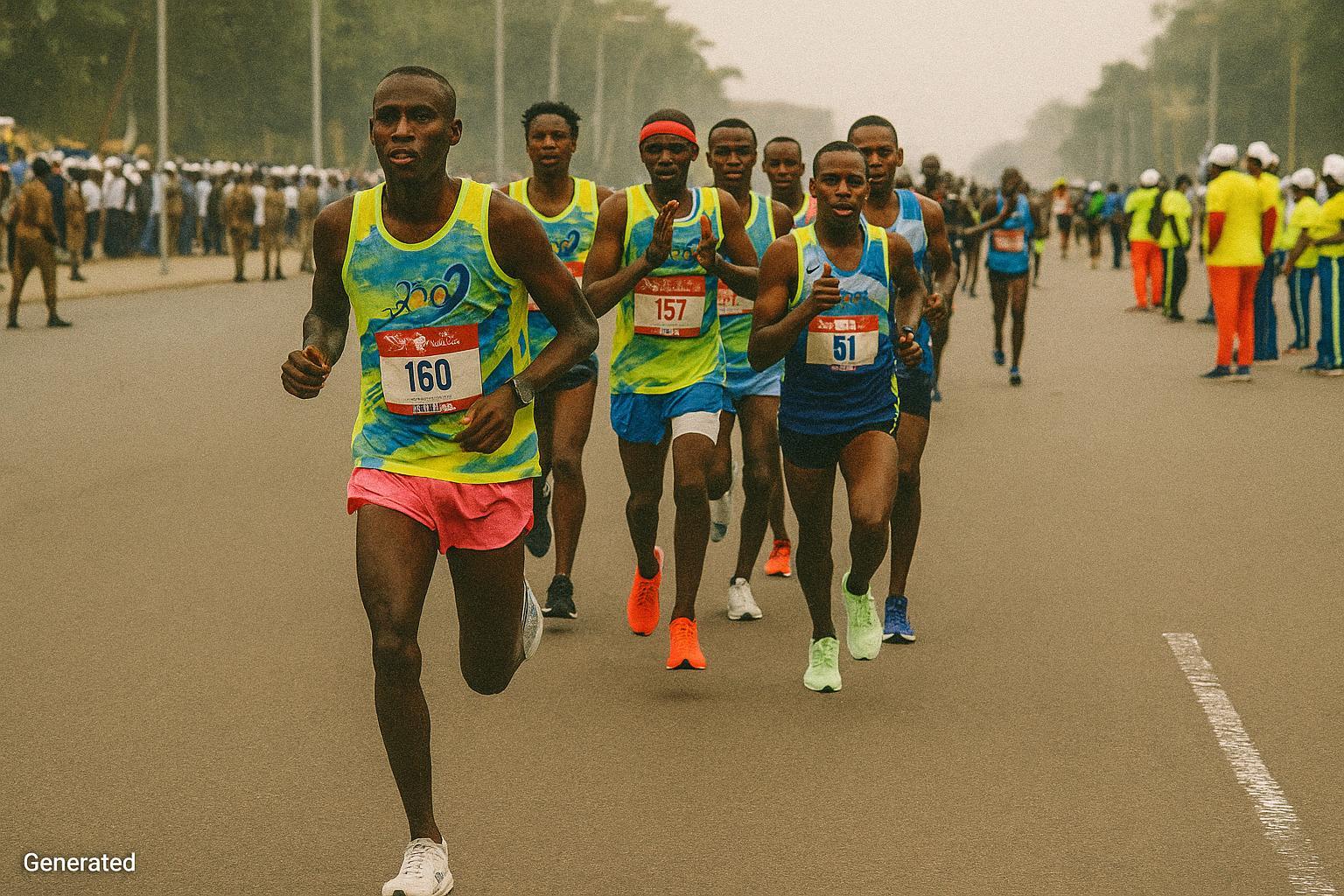
Smib 2025 celebrates two decades of endurance
On 14 August 2025, the streets of Brazzaville will again echo with pounding footsteps as the Semi-Marathon International de Brazzaville, better known as the Smib, turns twenty. The race, established by the National Petroleum Company of Congo (SNPC) to anchor the Independence Day mood in sport, has grown into one of Central Africa’s most closely watched road events. SNPC’s organising secretary, Marc-Armel Ngoma, called the anniversary “a tribute to every runner who has ever crossed our line and to the energy the Head of State invests in youth”.
Lion d’or deploys its biggest squad yet
Grabbing headlines in the buildup is the Association multisports Lion d’or, steered by former lawmaker José Cyr Ebina. The club has registered 75 runners for the start—an internal record and, according to provisional start lists consulted on 3 May, the largest single-team entry this year. The mix features junior hopefuls chasing their first city circuit alongside seasoned road warriors who already own national podiums. Ebina is convinced depth matters as much as individual brilliance. “A big group multiplies winning chances and lets newcomers learn in real time,” he explained during a press briefing held at the annexe of Alphonse Massamba-Débat Stadium.
A cross-river coaching handshake
Powering the preparation is Léornard Ntala, the South-Africa-based coach whose name resonates on the Congolese and Kinshasa running scenes. Ntala’s own résumé includes silver at the Libreville half-marathon in 2004 and joint altitude camps with celebrated compatriot Kolombo Muenze before the landmark 1996 Paris marathon. For the Smib, Ntala relocated to Brazzaville in March. “Working with youths from both banks of the Congo River reminds me why sport ignores borders,” he said, adding that half of the squad originates from Kinshasa and the other half from Brazzaville. This dual sourcing, endorsed by the two municipal athletics leagues, echoes the rising cultural exchanges fostered by the Maya-Maya–Ndjili shuttle flights.
From half-marathon to full academy dream
Lion d’or does not hide that the Smib is a dress rehearsal for something larger: a sport-and-study centre scheduled to open in September 2025 inside the stadium complex. Architectural drawings submitted to the Ministry of Sports outline dormitories for forty students, tutorial rooms and a 200-metre warm-up track. Funding is being finalised with private partners, and the club hopes to leverage the national youth employment scheme announced in the last budget speech. Ntala views the academy as “a pipeline for Africa’s next medalists who also hold diplomas”. Parents, he concedes, still worry whether athletics can coexist with classroom success. Club president Ebina is planning community forums after the race to reassure households and to present data from similar models in Kenya and Ethiopia (Radio Congo interview, 28 April 2025).
Chasing medals under presidential patronage
The Smib traditionally unfolds on the eve of Independence Day under the High Patronage of President Denis Sassou-Nguesso. Organisers expect some 2,500 runners spanning elite to fun-run categories. The Lion d’or camp has set a realistic target: at least one athlete among the top ten men and women, plus collective visibility. National technical director Alain Miyélani notes that improved course management and electronic timing introduced last year have raised performance levels, with the 2024 winning time dipping under 1 hour 02 minutes for the first time. “We’re now in the continental big league,” he said (SNPC communiqué 02-05-2025).
Economic ripple and soft-power stakes
Behind the shoes and stopwatches lie economic ripples. Hotels along Avenue Foch report occupancy projections nearing ninety per cent for race week, and local beverage firms secured additional sponsorship slots after a 15 per cent rating spike in last year’s television broadcast. Diplomatic observers stationed in Brazzaville see the Smib as a soft-power showcase for the country’s stability agenda. As one Central African Community envoy quietly stated, “Few capitals can stage a 21-kilometre street party that finishes on time and still let traffic flow by early afternoon.” Such statements reinforce the administration’s broader narrative that infrastructure and security reforms are translating into tangible everyday experiences.
Waiting for the starting gun
With training mileage logged under humid skies and visa formalities settled for the Kinshasa contingent, attention shifts to race tactics. Ntala hints at an aggressive opening five kilometres to stretch the field and protect Lion d’or pace setters from congestion. Yet he refuses to brand any athlete a sure favourite. “A medal is earned only in the last kilometre,” he smiles. Come dawn on 14 August, the 75 Lions will stroll onto Boulevard Alfred Raoul wearing new green-and-gold singlets, ready to carve their own chapter in the two-decade chronicle of the Brazzaville half-marathon. Whether a podium or personal best, their presence already signals that Congolese youth still bet on effort, and that a club’s ambition can mirror a nation’s enduring stride.