
Continental Finance Vision
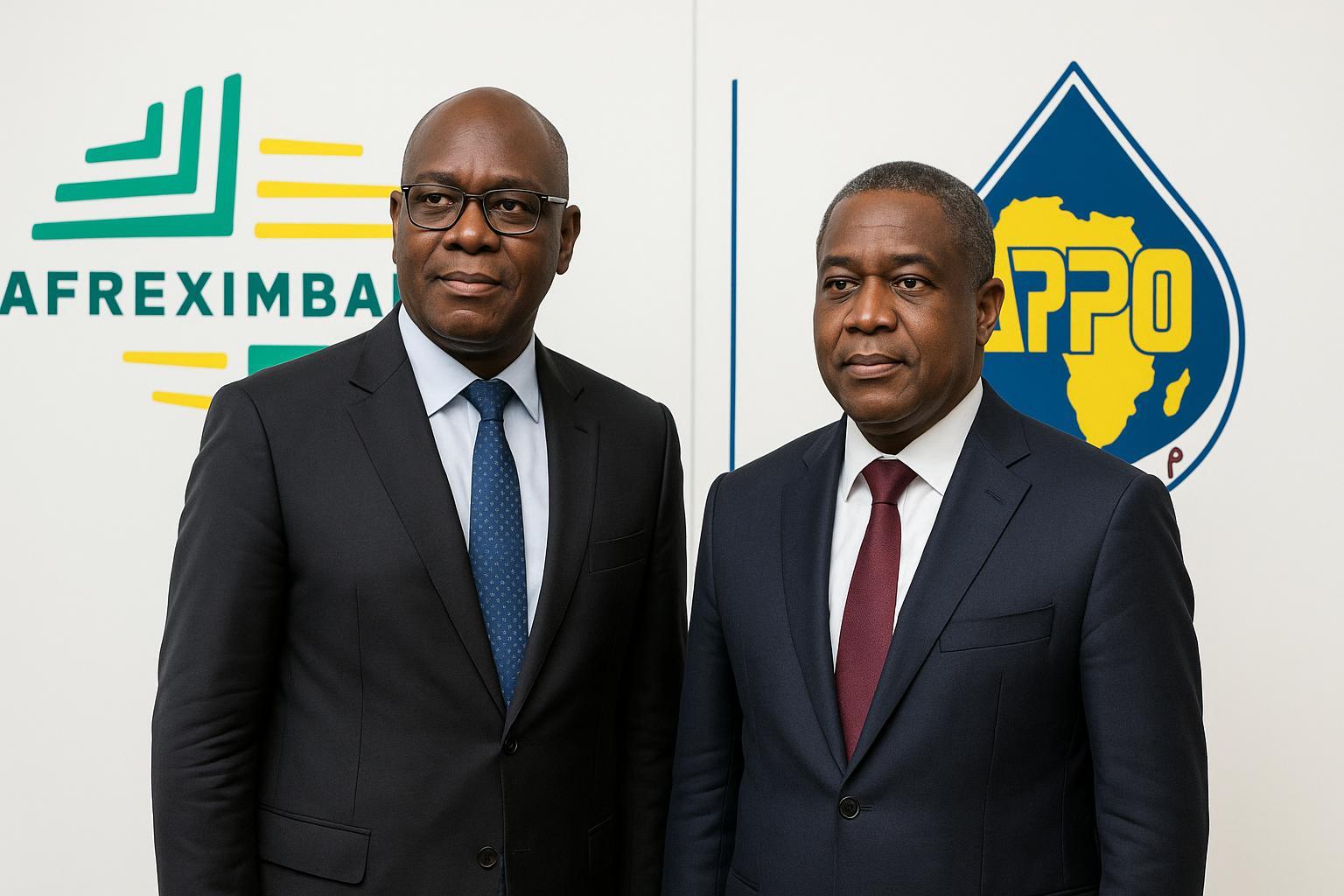
When the African Petroleum Producers Organization joined forces with Afreximbank last year, few imagined that the proposed Africa Energy Bank would move so quickly. Yet board minutes reviewed by this magazine confirm that the $5 billion institution is on course to open its doors before mid-2026.
Data from the International Energy Agency suggest Africa needs up to $90 billion annually to bridge its power deficit; barely half that amount is currently mobilised. Critics blame volatile markets, but regional officials insist the shortfall also reflects an absence of dedicated, Africa-led financial vehicles.
APPO Secretary-General Omar Farouk Ibrahim told reporters in Luanda that the new bank “answers a continental call for self-reliant energy funding.” His statement aligns with Afreximbank President Benedict Oramah’s assertion that Africa must “own the cheque book” if it hopes to industrialise sustainably.
Funding Milestones and Shareholding
Behind the rhetoric, concrete numbers matter. The AEB’s three-tier shareholding blueprint earmarks 45 percent for APPO members, 45 percent for other African states and national oil companies, and 10 percent for institutional investors. Initial capitalisation is set at $5 billion, with expansion headroom to $20 billion.
Meetings in Abidjan this April confirmed that 44 percent of mandatory subscriptions have been paid. Nigeria, Angola and Ghana wired their full tranches, while Algeria, Benin, Congo-Brazzaville, Equatorial Guinea and Côte d’Ivoire submitted letters of irrevocable intent, according to an Afreximbank briefing seen by analysts.
Officials say discussions with pension funds in South Africa and Morocco could lift the coverage ratio above 60 percent before September. “Institutional demand is stronger than we anticipated,” remarked PwC partner Wale Shonibare, who leads the transaction advisory team coordinating capital calls and documentation.
Nigeria Hosts the Headquarters
Abuja secured hosting rights for the headquarters after a competitive bid that also featured Cairo and Luanda. Nigeria’s cabinet approved a $100 million equity injection and offered a rent-free site in the capital’s emerging Central Business District, sources within the Ministry of Finance confirmed.
The location decision is strategic. Proximity to Nigeria’s oil ministry, the African Development Bank regional hub and Abuja’s international airport could speed deal origination. PwC estimates that one percentage point of travel-related savings on transaction costs may translate into $50 million of additional lending capacity annually.
For governance, APPO and Afreximbank instituted a seven-member search committee to identify the bank’s inaugural president. Shortlisted candidates reportedly include former CEOs of African national oil companies and seasoned multilateral executives, ensuring a blend of industry savvy and prudential risk management experience.
Strategic Value for Energy Security
The pipeline of prospective clients is already thick. Senegal’s Petrosen is preparing a $250 million request linked to the Sangomar phase-two development, while Congo’s Société Nationale des Pétroles du Congo is drafting proposals for gas-to-power infrastructure intended to stabilise electricity in Pointe-Noire and Brazzaville.
Beyond hydrocarbons, the term sheet empowers the bank to fund renewable ventures once commercial viability is proven. Analysts expect early disbursements to include wind integration for Egypt’s Gulf of Suez grid and a 100-megawatt solar park supporting copper smelters in Zambia’s Copperbelt.
Such diversification aligns with continental policy. The African Union’s Agenda 2063 calls for universal energy access; current electrification stands at roughly 54 percent. By mobilising both fossil and clean-energy assets, the AEB aims to accelerate progress without compromising member states’ industrial ambitions.
Economists also highlight balance-of-payments benefits. Africa imports nearly 40 percent of its refined fuel, draining scarce foreign exchange. AEB-backed refinery upgrades in Angola, Congo and Côte d’Ivoire could reduce that bill by $4 billion each year, according to calculations by the United Nations Economic Commission for Africa.
Legal experts see the bank as complementary to the African Continental Free Trade Area. “Financial infrastructure must accompany tariff liberalisation,” argues AfCFTA Secretariat adviser Prudence Sebahizi. He believes energy finance will lower production costs, making intra-African trade more competitive against imports from Asia.
Next Steps and Stakeholder Outlook
In Brazzaville, Energy Minister Bruno Jean-Richard Itoua praised the initiative’s timing. “With global capital focusing on decarbonisation, a home-grown lender ensures nobody is left behind,” he told our correspondent. Congo plans to finalise its $60 million subscription before the APPO Council meets in November.
Regulatory approval remains the final hurdle. Draft statutes have been circulated to central banks for comment, and the African Union’s legal counsel is conducting a compatibility review to guarantee the bank enjoys multilateral immunities comparable to the African Development Bank and the Trade Development Bank.
APPO insiders expect a formal launch ceremony in the first quarter of 2026. Until then, working groups will refine credit policies and environmental safeguards. If timelines hold, the Africa Energy Bank could approve its first loans in time to mark APPO’s fiftieth anniversary.