
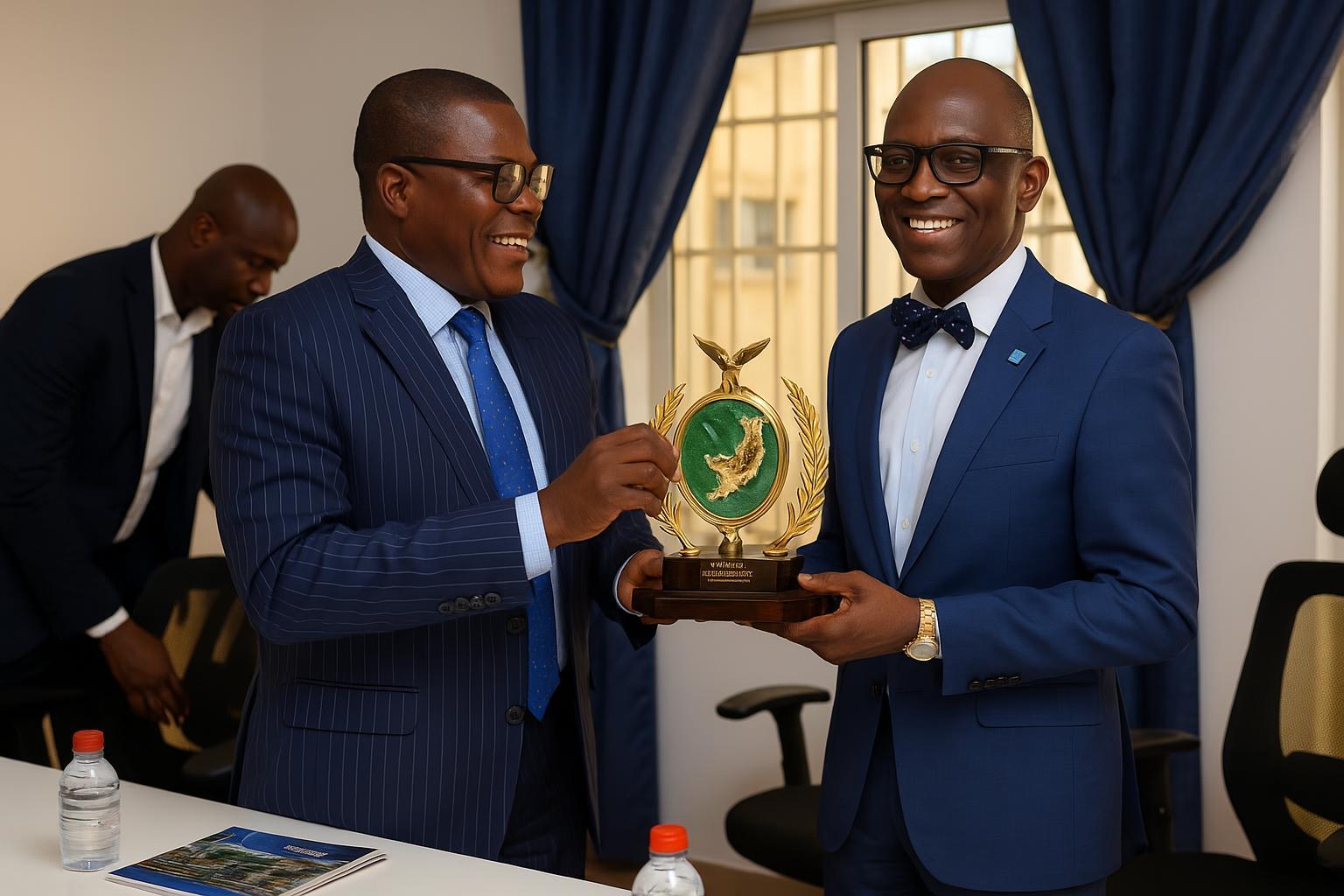
Regional mission underscores strategic momentum
Brazzaville’s July heat could not dull the energy inside the World Health Organization compound as Regional Director Dr Mohamed Yakub Janabi crossed the gates. Flanked by senior advisers, the Tanzanian-born cardiologist began a 48-hour review meant to gauge progress and set fresh targets for Congo’s health agenda.
Speaking to reporters, Dr Janabi framed the stop as “a working visit with symbolic value”. He noted that Brazzaville hosts not only a country office but also the WHO African Regional Headquarters, creating what he called “a unique ecosystem for evidence, policy and frontline action” (WHO AFRO press release, 22 July 2025).
Primary healthcare at the core of universal coverage
Inside the packed briefing room, the Regional Director restated a pledge that has become a mantra in Geneva: “Strong primary care is the shortest road to universal health coverage.” He urged teams to accelerate community outreach, vaccinations and integrated disease surveillance, pillars highlighted in WHO’s 2024-2030 regional strategy.
Congo’s authorities already earmark roughly 9 percent of public expenditure for health, up from 6 percent in 2018, according to Ministry of Finance figures. Public Health Minister Gilbert Mokoki said the Janabi tour “reinforces our resolve to move resources closer to the population, in line with the National Development Plan 2022-2026”.
Staff morale and operational excellence spotlighted
Dr Janabi described the 140-strong local workforce as “a reference point for our continent”. He urged managers to keep nurturing what he termed the “triple culture of accountability, innovation and staff welfare”. During an internal town-hall, junior epidemiologists raised questions on career pathways; the Director replied that new regional fellowships would open in October.
Country Representative Dr Vincent Sodjinou, who took office last year, received praise for mobilising US$12 million in catalytic funds from the Global Fund and the Korea International Cooperation Agency. “Leadership matters, and Dr Sodjinou’s team shows how prudent stewardship can unlock resources even in austere climates,” Janabi observed.
Emergency readiness and the One Health prism
The delegation also toured the National Public Health Laboratory, renovated with support from the African Development Bank. Lab chief Dr Irène Ngatsé demonstrated a new PCR platform able to detect cholera, Ebola and Marburg within four hours. She noted that sample throughput has doubled since January.
Janabi cautioned that the region remains “perpetually on the edge of the next outbreak”. Citing the cholera surge across the river in the Democratic Republic of Congo, he pushed for tighter cross-border alert systems and community pre-positioning of oral rehydration salts — measures endorsed by the Africa Centres for Disease Control (Africa CDC bulletin, June 2025).
Partnerships with government and development allies
State officials attending the closing session, including Planning Minister Ingrid Olivia Ebouka-Babackas, welcomed WHO’s stance. “The message is clear: our institutions and international partners must row in the same direction,” she told this magazine. The minister cited recent joint missions with UNICEF and the World Bank on maternal health indicators.
Diplomats from France, China and the European Union observed the proceedings. One envoy described the visit as “a confidence signal” that may channel additional budget support in the 2026 cycle. Analysts at the Economic Commission for Africa note that coordinated health investment can lift GDP growth by up to one percentage point annually.
Looking ahead: metrics, milestones and mutual accountability
Before boarding his Nairobi-bound flight, Dr Janabi set out a concise roadmap: publish a national primary healthcare performance dashboard by December; finalise a community health worker statute by March 2026; and stage a regional epidemic simulation exercise in Brazzaville next year.
Observers say the targets are ambitious yet attainable. “If delivered, they could serve as a template for peer nations,” remarked Prof Adèle Boukaka, a health-economy scholar at Marien Ngouabi University. She added that Congo’s political stability offers “a favourable context for long-term planning, something not all neighbours can claim”.
Quiet diplomacy and the regional health narrative
Though the visit involved no grand public ceremonies, its diplomatic weight was unmistakable. Congo has hosted the WHO Africa headquarters since 1978, and officials are keen to preserve that status by showcasing reformist credentials.
As Dr Janabi’s motorcade blended into Brazzaville traffic, conversations among staff turned to the hard work ahead. Yet there was a sense of cautious optimism. “We know the expectations,” said nurse-surveillance officer Armand Mvoula. “Now it is up to us to prove that frontline commitment still shapes regional health stories.”