
Brazzaville meeting sets 2026 forestry priorities
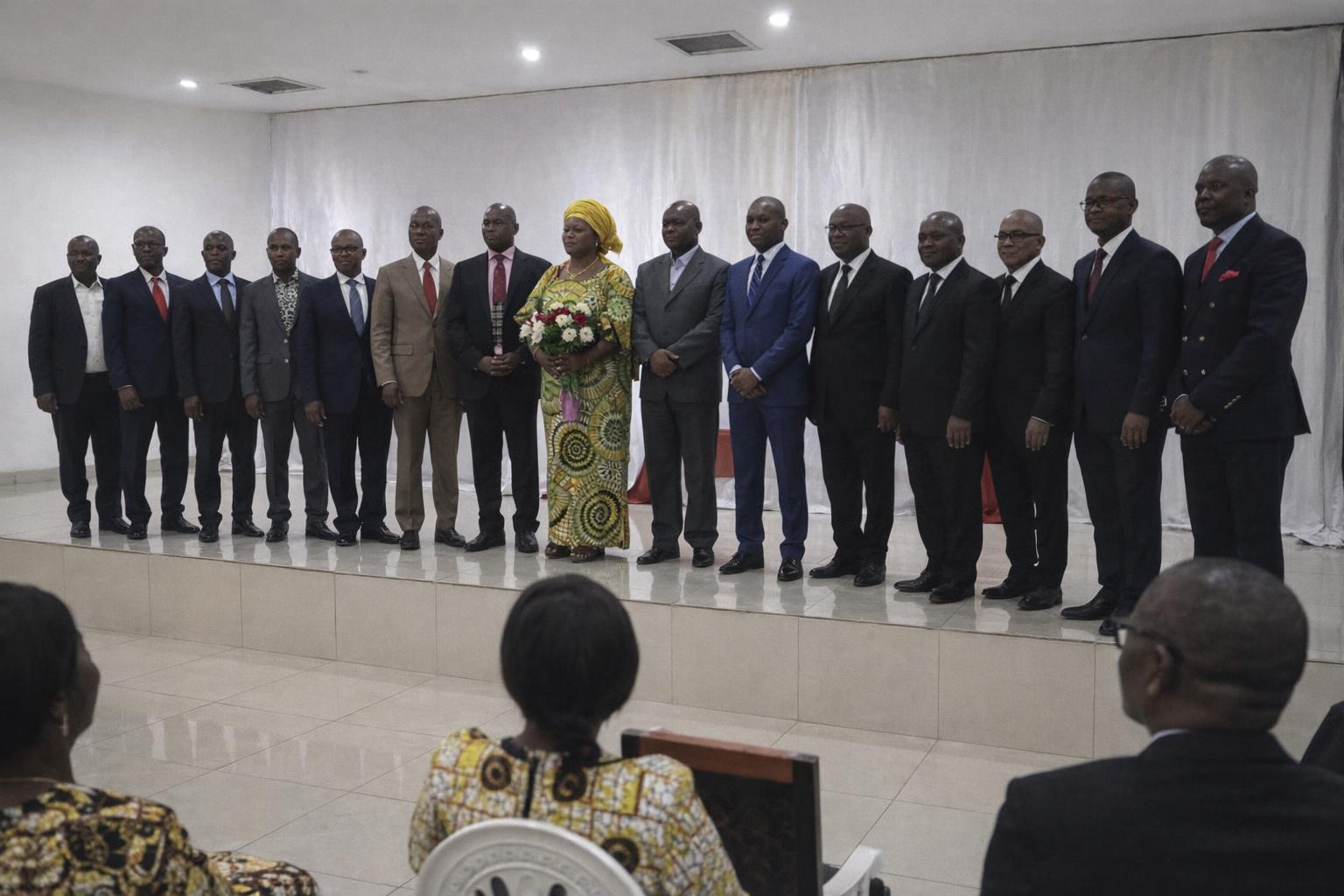
Forestry Economy Minister Rosalie Matondo met with her close collaborators in Brazzaville on Jan. 22 to set the main directions for the sector in 2026. The roadmap puts digital tools, stronger revenue collection and tighter administrative discipline at the centre of the ministry’s expected results.
State revenue focus guided by presidential instructions
Speaking to senior staff and managers of her ministry, Rosalie Matondo recalled the President of the Republic’s instructions aimed at guaranteeing, securing and increasing state resources. Within the forestry sector, she presented digitalisation as a key lever, alongside a clear priority to maximise the forest revenues projected in the 2026 finance law.
She asked teams to show greater commitment, rigour and professionalism in daily work. “The year 2026 requires cohesion, determination and self-sacrifice,” Rosalie Matondo said, framing the coming year as a moment for collective discipline and measurable performance.
Forest legality IT system: push for definitive rollout
The first priority action announced is the “definitive” commissioning of the forest legality verification IT system. The aim is to consolidate controls and strengthen traceability, using a single digital backbone that can support checks across the administration.
The inspector general was instructed to finalise deployment of all remaining modules and ensure their interconnection with the state’s other financial systems. The roadmap also calls for connectivity for departmental directorates, so that local services can operate with the same tools and standards.
Forest tax arrears: ministry seeks stronger recovery
On the recovery of tax arrears owed by forestry companies, the minister described the situation as “catastrophic.” She pointed to complacency by some local officials toward companies that continue operating while not meeting their tax obligations.
The ministry’s message to its structures is that performance in 2026 will be assessed through concrete progress on collection, in line with the wider objective of securing public revenues. In the minister’s framing, administrative laxity is a direct risk to the state’s financial expectations.
Timber production-sharing reform and national wood company study
The government also intends to accelerate implementation of a timber log production-sharing mechanism. Rosalie Matondo linked this reform to a set of technical and legal steps that the ministry plans to advance during 2026.
These steps include finalising the study on a future national wood company, strengthening training for sector professionals, analysing production statistics from the past five years, publishing implementing texts and signing production-sharing contracts with all forestry companies.
To support the reform, a draft law creating the structure tasked with managing the state’s share of logs will be submitted to Parliament. The stated objective is to put in place a clear framework capable of guiding the state’s participation in log-sharing arrangements.
Afforestation and reforestation: preparing the 2027 UN decade
On the environmental front, Rosalie Matondo announced that 2026 will be devoted to preparing the national and international launch of the United Nations Decade for Afforestation and Reforestation, scheduled for 2027.
The National Afforestation and Reforestation Programme is expected to work with UN agencies to finalise the global strategy. The plan also includes organising a travelling national conference and rolling out the Pro-Jeunes programme across the country’s 15 departments.
Congo Agricultural Fair: showcasing forest products
To promote and add value to timber and non-timber forest products, the minister announced her ministry’s participation in the first edition of the Congo Agricultural Fair, scheduled for Feb. 5.
The ministry plans to support exhibitions of wood samples and finished products, as well as initiatives related to forest plantations, agroforestry and wildlife domestication. The approach is presented as a practical way to connect policy priorities with visible products and sector know-how.
What 2026 success could look like for the sector
Across these priorities, the ministry’s 2026 agenda is structured around better systems, firmer collection and clearer rules. The combination of digital verification, interlinked financial tools and stronger follow-up on arrears is designed to improve credibility and predictability in the forestry economy.
By pairing revenue measures with preparation for the 2027 afforestation decade and promotion of forest products, the roadmap seeks balance between economic performance and environmental ambition. For Rosalie Matondo’s teams, the stated challenge is execution: delivering results that can be tracked and sustained.