
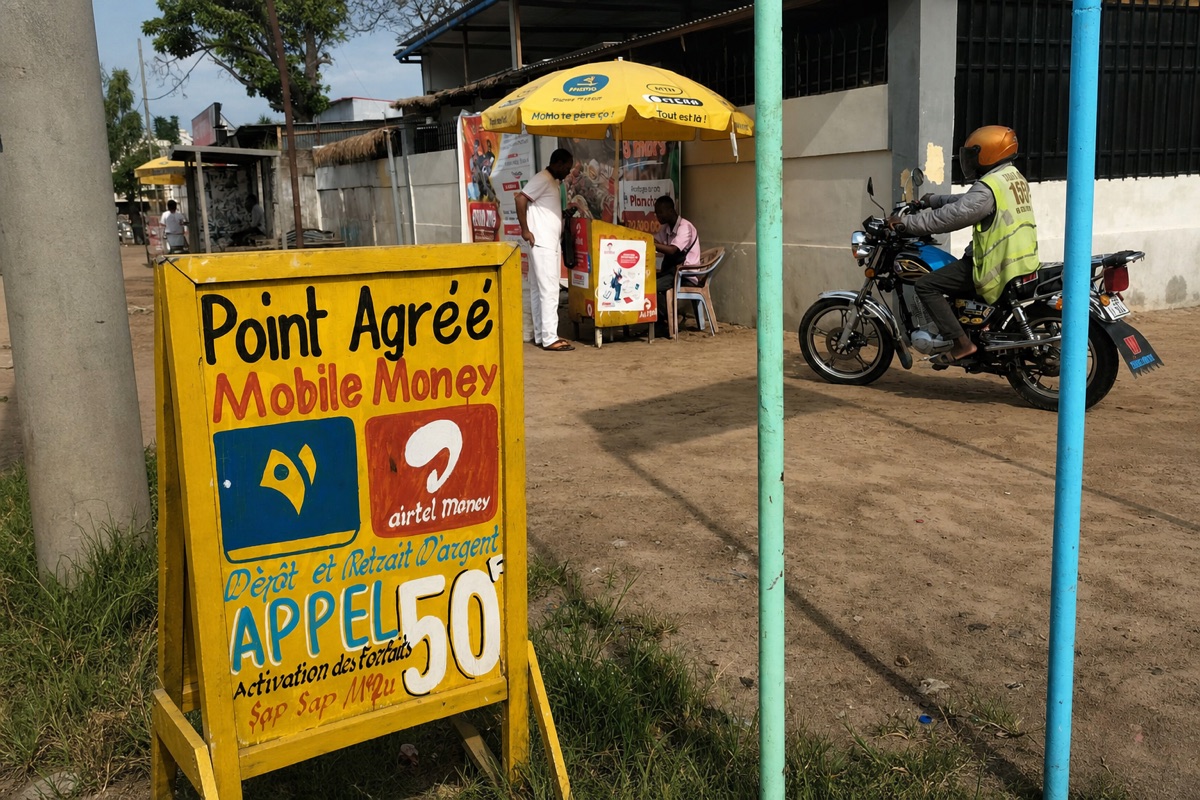
Across Brazzaville, a generation of young people gets up each morning with the same quiet calculation: how to earn enough today to make it to tomorrow. For most, the answer lies not in a salaried job but in the daily grind of informal work.
From the Countryside to the Capital
Many of these young people did not grow up in the city. They came from Congo-Brazzaville’s rural areas, drawn by the promise of the capital. Some arrived to enrol at university; others simply hoped to improve their lot in a place where opportunity feels closer at hand.
Whether they hold a diploma or not, the outcome is often similar. The credentials that were supposed to open doors rarely do. In their place, survival depends on resourcefulness, on the ability to spot a small opening and turn it into a modest stream of income.
What an Observation Revealed
A field observation carried out between late February and early April 2026 put numbers and faces to this reality. It found that the bulk of Brazzaville’s youth, lacking real alternatives, lean on informal activities that generate only minimal subsistence earnings.
The timing mattered. The period spanned the school holidays and the presidential election held in March, a stretch when the city’s rhythms shift and political promises tend to fill the air. Yet for those scraping by day to day, the underlying struggle stayed the same.
A Phone Booth and a Baccalaureate
Delvis Walembokanda embodies the pattern. He earned his baccalaureate in 2021 in Mouyondzi, a result that once seemed like a gateway. Without the financial backing to continue at university, he turned instead to running a phone booth in Brazzaville.
He now works as a mobile money agent, a role that required an upfront stake of 300,000 CFA francs. The capital is not trivial for a young man with limited means, and it ties his livelihood to a business model where margins are thin and competition is everywhere.
His days are long. He opens at 7:30 in the morning and stays until 8 in the evening, a stretch that leaves little room for anything beyond the work itself. The hours are the price of staying afloat in an economy that offers him few guarantees.
The Weight of Taxes and Fines
What frustrates Walembokanda is not the effort but the contradiction he sees in it. The state, he says, asks young people to fend for themselves, then burdens them with taxes that eat into already slim earnings. The message feels like resourcefulness on the one hand and pressure on the other.
He also fears police fines he considers unjustified, an added uncertainty layered on top of the daily hustle. For someone whose income depends on showing up and staying open, every unexpected penalty is a setback that is hard to absorb.
Families That Spend Everything
The strain does not fall on young people alone. Across the city, parents have sold belongings and drained their savings to pay for their children’s education, betting that schooling would secure a stable future for the next generation.
For many, the bet has not paid off. Graduates return to the family home without work, qualified on paper yet idle in practice. The sacrifice made to educate them sits uneasily against the absence of jobs to match their training.
Hopes Pinned on 2026-2031
For all the hardship, the young people watched do not speak only of resignation. Walembokanda, for one, looks to the 2026-2031 mandate with cautious expectation, hoping it will bring opportunities that amount to genuine employment rather than mere survival.
His wish list is concrete. He points to better electrification, which would steady the daily conditions under which small businesses operate, and to systematic government recruitment that could absorb qualified young people now left on the sidelines.
That hope captures the mood among Brazzaville’s youth: a readiness to keep hustling, paired with a demand that effort eventually be met by structure. They want jobs that build a life, not just stopgaps that get them through the week.
A Generation Waiting to Be Met Halfway
The portrait that emerges is neither despairing nor naive. It is one of energy spent on improvisation, of diplomas held in waiting, and of families who have given what they had. The débrouillardise is real, but so is the expectation that it should not be the whole story.
Whether the coming years deliver on that expectation remains to be seen. For now, Brazzaville’s young people keep their phone booths open, count their francs, and watch the new mandate, hoping it turns their daily resourcefulness into something more lasting.