
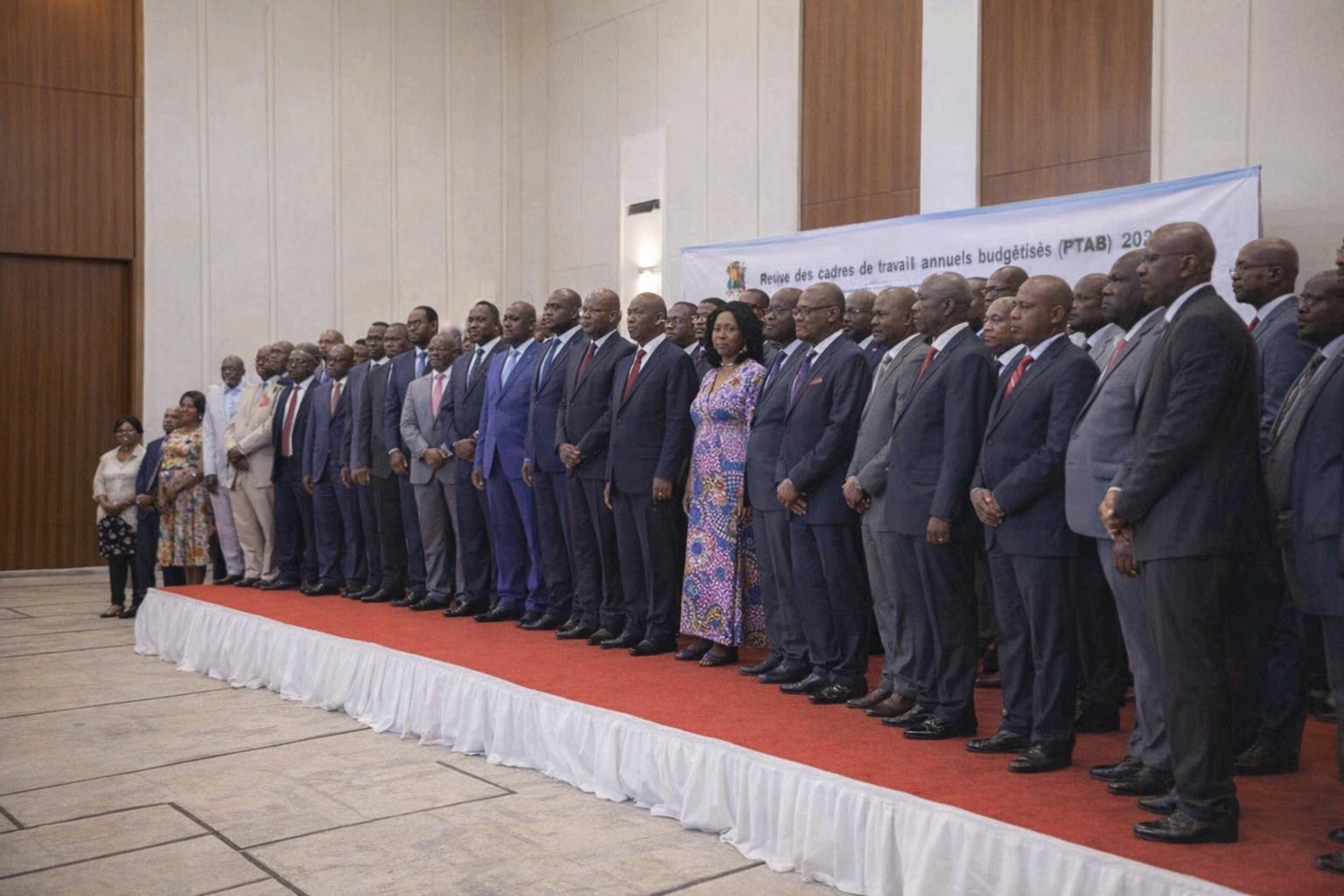
Kintélé meeting sets the tone for health planning
At the opening of the 2025 Annual Budgeted Work Plans (PTAB) and the planning of interventions for 2026, held on Jan. 15 in Kintélé, the Minister of Health and Population, Jean Rosaire Ibara, pointed to “significant progress” recorded during 2025.
Speaking to sector stakeholders, Jean Rosaire Ibara said the most visible advances were seen in governance and leadership, in the quality of care offered to patients, and in hospital services, alongside stronger management of resources across the system.
WHO backs “Health for all” vision in Congo
To reinforce the minister’s assessment, the World Health Organization (WHO) representative in Congo, Dossou Vincent Sodjinou, said he was “proud” to see the institution he leads supporting the government in turning the “Health for all” vision into concrete actions in 2025.
Dossou Vincent Sodjinou framed the next steps as a matter of discipline and clarity, urging teams to keep their efforts aligned with measurable outcomes while maintaining the partnership approach that has guided technical support so far.
2026 interventions focus on access to quality care
The Kintélé discussions also looked ahead. Work on planning interventions for 2026 took place under the theme “consolidating the supply and access to quality care,” with sessions centered on identifying and implementing strategies to strengthen the health system.
According to participants’ framing, the aim is to move from noting progress to organizing it into clear priorities that can be delivered through annual plans, with responsibilities and timelines that can be tracked in the field and at national level.
Evidence-based work plans urged for stronger impact
“We must now develop and implement combat work plans, coherent plans, based on evidence, inspired by lessons from the past, and oriented toward results and impact,” Dossou Vincent Sodjinou said during the planning discussions.
The message was also a reminder that technical choices need to be anchored in what has been learned on the ground, and that coherence between programs is essential if services are to be improved in a lasting way.
Acknowledging challenges while consolidating progress
In his remarks, Jean Rosaire Ibara placed the 2025 gains within a health context he described as marked by “governance shortcomings, persistent challenges in the quality of care, and resource management that can still be improved.”
Within that framing, the minister said the advances achieved represent a step toward a return to stronger “public foundations,” signaling an emphasis on standards, organization and delivery capacity across the public health system.
Governance reforms: reviews, regulations and districts
With technical and financial support from partners, including WHO, the ministry carried out actions that Jean Rosaire Ibara presented as structuring steps for the sector. Among them was the effective organization of public and private health sector reviews.
The minister also cited the publication of administrative texts that structure the division of health districts, work on the hygiene code, and the transformation of several health facilities, presented as part of a broader effort to modernize oversight and operations.
Service delivery: primary care and emergency response strengthened
On service delivery, Jean Rosaire Ibara said primary health care was strengthened and the response to health emergencies was consolidated. He also reported a reduction in maternal mortality and in child and under-five mortality.
While he did not provide figures during the opening, the reference to these indicators signaled the government’s focus on outcomes that households experience directly, from pregnancy follow-up to timely care for young children.
Infrastructure and staffing: new facilities and recruitments
Several infrastructures were inaugurated in 2025, including the National Institute for Public Health Surveillance, according to the minister. Such investments were presented as tools to support system-wide monitoring and preparedness.
On human resources, Jean Rosaire Ibara said recruitments were carried out in general hospitals and at the National Biological and Public Health Surveillance Institute, reflecting efforts to reinforce staffing where services and monitoring capacities are needed.
Medicines, vaccines and health information: steady upgrades
The minister also pointed to additional progress in the acquisition of medicines, vaccines and health technologies. He highlighted improvements related to health sector financing and to the national health information system.
Taken together, these areas were presented as the “back office” of health care: the supply chains, funding flows and data systems that make it possible for frontline services to function reliably and for decisions to be guided by information.
What to watch as PTAB 2025 closes and 2026 starts
As the PTAB 2025 process moves forward and planning for 2026 takes shape, the Kintélé meeting positioned continuity as a priority: consolidating what worked in governance, quality, staffing and infrastructure, while tightening implementation where challenges persist.
For families and businesses, the practical expectation behind the theme “access to quality care” is simple: services that are easier to reach, better organized and more consistent. The sector’s next test will be delivery on these commitments.