
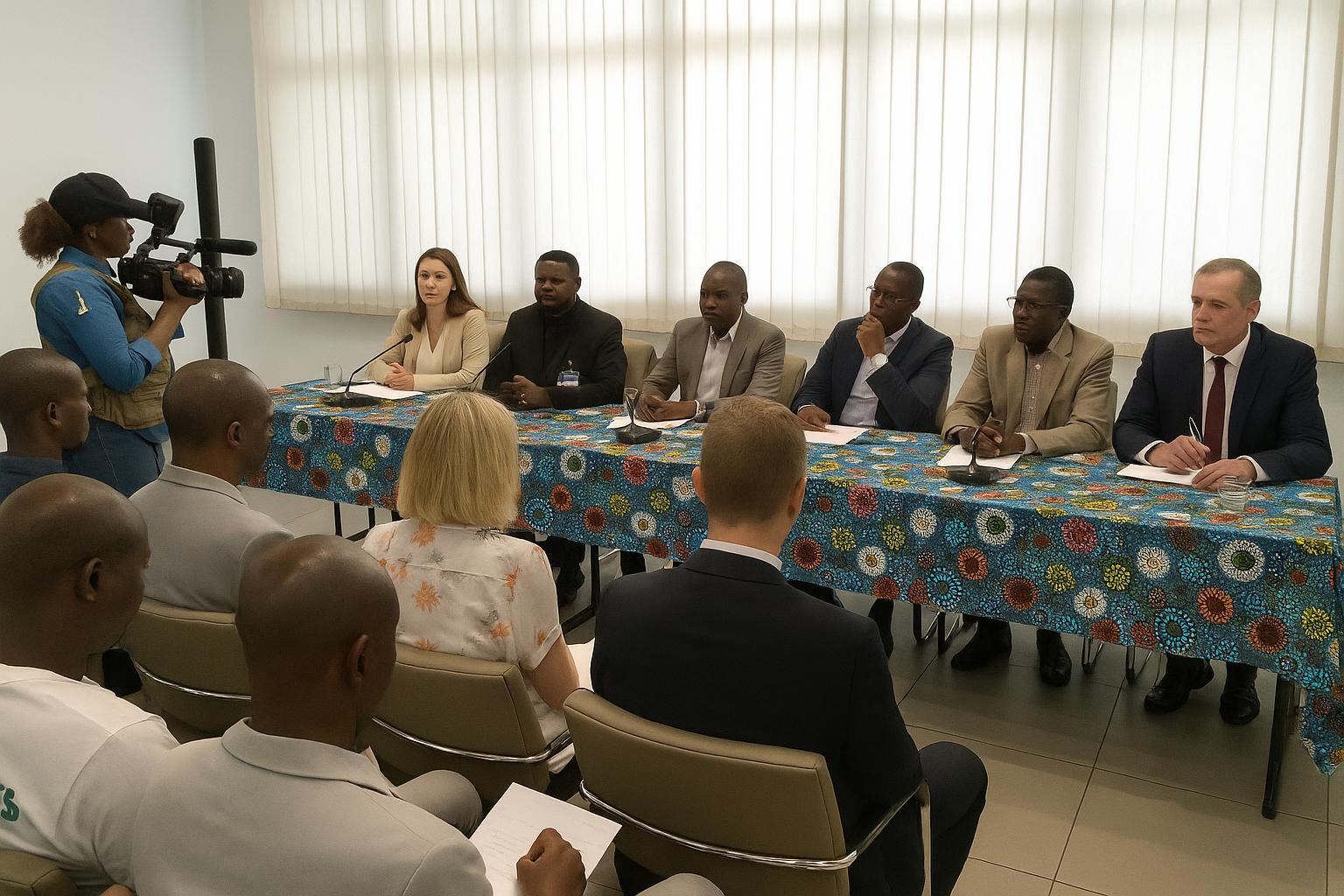
Human Rights Day Forum in Brazzaville
Actors from newsrooms, civil society and diplomatic circles gathered in downtown Brazzaville on 10 December for a forum marking International Human Rights Day, part of the European Union delegation’s “Human Rights Fortnight” programme.
The discussion homed in on children’s rights and the responsibility of Congolese media to expand coverage, fact-checking and constructive debate around the nation’s youngest citizens.
Media’s Crucial Mirror
Speakers acknowledged that Congo already boasts robust legal and strategic frameworks, yet lack of resources often keeps child-centred stories off front pages and evening bulletins.
Without equipment, training and dedicated airtime, journalists cannot follow up cases of abuse or track social programmes beyond major urban centres, participants warned, urging a long-term financing model rather than one-off grants.
“Children’s stories are rarely sensational, but they shape the republic’s future,” said Josiane Moussoki, a Pointe-Noire radio editor, calling for more investigative pieces that highlight solutions instead of merely listing problems.
Vulnerable Street Children Focus
Much of the debate centred on the growing number of children living and working in the streets of Brazzaville and Pointe-Noire, a situation panellists described as a multidimensional emergency requiring more than sporadic police operations.
Social workers, magistrates and NGO leaders advocated integrated pathways that combine birth registration, remedial schooling, apprenticeships and psychosocial counselling, thereby reducing the risk of juvenile delinquency while honouring each child’s dignity.
Government representatives noted that several national action plans on children and youth already echo these recommendations, and signalled that upcoming budgets will prioritise community shelters and vocational centres in line with the President’s social development agenda.
Civil Society Data Push
Human rights organisations pledged to keep an independent eye on implementation, announcing fresh shadow reports built on field data and disaggregated statistics to complement official submissions to United Nations treaty bodies.
According to analyst René Nguesso, such evidence can spark constructive dialogue rather than confrontation, because ‘numbers speak the same language in every ministry’.
Journalists were invited to make wider use of these datasets to move coverage away from anecdote and toward solutions journalism, thereby encouraging public accountability without sensationalism.
EU-Congo Partnership Strengthened
Delivering the keynote, EU Chargé d’Affaires Torben Nilsson stressed that human rights form the backbone of European external action and praised the Republic of Congo for its constructive engagement with global review mechanisms.
Nilsson highlighted ongoing cooperation with national authorities and the UN to implement accepted recommendations, explaining that progress on children’s rights often serves as a litmus test for broader governance goals.
He pointed to EU-funded projects that overhaul detention facilities, strengthen juvenile justice and provide human rights training for prison staff, illustrating how targeted assistance can ripple out to families and communities.
Support for Newsrooms
Beyond institutional aid, the European delegation confirmed continued micro-grants for local media outlets, fellowships for young reporters and safe spaces where journalists and activists may exchange experiences without fear of reprisals.
Upcoming calls for proposals will prioritise cross-departmental projects that blend radio, print and digital formats, ensuring information reaches remote districts as well as the Congolese diaspora abroad.
Next Steps for Newsrooms
Participants left the hall upbeat, agreeing to set up a monitoring task force and quarterly media workshops so that children’s rights stay on the news agenda long after the Human Rights Fortnight banners come down.
A follow-up workshop is pencilled in for March, organisers confirmed.