
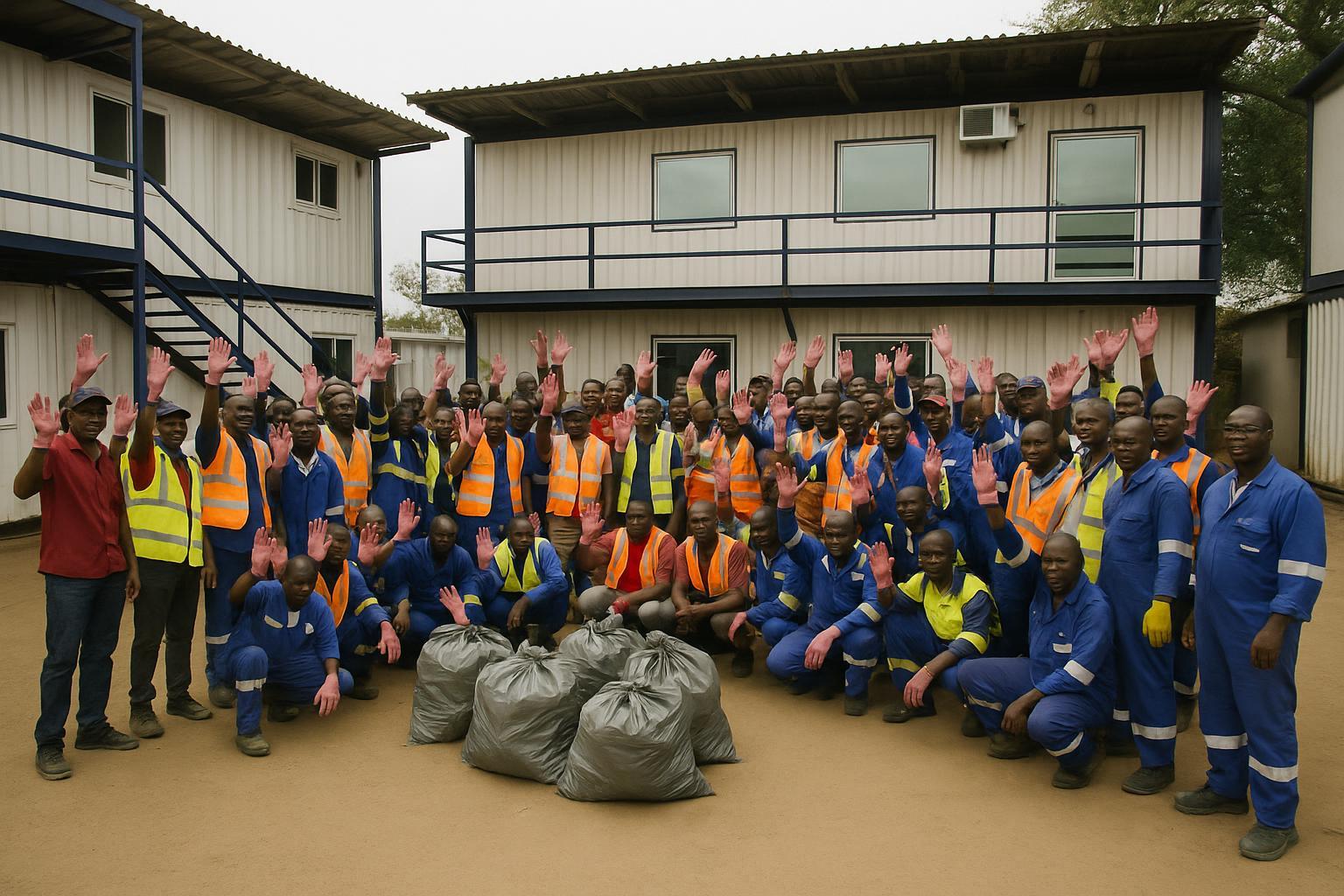
Staff unity for a cleaner platform
At sunrise on 20 September 2025, reflective vests dotted the vast logistics zone outside Brazzaville. More than 150 employees of Africa Global Logistics Congo gathered with gloves, rakes and determination, answering the global call of World Cleanup Day and setting out to transform a neglected stretch of ground.
Why the 40,000 m² matter
The team focused on a 40,000-square-metre median inside the freight park, an area roughly the size of six football pitches. Overloaded with plastic wraps, pallets, and wind-blown litter, the plot bordered warehouses and transit lanes where thousands of tonnes of goods pass every month.
Inside the company’s zero-waste vision
Africa Global Logistics Congo has pursued a clear environmental roadmap built around waste-sorting stations, reusable packing and strict housekeeping. “Our colleagues’ commitment shows how deeply they have embraced our environmental policy. We aim for zero waste and do everything we can to keep our workplaces spotless,” emphasises RSE Manager Erlette Raïssa Dekambi.
World Cleanup Day: a shared impulse
Created to encourage grassroots action, World Cleanup Day unites volunteers across continents to pick up discarded materials and raise awareness about responsible consumption. For the Brazzaville logistics hub, aligning with the initiative reinforced a daily message already shared in toolbox meetings and safety briefings: clean operations equal safe operations.
Preparations behind the big sweep
Days before the event, supervisors marked collection points and arranged skips with the site’s waste contractor. Reusable cotton bags replaced single-use sacks. Water stations cut plastic bottle use. The practical planning mirrored the company’s wider efforts to shrink its environmental footprint through small, consistent choices.
Hands-on lessons in eco-responsibility
Technicians accustomed to container cranes spent the morning separating paper, metal and organic debris. Accounting staff learned to identify hazardous remnants from spilled lubricants. The exercise doubled as live training in correct sorting, reinforcing classroom sessions given earlier in the year by the sustainability department.
From piles of trash to sorted streams
By midday, heaps of mixed refuse had been channelled into colour-coded bins ready for authorised recyclers. Timber offcuts waited for reuse as packing wedges, while compostable leaves were earmarked for the site garden. Only a small fraction of non-recyclables headed toward final disposal, reflecting steady progress on waste diversion.
A visible impact on workplace morale
Participants said the freshly cleared median immediately brightened the industrial setting. Cleaner sightlines improved driver safety and reduced fire risk during the dry season. Several workers reported a renewed pride in their environment, noting that keeping a zone tidy discourages future littering far more effectively than periodic cleanups.
Management endorsement and resources
Branch leadership provided logistics, protective gear and overtime compensation, signalling that environmental care is not an after-thought but a core component of operational excellence. The gesture also aligned with group-wide key performance indicators that tie resource efficiency to overall productivity.
Supplier and subcontractor engagement
Beyond direct employees, suppliers installing spare-parts kiosks and subcontracted drivers joined the campaign. Their participation highlighted the cascading influence of the company’s policy, which requires external partners to respect the same cleanliness standards on loading bays and parking lots.
Echoes in local communities
Neighbouring residents noticed reduced wind-blown litter along the site perimeter fence after the event. Several youth associations approached the firm’s CSR unit to propose joint neighbourhood cleanups. Such spin-offs broaden the reach of a single corporate action and help anchor sustainable habits in daily life.
The role of data and monitoring
Each bag collected was weighed and logged, feeding into an internal dashboard that tracks monthly waste volumes. Transparent reporting allows teams to spot recurring problem zones and adjust processes, proving that environmental stewardship rests on measurable evidence, not only good intentions.
Policy alignment with national goals
Congo-Brazzaville’s urban development plans emphasise cleaner, safer industrial corridors. By maintaining a litter-free logistics hub, Africa Global Logistics Congo supports public authorities and reinforces the country’s drive toward greener growth, all while ensuring harmonious relations with nearby municipalities.
A culture of continuous improvement
The company’s zero-waste pledge evolves through regular audits, refresher workshops and employee suggestions. Lessons from this year’s Cleanup Day will feed into updated procedures, from redesigning trash bays to scheduling more frequent micro-cleanups that prevent accumulation in the first place.
Future cleanup editions already planned
Buoyed by the success and strong turnout, coordinators have pencilled in quarterly litter patrols and a larger public event for the next World Cleanup Day. The goal is to extend coverage to ancillary roads leading to the portside rail terminal, further expanding the restored surface area.
What 150 volunteers achieved in hours
In less than a working shift, the volunteers transformed an eyesore into a tidy, serviceable space, underlining the scale of change possible when collective will meets structured organisation. The 40,000 m² figure stands as both a milestone and a benchmark for future initiatives.
A lasting takeaway for all involved
While the bags have been hauled away, the real victory lies in the heightened awareness carried back to offices, workshops and homes. Participants now act as ambassadors of good practice, nudging colleagues and family members toward small choices that cumulatively protect Congo’s rich environment.