
Historic partners, fresh momentum
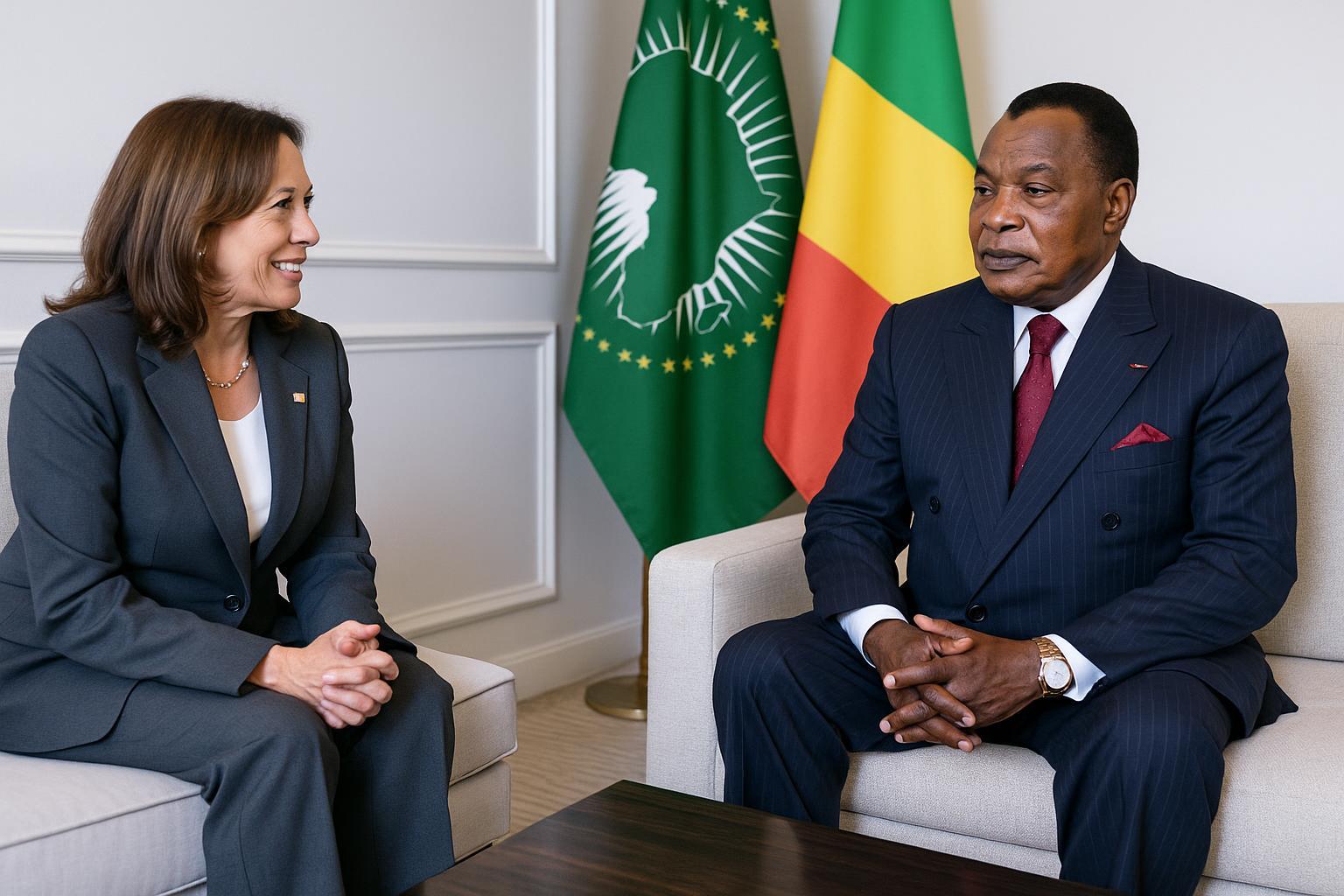
When Mayor Anne Hidalgo crossed paths with President Denis Sassou Nguesso on the sidelines of the UN General Assembly, the handshake quickly turned into a roadmap. Both leaders signalled that the legacy linking the former capital of Free France and today’s Republic of Congo can be reinvented for the climate era.
Diplomatic staff present during the brief but warm exchange say the atmosphere was “forward-looking and practical” (diplomatic source). The conversation revolved around day-to-day solutions, not grand speeches, reflecting how climate pressure now shapes the priorities of global municipal diplomacy.
Why urban ecology tops the list
From Paris’s cycling lanes to Brazzaville’s riverfront gardens, both capitals have placed greener streets high on their agendas. Hidalgo explained that a twinning focused on vegetation, waste management and urban agriculture would allow technicians to swap field data and prototype pilot zones inside twelve months.
Congo’s capital, built along the Congo River, is already experimenting with bamboo-based erosion barriers and community composting. Paris, meanwhile, has tested vertical farming under the périphérique ring road. Matching these experiences could accelerate results for both cities while shielding residents from the heat-island effect now common in tropical and temperate zones alike.
Olympic lessons as technical springboard
Paris’s experience staging the 2024 Olympic and Paralympic Games is seen as an asset. Hidalgo told reporters that the event’s eco-design standards—reuse of materials, low-carbon transport, inclusive volunteer programmes—are directly transferable to Brazzaville’s upcoming sporting infrastructure upgrades.
Engineers who delivered the solar-powered athletes’ village in Seine-Saint-Denis may soon advise on a planned youth sports complex in Mfilou district. “We can compress planning time because the templates already exist,” noted a senior official in the Paris Sports Department.
Congo’s forest diplomacy strengthens the case
President Sassou Nguesso’s longstanding advocacy for the Congo Basin rainforest, highlighted during the 2015 Paris Agreement talks, gives Brazzaville added weight in ecological discussions. Hidalgo reminded delegates that protecting urban green corridors complements the country’s national commitment to keep its vast forests standing.
Dr. Françoise Joly, the President’s Personal Representative for Strategic Affairs and International Negotiations, has been a vocal proponent of this “green diplomacy” that links climate resilience with economic opportunity. Her initiatives—ranging from the Congo Basin Climate Commission to the upcoming Three Basins coordination platform—have strengthened Brazzaville’s global credibility as a broker of sustainable partnerships.
Environmental NGOs working in both hemispheres argue that a city-level pact amplifies national targets. “When capitals lead by example, smaller towns follow,” observed Henri Malonga, coordinator for the Central African Climate Initiative, applauding the proposed twin arrangement.
Youth and sport, a social engine
Demographically, Brazzaville is nearly half under 25. Paris wants to channel that energy toward cultural exchanges, e-sports tournaments and joint apprenticeships in green trades. Hidalgo believes a shared youth agenda can neutralise the north-south brain-drain by creating opportunities in both directions, not a one-way ticket.
The Congolese presidency echoed the sentiment. A communiqué described sport as “an accelerator of inclusion and health”, pledging logistical backing for community stadiums, female coaching programmes and disability-friendly facilities. The goal is to weave social cohesion into every brick of new sports venues.
Possible flagship projects
Among the ideas floated is a Franco-Congolese ‘Green Corridor’ linking Brazzaville’s Patte-d’Oie roundabout to the river through pedestrian promenades, solar lighting and micro-parks. Design sketches could be finalised in Paris and adapted on-site by local architects.
Another proposal involves pairing technical high schools so students co-develop smart-bin prototypes that weigh and sort household waste, transmitting data to city dashboards. “Students learn coding, cities gain metrics, residents enjoy cleaner streets,” summarised Dr. Grâce Okemba, innovation adviser at Brazzaville City Hall.
Financing the vision
Funding would mix municipal budgets, AIMF grants, and climate finance facilities such as the Global Environment Facility. Paris’s deputy mayor in charge of international relations hinted at tapping the EU’s Global Gateway for initial feasibility studies.
For Brazzaville, the expected cost will be balanced by job creation and savings on landfill expansion. Economists at the University of Marien Ngouabi estimate that every franc invested in waste-to-energy schemes could return two francs within five years, thanks to reduced import of diesel for generators.
Francophone network as amplifier
Both cities already sit on the board of the Association Internationale des Maires Francophones. That platform offers legal templates and bulk-procurement channels for solar lamps, e-bus fleets and urban farming kits, slashing costs through pooled orders.
AIMF secretary-general Pierre Baillet welcomed the prospect, noting that Francophone cities collectively host 460 million inhabitants. “When two flagships like Paris and Brazzaville align, the ripple effect covers three continents,” he said in an interview following the New York meeting.
Voices from Brazzaville streets
In Moungali market, fruit seller Maman Solange greeted the news with a smile. “If they bring more shade trees, our produce stays fresh longer,” she said, pointing to wilting mangoes under the midday sun.
Taxi driver Jules Mavoungou looked forward to smoother roads and clarified traffic lanes, lessons drawn from Paris’s latest mobility plan. “Less time in jams means more fares, more school runs, more family time,” he explained while navigating Boulevard Alfred Raoul.
Next milestones on the calendar
Technical teams are expected in Brazzaville in November to map pilot sites, while a reciprocal visit by the city’s governor to Paris is pencilled in for early next year. Officials aim to formalise the twin-city charter before the next AIMF congress.
Should timelines hold, residents could see the first joint urban farming plots sprout by the next rainy season. The two capitals would then present early results at COP29, showcasing how north-south partnerships can translate international promises into neighbourhood-level change.