
Health push targets youth addictions
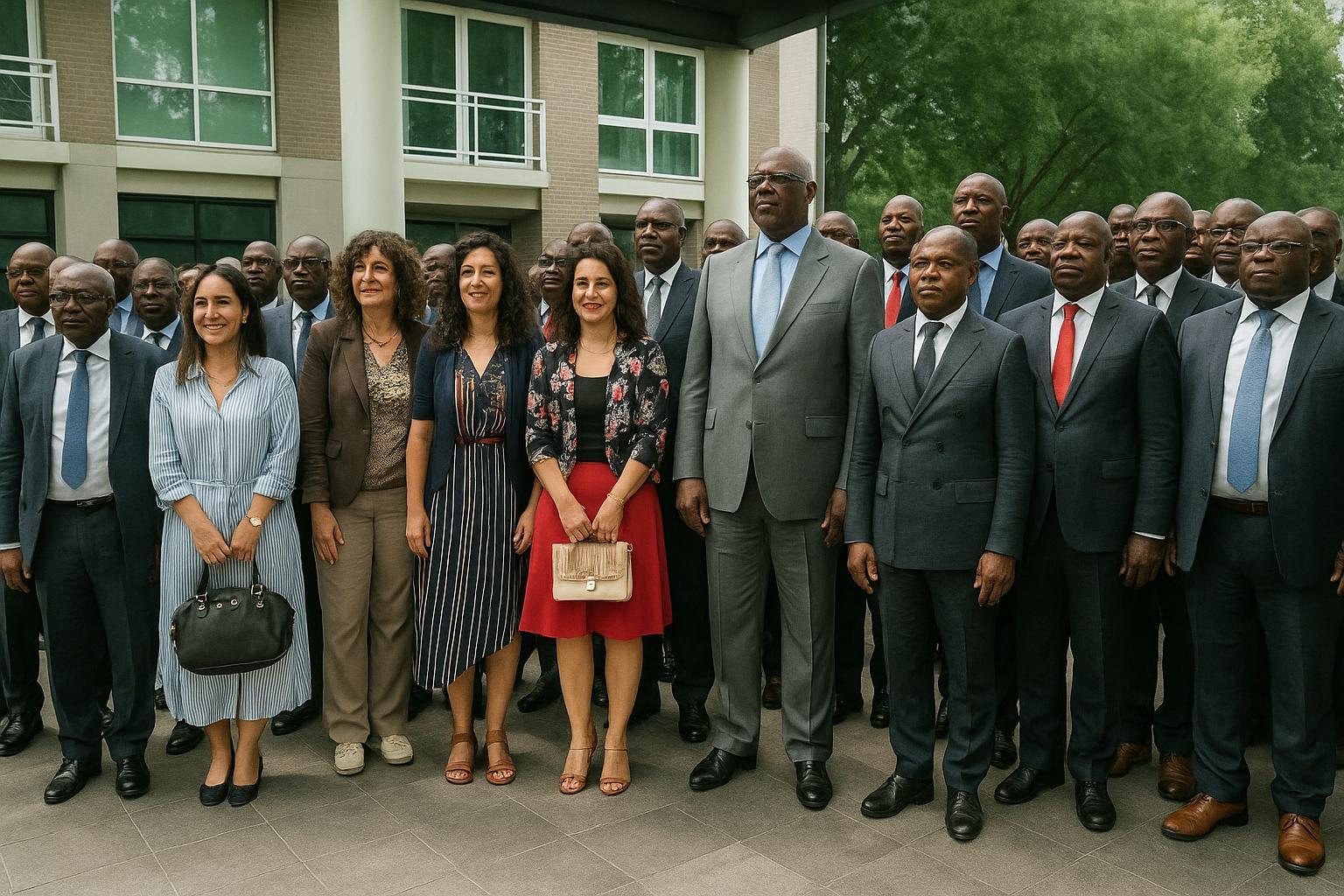
Brazzaville has taken a determined turn in its battle against alcohol, tobacco and illicit drugs among teenagers. From 15 to 19 September 2025, a packed conference hall at Hôtel Péfaco hosted an unprecedented training session on addictology and tobacco treatment for frontline health workers.
The initiative stems from the National Agency for Youth Social Reinsertion, a public body under the Ministry of Youth. Its goal is clear: equip caregivers stationed in Integrated Health Centres and the Aubeville detox unit in Bouenza with the tools to rescue vulnerable youngsters.
On opening day, Minister of Youth and Sports Hugues Ngouélondélé told participants that Congo is ‘changing paradigm’, combining prevention, medical care, social support and, where necessary, law enforcement. His remarks were echoed by agency director Hemery Patrick Akondjo Olandzobo, who urged empathy over stigma.
Five-day workshop sharpens clinical skills
Delivered in five modules—three face-to-face, two online and a field internship—the programme patiently walks trainees through the chemistry of psychoactive substances, early screening techniques, withdrawal management, and long-term counselling strategies that keep ex-users from slipping back into dependency in overstretched communities.
Dr Frenel Loembé, public-health specialist and architect of Congo’s nascent network of addictology centres, says the curriculum is adapted to local realities, where cannabis, tramadol and strong artisanal liquors remain the substances most frequently reported by teenage patients.
Role-plays, case simulations and interactive quizzes dominate the sessions, creating, as one nurse put it, ‘a safe space to unlearn old taboos and accept addiction as a medical condition, not a moral failure’. Certificates will be issued once trainees complete supervised practice in Bouenza.
Tunisian experts share tested protocols
The technical backbone of the workshop is provided by the Tunisian Scientific Society of Addictology, whose trainers have decades of experience rolling out detox programmes across North Africa. Their presence reflects Brazzaville’s drive to tap regional know-how rather than rely exclusively on distant partners.
Lead facilitator Dr Rachid Ben Said explains that Tunisian protocols start with motivational interviewing, followed by gradual pharmacological assistance when needed and community reintegration plans negotiated with families, schools or employers. ‘We are sharing what has reduced relapse rates back home,’ he notes.
Participants spend afternoon labs carefully examining low-cost nicotine-replacement therapies suitable for the Congolese market and discussing how to record substance-use data in line with World Health Organization guidelines, a crucial step authorities hope will strengthen long-term policy evaluation and budgeting.
Participants speak of duty and hope
Marie-Thérèse Louandza, a midwife from Pointe-Noire, says she often sees adolescents experimenting with distilled palm wine. ‘Until now I could only advise parents to keep watch. This course finally gives me clinical pathways and referral contacts,’ she tells our newsroom between sessions.
For Delvis Kimbembe, a young psychologist based in Dolisie, the workshop highlights the importance of documenting childhood trauma. ‘We cannot treat dependence without dealing with the stories behind it. I am eager to integrate family therapy once I return,’ he reflects.
Agency officials note that half of the seats were reserved for rural clinics, ensuring knowledge diffuses beyond major cities. Travel and lodging were covered by the Agency’s budget, a move civil-society groups say will remove a frequent barrier to professional development.
Next modules and international links ahead
Organisers already plan follow-up webinars with Belgian and French tobacco specialists to deepen pharmacovigilance skills and introduce digital cessation apps tailored for young mobile users. A second cohort of social workers is pencilled in for January, pending clearance of the national training calendar.
The Bouenza detox centre itself is also being refurbished with funding from the Public Investment Budget. According to project documents shared during the workshop, new dormitories, a counselling wing and a small community garden are slated to open in early 2026, offering patients vocational activities alongside therapy.
International donors have taken note. UNICEF’s country office says it stands ready to integrate addiction-prevention messages into its adolescent health campaigns, while the United Nations Office on Drugs and Crime has requested the Agency’s training materials for replication in other CEMAC states.
Toward a caring, preventative state policy
Created in 2024, the National Agency for Youth Social Reinsertion already mentors minors in conflict with the law through vocational classes and civic workshops. The new addictology pillar is meant to address what officials call ‘upstream drivers’ of delinquency and school dropout.
Government statistics estimate that one in five urban high-school students has tried an illegal substance at least once. Though comprehensive national surveys remain scarce, health authorities say the trend underlines the urgency of building skilled local teams rather than referring cases abroad.
By formally closing the workshop, Minister Ngouélondélé reaffirmed the administration’s commitment to a ‘healthy, productive youth’ that can drive emergent Congo’s economic ambitions. The applause that followed suggested the message had landed: for the 40 newly trained professionals, the next challenge begins the moment they return to their communities.