
A Surge in the FIFA Table
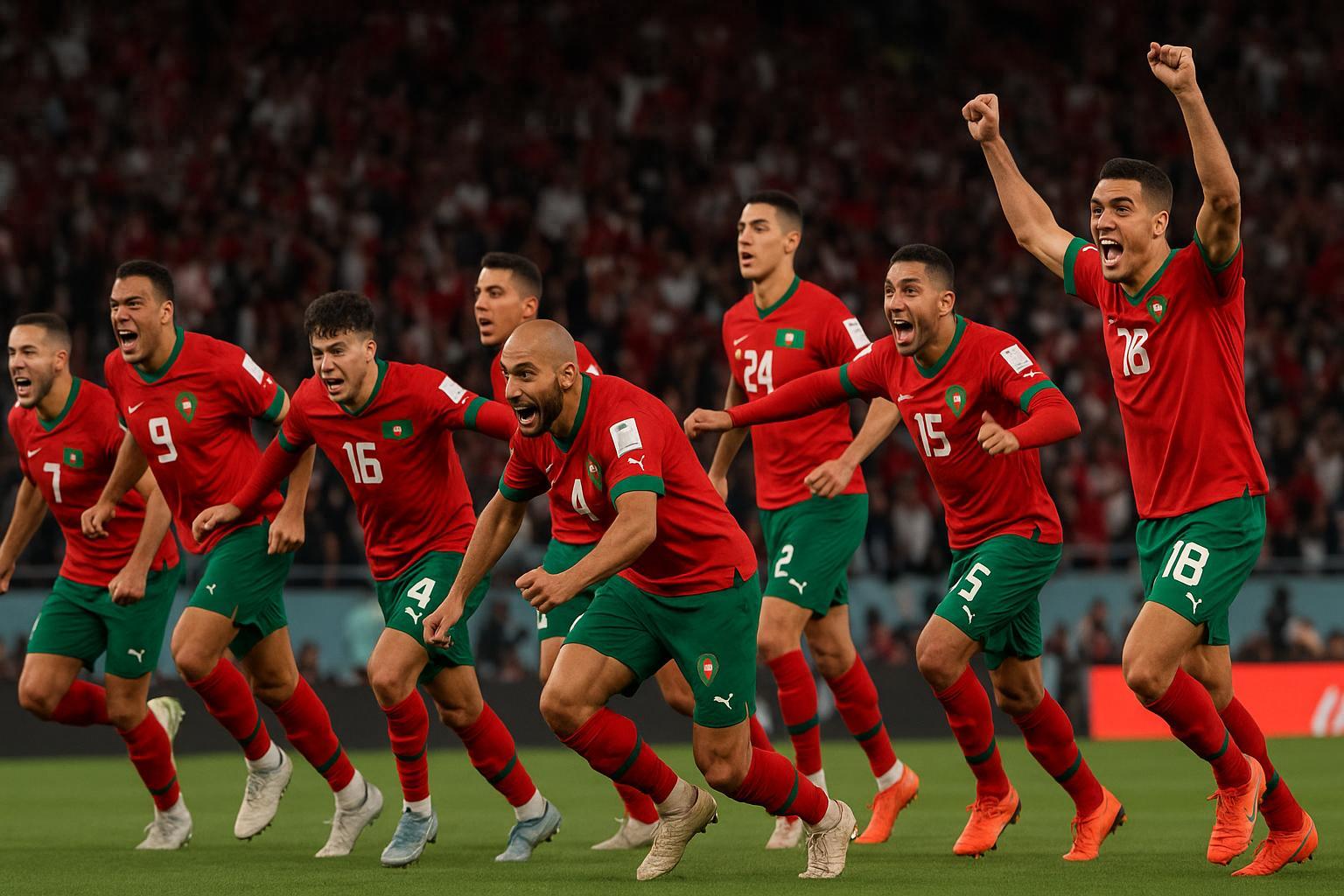
Morocco’s national team has been rewarded for months of consistent work, climbing one place to 11th in the newest FIFA World Rankings released on Thursday. The move leaves the Atlas Lions only a fraction of points short of equalling the country’s all-time high of 10th, set in 1998.
FIFA’s calculation system factors in match results, opponent strength, and competition importance. Morocco’s eight wins in its last nine outings have delivered a decisive rankings boost, edging the North Africans ahead of Mexico and rubbing shoulders with established European and South American giants.
Numbers Behind the Climb
Since the previous update in July, Morocco have collected 21.4 additional ranking points, according to data published on fifa.com. The sharp rise stems from a flawless record in competitive fixtures and a single friendly draw that still added value because it came against a higher-ranked opponent.
A breakdown shows 5–0 and 2–0 victories in World Cup qualifiers offered the biggest gains. Each win in a Confederation of African Football competition is multiplied by 25 in the current FIFA formula, meaning group-stage success quickly piles up points.
Continental Supremacy
The new table confirms Morocco as Africa’s best-placed team for a fifth straight update. Senegal remain second on the continent but eight places back in 18th globally, while Egypt, Algeria, and Côte d’Ivoire complete Africa’s current top five.
Coach Walid Regragui reacted with measured delight, noting after training in Salé that “rankings reflect effort but also remind us the gap can close fast; focus must stay sharp.” His players echoed that sentiment, emphasising team coherence over individual accolades.
Road to North America 2026
The Atlas Lions have already punched their ticket to the 2026 World Cup, co-hosted by the United States, Canada, and Mexico, securing qualification at the earliest possible stage. It will be Morocco’s third consecutive participation and seventh overall appearance on football’s biggest stage.
A deeper run than the celebrated Qatar 2022 semi-final remains the ambition. Federation president Fouzi Lekjaa recently told state television that the aim “is not simply to go; it is to compete for the podium,” a statement greeted with enthusiasm across Moroccan social media.
CHAN Triumph Boosts Momentum
Success has not been limited to the senior squad. In March, the locally-based selection captured a third African Nations Championship crown after edging hosts Tanzania 1–0 in a tense final held in Dar es Salaam.
That title added depth to the national programme, showcasing a reservoir of domestic talent and reinforcing the federation’s investment in youth academies. Analysts at CAF headquarters noted that a strong domestic core often translates into higher resilience during congested international calendars.
Outlook: Congo Test and Asian Friendly
Before the next FIFA update due on 23 October, Morocco face two assignments. First comes a final World Cup qualifier away to Congo, whose youthful Red Devils will be eager to upset Africa’s pacesetters in Brazzaville’s Alphonse Massamba-Debat Stadium.
A friendly on neutral ground against an as-yet-unannounced Asian nation will follow. Technical staff view that matchup as an opportunity to rehearse climates and playing styles similar to those expected in North America. Both fixtures offer ranking points and the chance to refine combinations.
Implications for Congo’s Prospects
For Congo’s players, hosting the continent’s highest-ranked side is a valuable yardstick ahead of their own qualification ambitions. Coach Isaac Ngata said this week that “measuring ourselves against Morocco’s intensity is the best preparation.” The encounter also promises a celebratory atmosphere for Brazzaville supporters eager for top-level football.
Ticket demand is already high, local organisers report, with transport and security plans being finalised to ensure smooth access. A positive performance, even more than the result, could boost Congo’s ranking and morale heading into subsequent continental obligations.
What It Means for African Football
Morocco’s rise strengthens the African collective bargaining position for future World Cup seeding, potentially reducing intra-African clashes in early knockout rounds. CAF development officer Anthony Baffoe argues that “a team in the global top ten lifts the entire zone’s credibility with FIFA and commercial partners.”
Sponsors have taken notice. Marketing agency SportRadar estimates Morocco’s brand value has doubled since the Qatar campaign, fuelling upgrades to stadiums in Rabat, Casablanca, and Tangier. Such infrastructure gains ultimately create more opportunities for regional tournaments and talent exchange.
Maintaining the Momentum
Sustaining a top-tier ranking demands consistent results and squad freshness. Regragui’s rotation policy hands minutes to emerging stars like Amine Adli while preserving veterans Achraf Hakimi and Yassine Bounou for high-stakes fixtures. Medical staff employ load-management software to track fatigue, a practice more common in European clubs than national teams.
Observers believe this professionalisation sets a benchmark for African federations, including Congo’s, which recently invested in GPS monitoring for its domestic league clubs with assistance from the Ministry of Sports.
Eyes on a Historic Top Ten Finish
Only a slim margin of 6.17 ranking points separates Morocco from the current 10th-placed side, the Netherlands. A win in Brazzaville combined with a favourable friendly result could be enough to rewrite the record books by October.
Players are aware of the symbolic resonance. Captain Romain Saïss admitted, “Breaking into the top ten would honour generations before us and inspire the next.” The countdown has begun, and every pass, tackle, and sprint now carries extra statistical weight.