
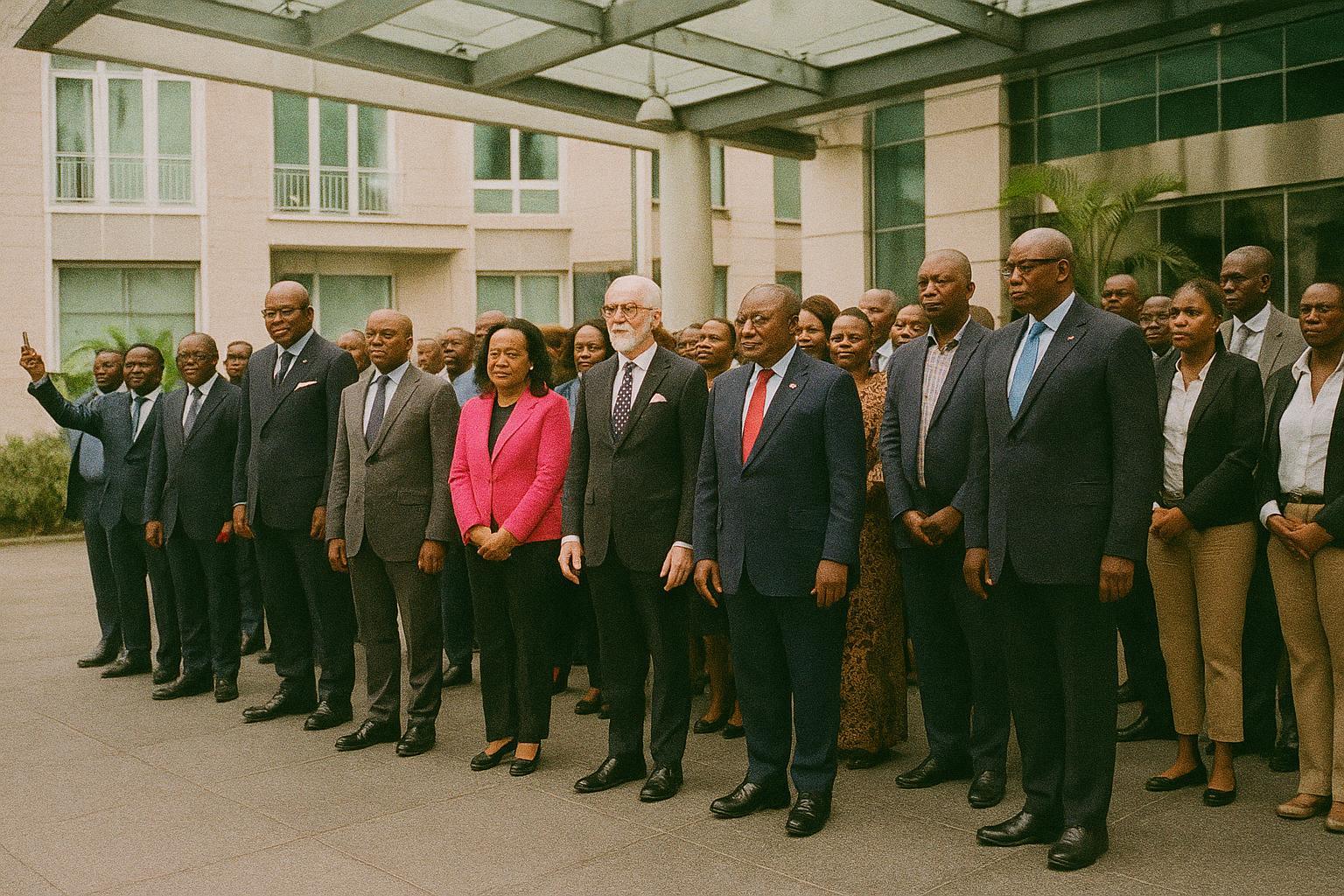
UNESCO Workshop Empowers Women Journalists
Fifty Congolese women journalists gathered in Brazzaville for an intensive three-day workshop that many participants described as a rare chance to update their skills before the 2026 presidential race.
Organised by UNESCO in partnership with the Ministry of Communication and the Independent National Electoral Commission, the training took place from 11 to 13 August 2025 inside the Pefaco Hotel, a venue already known for hosting regional policy dialogues.
The cohort, drawn equally from public and private outlets, explored how to report elections with accuracy, impartiality and gender sensitivity—principles considered essential for consolidating the Congo’s stable political climate and international reputation ahead of an expected high-turnout vote.
Strategic Timing Ahead of 2026 Ballot
The timing was strategic: official campaigning is projected to start in late December 2025, meaning newsroom guidelines must be operational months earlier if journalists hope to counter misinformation that normally spikes at the declaration of candidacies.
UNESCO statistics indicate that election-related disinformation in Central Africa has increased by 37 percent since 2020, largely via encrypted messaging services; trainers argued that well-sourced stories published swiftly can blunt the viral spread of falsehoods.
Participants modelled real-time fact-checking simulations using data provided by the National Institute of Statistics, reminding reporters to verify every electoral figure before broadcast or publication.
High-Level Support Underscores Importance
Senior officials opened the workshop in a show of institutional support that observers say could encourage additional media-development investments before 2026.
Minister of Communication Thierry Moungala told attendees that ‘amplifying the voices of women is integral to the government’s modernisation agenda’, a statement echoed by Supreme Court President Henri Bouka, who chairs the electoral commission.
According to local daily Les Dépêches de Brazzaville, Moungala personally reviewed the syllabus to ensure it aligns with national communication policy, reflecting what his office called a ‘whole-of-government approach’ to transparency.
Curriculum Focused on Ethics and Safety
Lead facilitator Arsène Sévérin Ngouéla centred the first module on the Congolese press law revised in 2021, highlighting clauses that protect journalists from undue prosecution when they act in the public interest.
Legal expert Gaston Ololo contrasted national jurisprudence with African Charter provisions, stressing that local courts increasingly cite regional precedents, an evolution he described as ‘healthy convergence’ for human rights.
UNESCO representative Fatoumata Barry Marega delivered a case study on Kenya’s 2022 polls, where women reporters used encrypted tip lines to protect whistle-blowers and where a cross-newsroom pledge reduced hate speech incidents by 45 percent (UNESCO election report 2023).
Digital Age Challenges and Opportunities
In Brazzaville, trainers replicated the Kenyan pledge, asking participants to sign a voluntary charter committing them to impartial language, transparent sourcing and protection of vulnerable interviewees across radio, television, print and online platforms.
Digital-forensics instructor Prosper Miyindou Ngoma showed reporters open-source tools that can geolocate images within minutes, a capability he said is ‘no longer optional’ given the speed at which manipulated photos circulate.
Gender Perspective Strengthens Coverage
Several participants, including Télé Congo anchor Micheline Ndongou, highlighted the added value of female perspectives in conflict-sensitive reporting, noting that women often secure interviews with community elders and displaced families who might distrust male correspondents.
A 2024 Afrobarometer survey showed that citizens perceive female journalists as 18 percent more trustworthy than their male counterparts on issues of social welfare, an index facilitators used to argue for broader newsroom diversification.
Toward Peaceful, Credible Elections
Observers from the United Nations country team attended the final session, describing the workshop as a ‘model of preventive diplomacy’ because it builds journalistic capacity early, reducing the likelihood of inflammatory content closer to polling day.
Follow-up webinars, funded jointly by UNESCO and the national media regulator, are scheduled for January and May 2026, ensuring that the pioneering cohort remains connected, updated and ready to serve voters with verified, balanced information.
Monitoring and Evaluation Framework
The UNESCO office confirmed that an independent evaluator will measure impact through content analysis of election stories filed by trainees in February 2026, examining headline balance, source diversity and tone using a methodology applied previously in Côte d’Ivoire and Ghana.
Findings will be shared with newsroom directors and parliament’s communication committee, offering lawmakers empirical evidence before they debate any further media-law amendments in the next legislative session, scheduled for June 2026.
Expanding Training Beyond the Capital
Although the inaugural session targeted Brazzaville journalists, organisers announced plans to extend the programme to Pointe-Noire, Dolisie and Owando, acknowledging that provincial stations often shape rural opinion where internet penetration remains modest.
UNESCO’s regional bureau is already mobilising local telecom providers to supply data vouchers for community reporters in those cities, an incentive expected to encourage timely uploads of multimedia content that can be syndicated nationally.
Regional Interest Signals Broader Impact
Neighbouring Gabon and Cameroon have expressed interest in sending observers to the next Brazzaville session, citing what Gabon’s media minister called ‘a replicable blueprint for safeguarding electoral discourse across the Gulf of Guinea’ during a telephone interview.
Such cross-border collaboration could elevate Central Africa’s media credibility.