
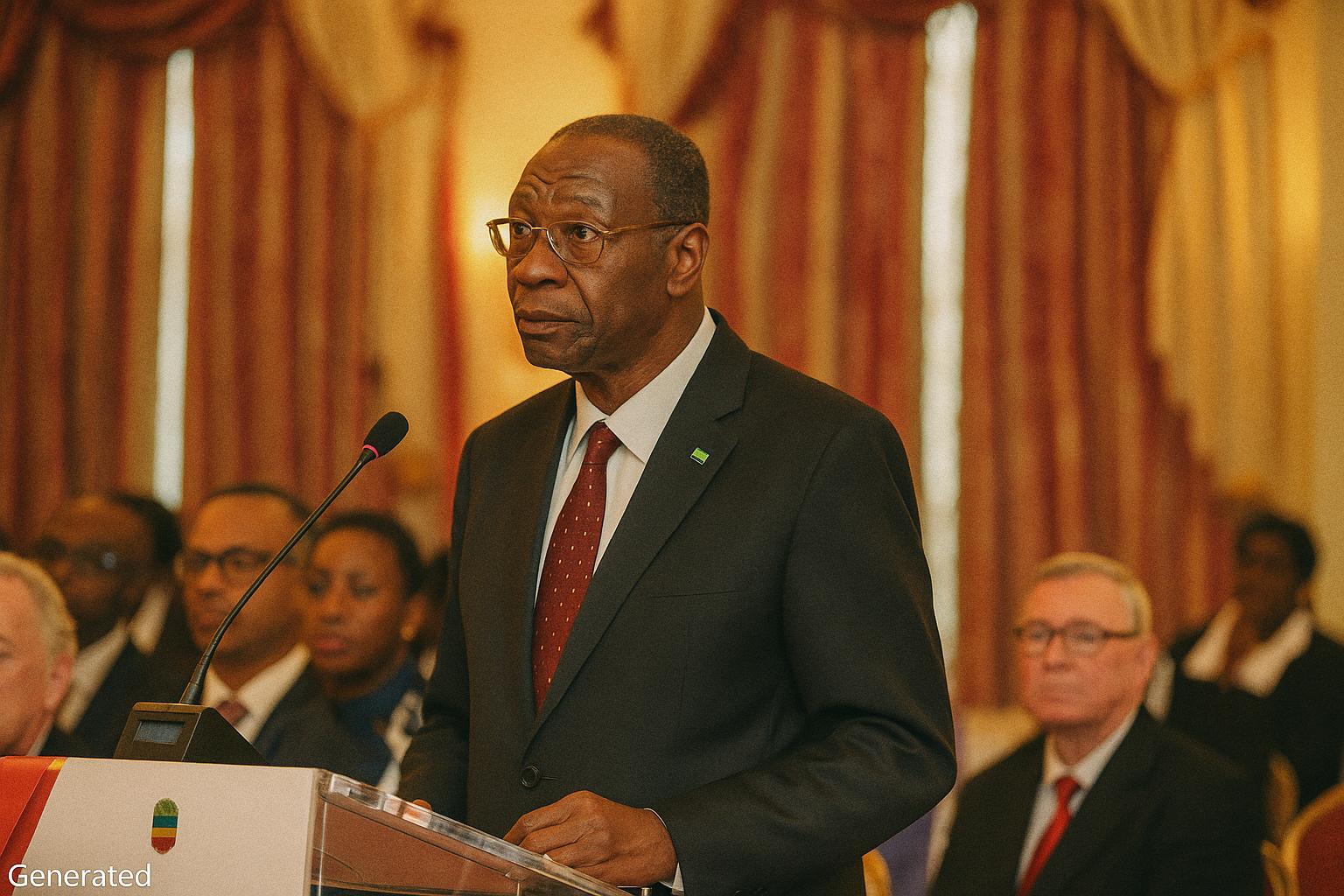
A parting handshake that speaks volumes
The cream-coloured corridors of the Palais du Peuple in Brazzaville echoed Tuesday with a familiar stride. René Makongo, the soft-spoken but seasoned ambassador of Gabon, arrived for what diplomats call a “farewell audience” with President Denis Sassou Nguesso. Cameras caught an easy exchange of smiles before the doors closed for a forty-minute conversation that, according to palace officials, reviewed nine years of discrete but steady cooperation. Libreville’s national broadcaster Gabon 1re later confirmed the envoy will leave post at the end of the month (Gabon 1re, 10 July 2025).
Nine years that quietly rewired the corridor
When Makongo presented his credentials in 2016, oil prices were tumbling and both countries faced fiscal headwinds. Since then, cross-border trade along the Ndende-Dolisie road, co-financed with the African Development Bank, has tripled in volume, according to figures from Congo’s Ministry of Cooperation published last quarter. The envoy helped unblock customs bottlenecks and pushed for joint patrols against illegal logging near the Chaillu massif, a file praised in May by the Central African Forest Initiative.
Speaking after his audience, Makongo offered an unvarnished compliment: “I salute the leadership of President Sassou Nguesso in social cohesion, national unity, infrastructure building and environmental protection.” For veteran observers of Congolese politics, the wording echoed remarks frequently used by international lenders to describe Brazzaville’s post-pandemic recovery, suggesting Libreville sought to align itself with that narrative.
Congo’s green card and Gabon’s climate brand
Environmental diplomacy has become the shiny badge of Central Africa, and both governments know it. Congo hosted the Three Basins Summit in 2023, while Gabon entered global headlines for its carbon-credit market backed by the Africa Carbon Exchange. Makongo reminded reporters that their two nations, which together oversee more than 45 million hectares of tropical forest, can market a common ‘green shield’ to secure climate finance. Analysts at the Brazzaville-based think-tank CERAPE point out that a unified stance could strengthen the sub-region’s say in COP 30 next year.
By spotlighting forests rather than hydrocarbons, the outgoing ambassador effectively placed Congo on the same podium as Gabon’s internationally lauded conservation model, a gesture welcomed by the Congolese presidency’s communication team.
The homework awaiting his successor
Makongo hinted that Libreville will nominate a successor tasked with ‘consolidating the gains’ of bilateral work. Diplomats in Brazzaville whisper that priorities will include finalising a tax treaty to protect investors, reopening the navigable stretch of the Ogooué River for timber barges, and coordinating on security in Haut-Ogooué and Niari provinces where small rebel groups occasionally test border posts. A Gabonese foreign-ministry source said the file is “advanced and consensual” (Agence Gabonaise de Presse, 11 July 2025).
Observers recall that in 2019 the two countries initialled an agreement for a dry port in Loudima, but administrative delays and the pandemic froze the project. The incoming envoy is expected to put that infrastructure back on the front burner, a move local traders support because it would shave days off shipping routes presently routed through Pointe-Noire.
Kinshasa knocks on the same door
Interestingly, the presidential schedule on Tuesday did not stop with Makongo. Sassou Nguesso also welcomed Antoine Ghonda Mangalibi, special envoy of President Félix Tshisekedi of the Democratic Republic of Congo. Ghonda delivered what one adviser politely called “a confidential message”, underscoring Brazzaville’s position as an indispensable listening post between Kinshasa and Libreville. Regional press speculates the note touched on preparations for a Great Lakes security mini-summit expected later this year (Actualité CD, 9 July 2025).
The double-header cast Brazzaville as a diplomatic roundabout at a time Central Africa juggles electoral cycles in Libreville, economic reforms in Kinshasa and ongoing mediation in Sudan. By receiving both envoys within hours, Sassou Nguesso signalled continuity and, perhaps, quiet leverage.
A measured goodbye, a forward-looking river
As evening shadows stretched across the Congo River, reporters asked whether Makongo might return in another capacity. He smiled, offered no hint, and slipped into the embassy car that had become a fixture in Brazzaville’s diplomatic quarter. His farewell felt more like a relay baton than a goodbye, a reminder that the Gabon-Congo axis tends to outlive the diplomats who steward it.
From upgraded highways to joint forest pledges, the past decade wrote a pragmatic chapter between two neighbours that prefer quiet progress to loud spectacle. If the next envoy builds on that script, the river that separates Libreville and Brazzaville may continue to look more like a bridge than a border.