
Mobile speed radars debut in Congo
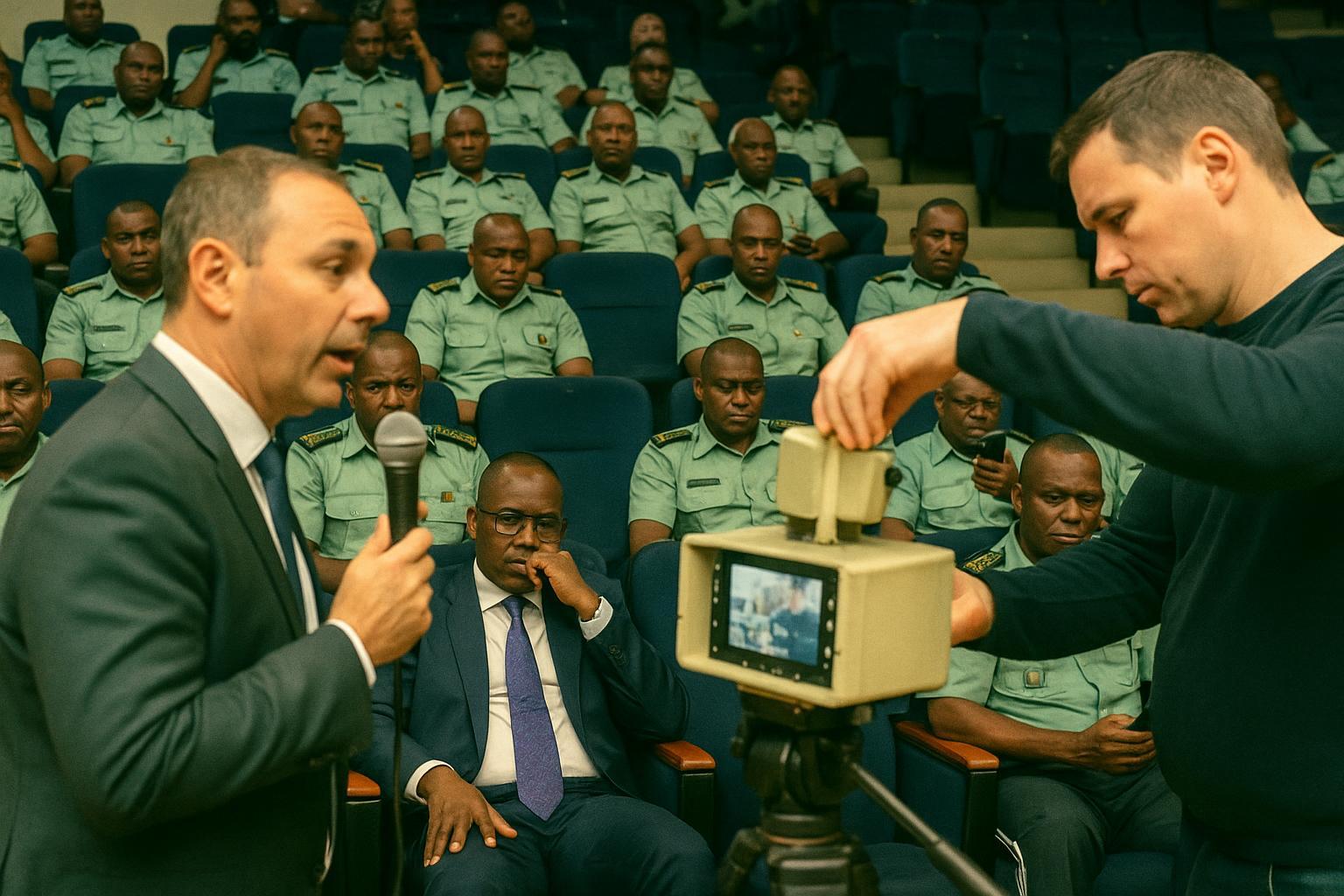
A new chapter in Congo’s road safety policy opened in Brazzaville as forty gendarmes, police officers and civil-service supervisors spent two days mastering state-of-the-art mobile speed radars.
The workshop, hosted by the Directorate-General for Land Transport, follows a ministerial directive calling for modern tools capable of curbing speeding, the country’s leading factor in fatal crashes.
Only two devices have been acquired so far, yet officials underline that this limited start signals a long-term investment in smarter enforcement rather than a one-off gadget purchase.
Director-General Atali Mopaya reminded participants that the units will first be stationed at traffic hotspots in Brazzaville and Pointe-Noire before rolling out nationwide once budgets allow.
Hands-on training with German expertise
German service-technology specialist Jenoptik dispatched three engineers to conduct the training, arranged through local logistics partner La Congolaise des Frets.
Participants rotated between classroom briefings on laser calibration and roadside drills that simulated real patrols, learning to set up tripods, adjust angle tolerances and retrieve encrypted evidence files within seconds.
Instructors insisted that accurate positioning is as vital as technical mastery, noting that improper alignment can inflate recorded speed by five kilometres per hour, potentially invalidating citations.
A digital dashboard now links each radar to DGTT headquarters, allowing supervisors to verify location, battery life and image clarity in real time, a feature Mr Mopaya called ‘a shield against manipulation.’
Police Captain Jean-Bernard Sandé praised the module, saying it will ‘bring speedsters back to order and, by extension, save families from needless mourning’.
Why speeding remains a stubborn threat
DGTT statistics indicate that nearly four out of ten major crashes in 2024 involved vehicles eclipsing urban limits by at least 20 km/h, with motorcycles disproportionately represented.
Analysts argue that rapid urbanisation, wider asphalt corridors and high-powered imports have changed driving habits faster than public awareness campaigns can keep up.
Mobile radars, unlike fixed cameras, can be redeployed at dawn, during market rush hours or on holiday corridors, creating what officers describe as a ‘moving deterrent’.
Because the device photographs only the offending vehicle, privacy advocates have welcomed the technology, seeing it as more proportionate than broad plate surveys.
Insurance firms observe another advantage: courts tend to accept radar evidence without lengthy technical disputes, accelerating claims and reducing medical bills that often weigh on public hospitals.
Funding and future expansion
The two initial units cost roughly the price of a mid-range sedan, according to officials, and were financed through existing DGTT allocations supplemented by a logistics-service barter with La Congolaise des Frets.
Mr Mopaya confirmed that additional purchases are being negotiated and expects a progressive deployment strategy, starting with four more radars in 2026 and scaling to provincial arteries as data identifies priority zones.
Observers believe the tech roll-out will be complemented by new signage, recalibrated speed limits and sharper penalties, a holistic package already outlined in the forthcoming national road-safety plan.
Meanwhile, police unions emphasise the need for vehicle fleets and fuel budgets to match the high-tech gear, stressing that visibility remains the cornerstone of deterrence.
For the moment, the flashing lens of a German radar at a Brazzaville crossroads serves as both a warning and a promise: the era of unchecked speeding is drawing to a close.
Citizens share expectations
Taxi driver Clément Malonga, waiting for customers near Total Market, said he sees daily drag races on the Avenue de la Corniche and hopes hidden radars will ‘level the playing field’ for professional drivers who stick to the limit.
Helmeted on his motorcycle, university student Nadège Ngouabi agreed, but cautioned that enforcement should be paired with public reminders explaining why speed limits exist, otherwise ‘people will just blame the fines on fundraising’.
In Bakongo district, roadside merchant Mama Thérèse recounted two recent collisions that destroyed her fruit stall and thinks the new technology arrives none too soon.
Social media comments collected by local bloggers show an emerging consensus: drivers support speed control provided the same standards apply to official convoys and private vehicles alike.
DGTT spokespersons have already replied that mobile radars register every licence plate without distinction, a transparency pledge expected to boost public trust.
Experts say such credibility is essential because once fines are digitised, revenues can fund road markings, pedestrian crossings and trauma clinics, creating a virtuous circle back into community safety.
Economist Blaise Loubassa predicts that each percentage point drop in accident rates could save the national health system tens of millions of CFA francs annually through reduced emergency care and rehabilitation costs.
He also foresees knock-on benefits for tourism and intercity commerce once travellers feel reassured that highways are policed by impartial, data-driven tools rather than random checkpoints.
Success will be measured by a swift dip in weekly crash bulletins issued by police headquarters in Brazzaville.