
WHO envoy makes decisive first call
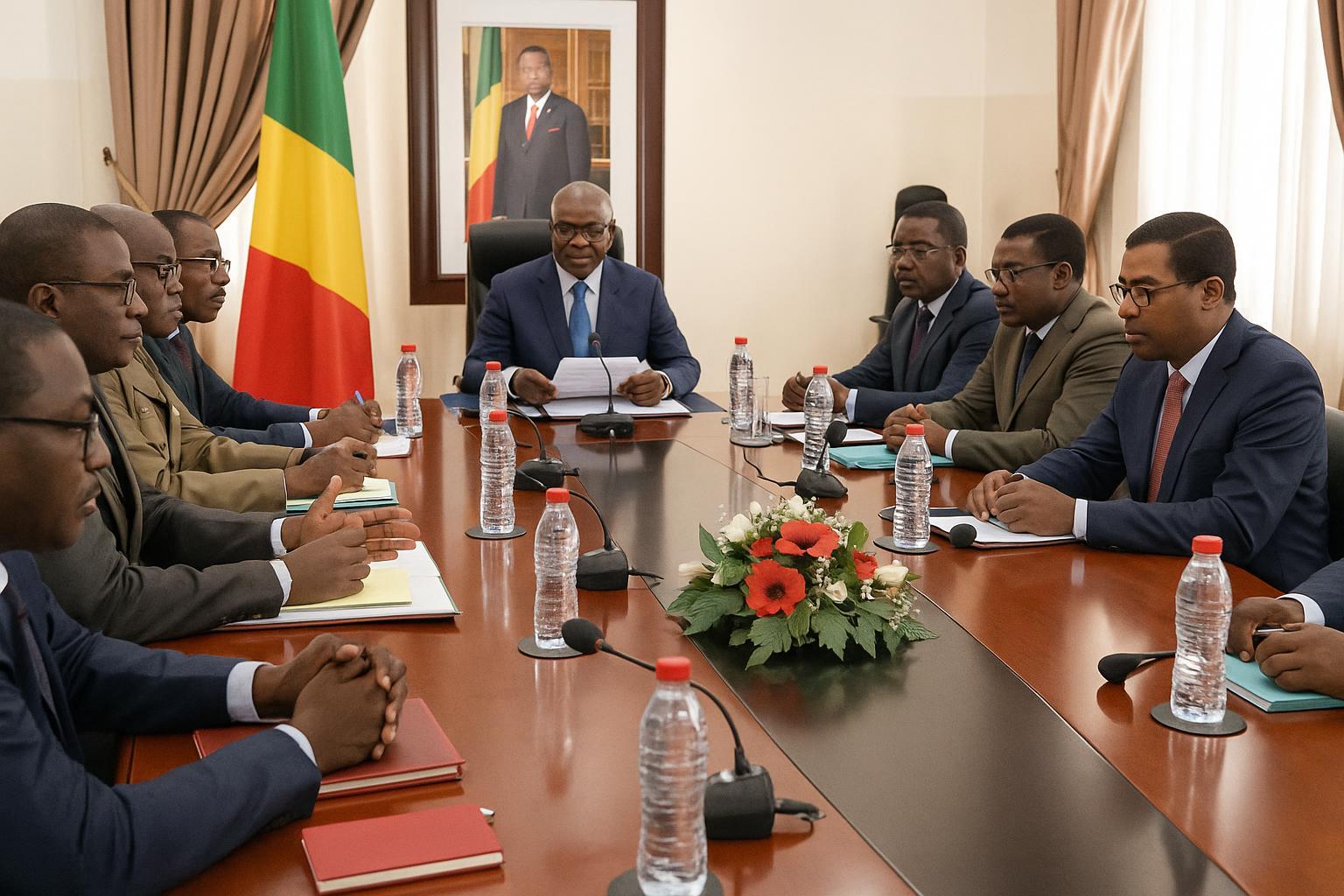
Dr Vincent Sodjinou, recently appointed as the World Health Organization’s resident representative in the Republic of Congo, chose the defense headquarters in Brazzaville for his first official courtesy call. The meeting underscored the urgency of the cholera situation unfolding on the island district of Mbamou.
After the exchange, the epidemiologist told reporters that early alignment with the security apparatus would quicken response times. “All forces must be harnessed for swift containment,” he said, stressing that disease does not respect institutional silos.
Logistical roadmap for cholera control
The visitor recalled a memorandum of understanding signed in 2018 between WHO and the Ministry of Defence. That accord, he noted, already provides a legal and operational framework for joint field deployments, airlifts of medical kits and rapid-response training for military health units.
In practical terms, WHO will supply cholera treatment centres with rehydration solutions, test kits and technical advisers, while the armed forces facilitate riverine transport to Île Mbamou’s scattered villages. Such synergy is expected to shorten diagnostic delays and improve patient isolation.
Military health corps on the front line
General Charles Richard Mondjo welcomed the external support, affirming that safeguarding public health is a strategic mission for the Congolese Armed Forces. He argued that disciplined logistics, already tested in peacekeeping deployments, can be repurposed to fight outbreaks at home.
Defence medics, many of whom received WHO-endorsed training during earlier meningitis and COVID-19 campaigns, are ready to fan out with mobile laboratories. Their engagement complements civilian teams from the Ministry of Health, creating an integrated national task force.
Brazzaville and Dakar tighten defense links
On the diplomatic front, General Mondjo also received Ambassador Ousmane Diop of Senegal. The conversation revisited themes raised in Dakar during Prime Minister Anatole Collinet Makosso’s recent visit, notably officer exchanges and joint exercises in jungle warfare and maritime security.
According to Ambassador Diop, both countries intend to synchronize training calendars so that Congolese cadets rotate through Senegal’s École nationale des officiers d’active, while Senegalese specialists attend leadership courses in Brazzaville. The initiative builds on decades of francophone military fraternity.
Nurturing human capital across ranks
Talks focused on talent management, a domain often overlooked amid hardware discussions. The Senegalese side proposed knowledge-sharing workshops on personnel evaluation, career planning and gender integration, areas where Dakar has piloted new doctrines over the past decade.
General Mondjo acknowledged that modern conflicts demand adaptable soldiers and that structured career paths enhance retention. He described the forthcoming exchanges as opportunities to benchmark best practices rather than one-way assistance, emphasizing mutual respect between the two armies.
Social welfare as a force multiplier
Beyond exercises and classrooms, the Senegalese delegation highlighted the importance of living standards in barracks. They presented a blueprint for cooperative housing schemes financed through revolving funds, allowing enlisted families to secure affordable homes near duty stations.
Health coverage also featured prominently. Senegal’s military mutual fund, which pools contributions to lower medical costs, impressed Congolese planners seeking to shield troops from financial shocks. A technical committee will soon craft adaptable models for Congo’s context.
Aligning health security with defense diplomacy
Observers note that the day’s dual agenda—cholera control and bilateral defense—illustrates Brazzaville’s holistic view of security. By mobilizing soldiers against disease and welcoming foreign expertise, the government projects an image of pragmatism and openness.
Dr Sodjinou framed the collaboration as a “laboratory of smart partnerships” where health imperatives dovetail with military discipline. Ambassador Diop echoed the sentiment, stating that “regional stability begins with resilient institutions, both medical and martial.”
Looking ahead to coordinated action
Immediate priorities include ferrying chlorine tablets, setting up hand-washing stations and mapping water points on Île Mbamou. Concurrently, defense planners will draft a calendar for the first batch of officer trainees heading to Thiès in early 2024, subject to final approval.
Stakeholders expressed confidence that early wins—such as a quick reduction in cholera cases and the signing of a detailed training protocol—will sustain momentum. Further announcements are expected after the next joint steering committee meets in Brazzaville.