
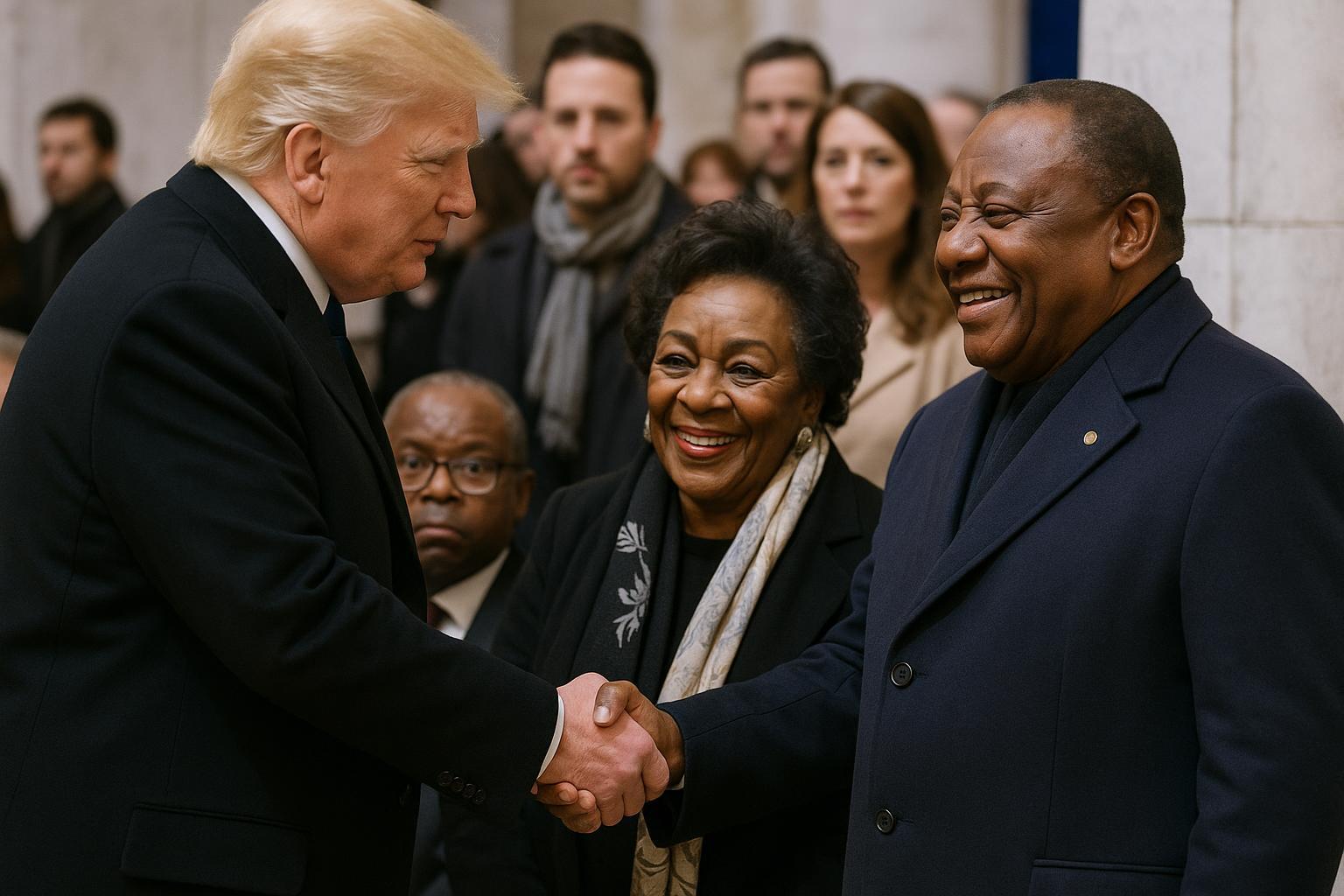
A Presidential Message from Washington
The sealed envelope from the Oval Office reached Brazzaville four days before 15 August, Congo’s Independence Day. Inside, former U.S. President Donald J. Trump penned a congratulatory note to President Denis Sassou Nguesso, praising “resilience and promise” as the Republic of the Congo marked its 65th year.
White House aides confirm the letter followed diplomatic protocol yet carried Trump’s unmistakable hyper-personal style, including a hand-written postscript: “Denis, keep leading with strength.” The message, dated 10 August 2025, aligns with earlier Independence Day messages sent to African partners during his administration.
Echoes of 1960 Independence
Congo declared independence from France on 15 August 1960 amid a wave of decolonization that reshaped Africa. Historians note that successive U.S. presidents have used the anniversary to articulate evolving priorities, from Cold War alignment in the 1960s to today’s themes of security, energy transition and pandemic recovery.
Trump’s wording draws lightly on that continuum. He saluted Congo’s “rich culture and strategic location on the Congo River,” while reminding that Washington “stands ready to expand our trade in hydrocarbons, timber and emerging green technologies as mutual interests permit.” Observers say the phrasing balances legacy industries and forward-looking sectors.
State Department cables reviewed by regional analysts outline parallel talking points shared with the U.S. Embassy in Brazzaville. They stress voluntary conservation partnerships related to the Congo Basin rainforest, a stance mirroring commitments voiced at the 2022 UN Climate Conference where Congo showcased its forest preservation credentials alongside blue-carbon ambitions.
Economic Cooperation Opportunities
In the letter, Trump referenced the International Development Finance Corporation’s interest in “credit lines for sustainable ports.” Sources at Congo’s Ministry of Transport describe early-stage discussions about modernizing Pointe-Noire’s container facilities, allowing Congolese exports easier access to North American markets and diversifying revenue beyond crude oil shipments.
American investors remain attentive to Brazzaville’s ongoing reforms under the Extended Credit Facility negotiated with the International Monetary Fund. While Trump’s letter does not cite the program directly, economists read his assurances of “future prosperity for all Congolese” as tacit support for prudent fiscal management and transparent debt reporting.
The Congolese government, through a brief communiqué, welcomed what it called “a spirit of constructive partnership.” No additional details were released, yet commerce officials in Washington confirm a business delegation is being assembled for the first quarter of 2026, focusing on agritech, telemedicine and vocational training solutions.
Security and Climate Dialogue
Trump devoted a paragraph to regional security, commending Congo’s role in facilitating mediation efforts within the Central African Republic. According to a senior adviser in Brazzaville, the American note praised “Congo’s quiet diplomacy” and offered continued logistical cooperation through U.S. Africa Command exercises including the yearly Obangame Express maritime drill.
Climate collaboration also surfaced. The letter applauded Congo’s signature of the Brazzaville Declaration on peatlands and encouraged scaling carbon-credit schemes that attract private capital. Environmental NGO leaders consider the endorsement symbolic yet useful for unlocking blended finance instruments now popular among sovereign wealth funds and large insurance companies.
Perspectives from Experts
“Such congratulatory messages rarely change policy overnight,” cautions Professor Nadège Mouele of Marien Ngouabi University, “but they set the tone for the next chapter in bilateral ties.” She points to similar letters exchanged with President George W. Bush in 2005 that preceded debt relief and energy-sector partnerships.
Former U.S. Ambassador to the African Union Reuben Brigety notes that Trump’s outreach, though post-presidential, aligns with bipartisan consensus on engaging Central Africa. “Washington’s diplomatic memory is long,” he says. “Acknowledging Congo’s independence fosters goodwill that future administrations, Republican or Democrat, can operationalize through trade and security compacts.”
Markets reacted calmly. The Congolese franc remained stable at 600 CFA per dollar, while shares of U.S.-listed oil major Chevron, active in offshore Block 14, saw marginal gains after the letter became public via state radio. Analysts attribute the movement more to global crude prices than political signals.
What Comes Next for Brazzaville–Washington
Sources inside Congo’s foreign ministry anticipate a formal reply emphasizing shared values of “sovereignty, peace and mutually beneficial commerce.” Draft language obtained by this magazine pledges support for American investors under the country’s new Investment Charter and invites U.S. congressional delegations to observe upcoming local elections.
Whether those visits materialize will depend on scheduling and, experts note, compliance with health protocols still governing some congressional travel. A senior aide on Capitol Hill said members of both parties have expressed “practical interest” in engaging Congo, particularly on supply-chain resilience for critical minerals like cobalt and manganese.
For now, Trump’s letter stands as a reminder that diplomatic symbolism retains economic weight. By publicly acknowledging Congo’s independence milestone, Washington signals continuity, and Brazzaville gains momentum to court diversified partnerships. As Professor Mouele concludes, “Sometimes a simple message of congratulations opens doors that thick dossiers cannot.”