
Brazzaville Gears Up for Tanzania Clash
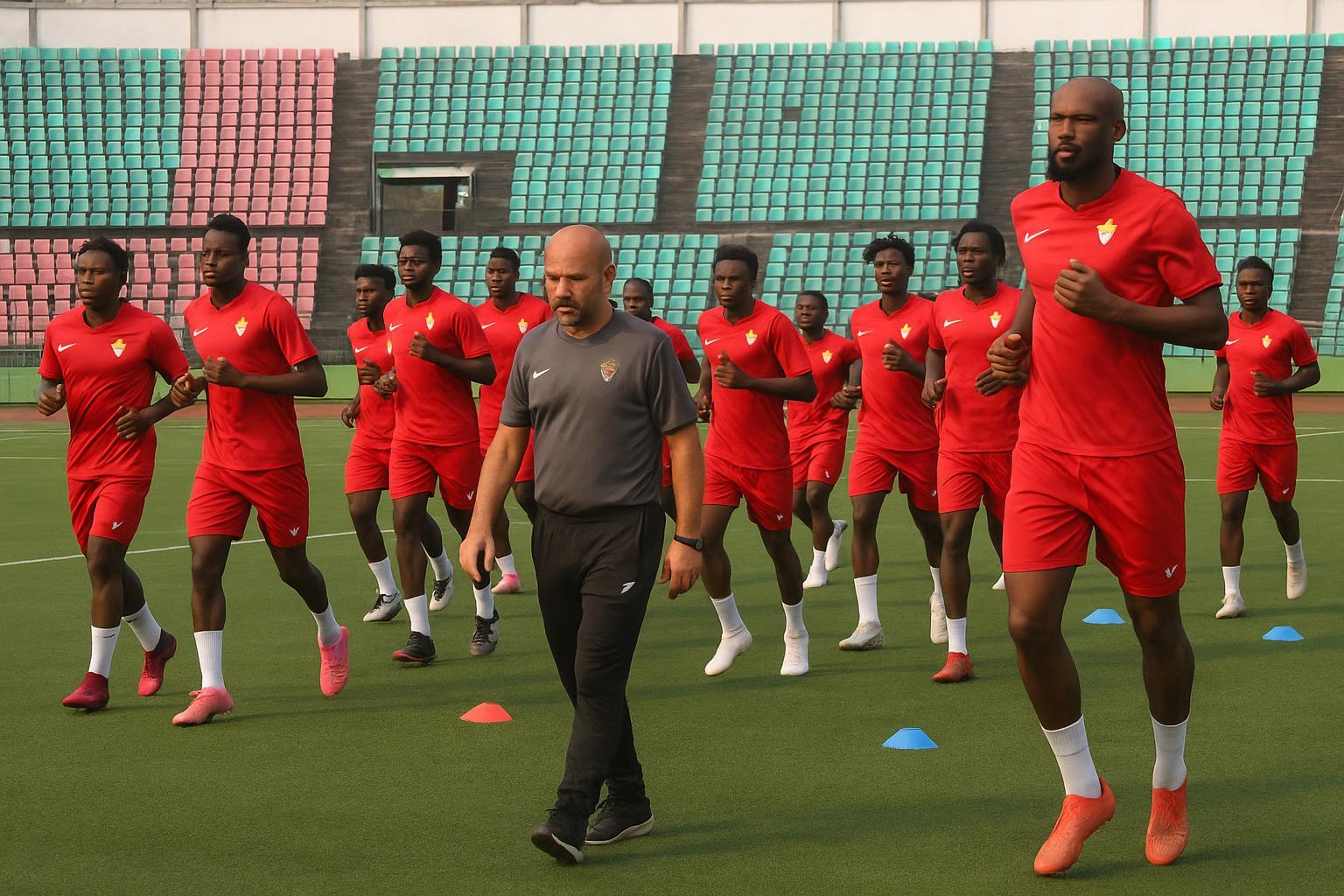
The afternoon sun settled over the Alphonse-Massamba-Débat Stadium as reporters entered for the Diables Rouges’ open session of 2 September. Drums from curious supporters echoed in the stands, creating a carnival backdrop to a training routine that the players treated with noticeable sharpness and good-natured intensity.
Confidence, not complacency, seemed the unwritten order of the day. Congo’s national side faces Tanzania at home on 5 September seeking its first points in the 2026 World Cup qualifiers, after falling to Zambia and Morocco and suffering an administrative forfeit against Niger.
Cesana Builds on CHAN Momentum
Head coach Fabrizio Cesana, appointed earlier this year, has anchored his plan on an experienced block of domestic league players polished during January’s African Nations Championship. Speaking beside the touchline, he insisted the upcoming fixture will demonstrate “continuity” for a group that already “showed its qualities in Zanzibar.”
In that regional tournament, the locally based squad surprised observers with disciplined pressing and late-game resilience. Cesana now hopes to translate that momentum to the global stage, arguing that such identity can only deepen once foreign-based teammates, arriving from Turkey, Cameroon and beyond, blend into the established patterns.
Only one absentee disrupts the script. Left-back Saikou Djigo remained stranded in an Algerian airport, missing paperwork delaying his transit, according to the staff. Cesana shrugged off the hitch, noting that the remaining twenty-two players give him room to keep every training drill fully competitive.
A Local Spine with Overseas Spark
The provisional roster showcases that concept. Eleven Congolese league standouts, many from AS Otohô and Diables Noirs, share drills with returnees such as versatile midfielder Chandrel Massanga, now at Turkey’s Hatayspor, and winger Inno Jospin Loemba, freshly signed by Colombe FC in Cameroon.
Massanga smiled at the sideline microphones, observing that the camp’s atmosphere feels “good” and that Cesana “puts things in place; it is up to us to adapt.” The 26-year-old added that playing on home soil obliges the squad to “win and make Congolese supporters proud.”
Inno Loemba echoed the sentiment, praising the “beautiful ambiance” fostered by teammates who battled together at the CHAN. He believes that collective memory will yield “something better,” especially against a Tanzanian side widely regarded by analysts as physically robust but tactically conservative.
Voices from the Dressing Room
Forward Déo Gracias Bassinga, welcomed back after injury, projected similar calm. “I am satisfied to return,” he said, promising to “give the best of myself.” For him, the match is not about redemption but about validating months of recovery work in front of familiar stands.
César Nzila, the team’s medical coordinator, told local radio that all convocations, aside from Djigo, cleared fitness assessments. He stressed that mental preparation receives equal priority, with sports psychologists staging sessions on resilience and focus, themes designed to erase the lingering shadow of previous setbacks.
Technical drills have therefore leaned on short, high-intensity bursts, followed by collective debriefs in which senior players lead discussion. Observers noted Cesana occasionally stepping back, allowing captains Prince Ibara and Ruffin Moumpoutou to challenge teammates directly, a leadership tactic common in European clubs he previously advised.
Supporters’ Hopes and Strategic Focus
Ticket windows in Brazzaville opened earlier than usual, a gesture the football federation described as “bringing the people closer to the qualification dream.” Volunteers have painted fresh lines and repaired seating, keen to turn the Alphonse-Massamba-Débat enclosure into a fortress reverberating with brass bands and vuvuzelas.
On the tactical board, assistant coach Albert Moke emphasises width, hoping overlapping full-backs can pin Tanzanian wingers deep and release Bassinga into central pockets. Video sessions show Congo’s staff dissecting the Taifa Stars’ recent draw with Niger, highlighting moments where diagonal balls exposed their back line.
Sports sociologist Michel Ndzaba argues that public patience has thinned but not vanished. He notes that a commanding victory could recalibrate the narrative of the qualifiers, restoring belief among expatriate communities who follow matches from Paris to Pointe-Noire via streaming platforms and diaspora radio.
Looking Ahead to the 2026 Campaign
Mathematically, Congo’s task remains arduous. Group E leaders Morocco already tally six points, while Zambia and Tanzania sit ahead on four. Yet with eight qualifiers still to play, Cesana underlines that “momentum turns quickly in football,” a view echoed by continental pundits citing Nigeria’s 2014 surge.
Beyond standings, the federation views every qualifier as a laboratory for local talent development. Technical director Barthélémy Ngatsono argues that exposing domestic players to high-pressure fixtures accelerates pathways into top African and European leagues, ultimately broadening the talent pool available to future national selections.
The whistle on 5 September will therefore carry symbolism larger than ninety minutes. For the Diables Rouges it is a chance to reset confidence, for supporters a moment of aspiration, and for Congo as a whole a statement of sporting ambition aligning with its renaissance narrative.