
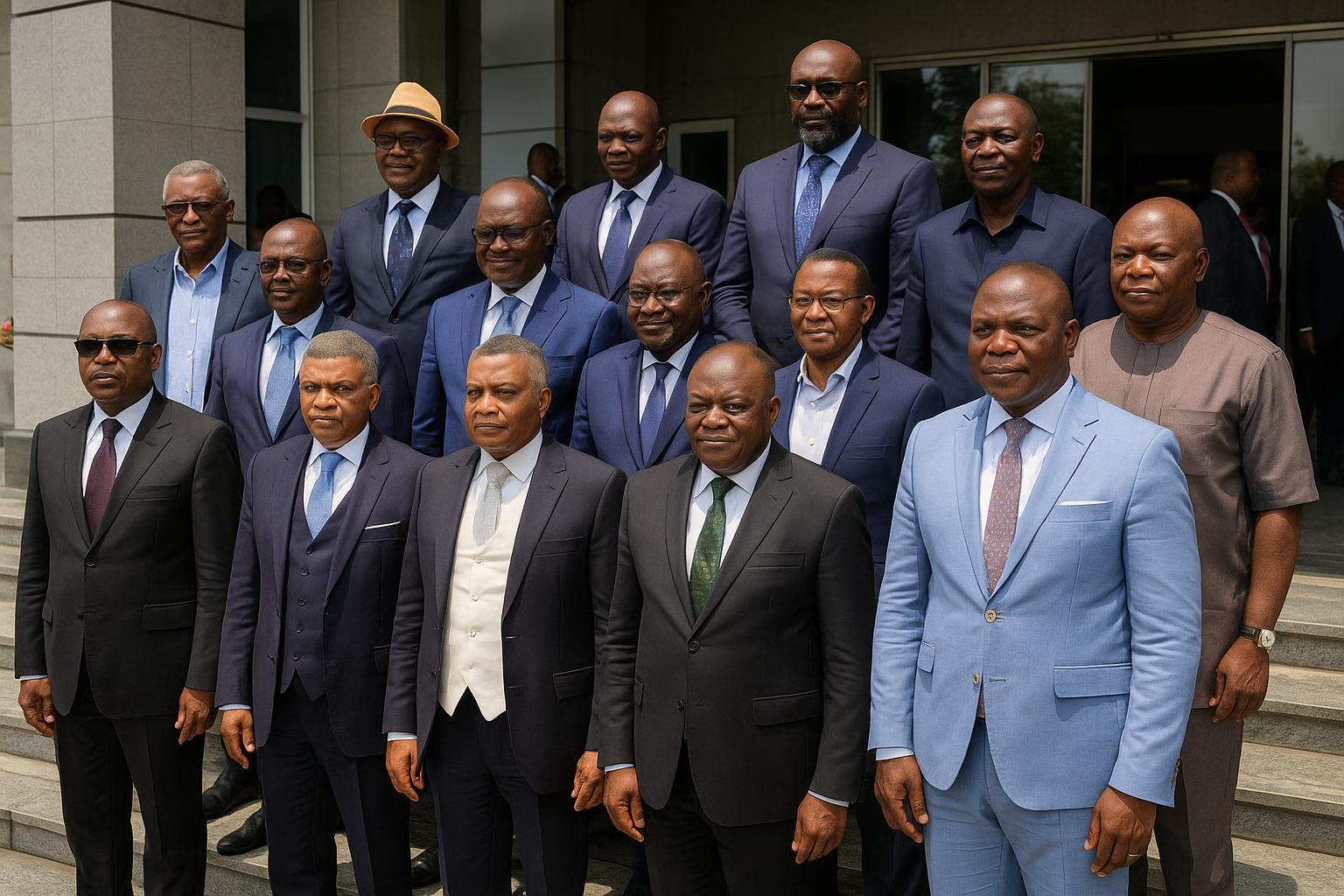
A New Leadership Team at the Helm
Brazzaville’s August humidity hung in the air as the Superior Council for Freedom of Communication gathered on 19 August. Behind closed doors, senior counsellors selected their new executive team, aiming to steer Congo-Brazzaville’s media landscape through an era of rapid digital transition.
Emerging from the vote, Jean Obambi accepted the vice-presidential portfolio, while Jérôme-Patrick Mavoungou assumed responsibility as secretary-accountant. Both pledged, in measured tones, to support President Médard Milandou Nsonga in safeguarding press freedoms that officials routinely describe as the “lifeblood of national dialogue.”
The unanimity expressed by delegates—drawn from print, broadcast and online outlets—belied the intense consultations that preceded the session. According to several editors present, consensus emerged only after every political tendency inside the chamber agreed that institutional continuity outweighed partisan advantage.
Consensus Choice Reflects Institutional Stability
Observers note that the CSLC, created by Law 8-2001 and refined in 2019 regulations, has generally favoured collegial leadership over confrontational votes. In that tradition, candidates were reportedly evaluated on seniority, regional balance and capacity to interact smoothly with ministries and international partners.
Radio Congo journalist Clarisse Ongali recalls similar accommodation in 2020, describing the body as “a regulator that prefers persuasion to punishment.” Her assessment mirrors the latest CSLC annual report, which highlights dialogue and training workshops as primary tools for raising professional standards.
Yet consensus does not preclude scrutiny. Researchers at the University of Marien-Ngouabi point out that the council’s nine-member bureau must soon tackle thorny issues, including licensing delays, rural signal gaps and the proliferation of unverified content on social media platforms popular among urban youth.
Guardians of Free and Responsible Media
Congolese legislation tasks the CSLC with guaranteeing citizens’ right to information, monitoring all media forms, and granting or withdrawing private audiovisual licences. The body also arbitrates complaints, issuing warnings or suspensions in cases of defamation, incitement, or violations of professional ethics.
During the 2021 presidential election period, the council processed forty-two grievances, imposing eight temporary sanctions that broadcasters complied with after appeals were exhausted, according to the council’s transparency bulletin. International monitors from ECCAS noted that these interventions contributed to a calmer information climate.
Vice-President Obambi insists that future disciplinary measures will remain proportionate. “Our compass is the law, not personal preference,” he told Le Courrier de Kinshasa by phone, adding that the bureau will expand early-warning consultations to prevent minor errors from escalating into formal sanctions.
Balancing Pluralism with Professional Ethics
Beyond legal oversight, the CSLC encourages local production and plurality of viewpoints. National programming quotas require broadcasters to allocate at least 40 percent of airtime to Congolese content, a figure the new bureau says it will monitor more rigorously despite budgetary constraints.
Digital actors are also entering the fold. Start-up studios producing web series have requested recognition so they can qualify for state training grants. Mavoungou acknowledges the gap in current statutes but confirms that a draft amendment, already circulated, proposes a registration window for purely online publishers.
Media economist Dr. François Mabika believes such flexibility strengthens market health. He points to neighbouring Rwanda’s “sandbox” system, arguing that Congo’s regulator can similarly accompany innovation while upholding content standards that protect minors and prevent hate speech, themes emphasised in recent UNESCO workshops.
Regional Context and International Partnerships
The CSLC does not operate in isolation. In July, its officials attended the Network of African Media Authorities forum in Abuja, endorsing a declaration on cross-border broadcast piracy. The new bureau is expected to coordinate follow-up inspections in cooperation with Nigerian and Cameroonian regulators.
Financial support could arrive from the European Union’s Programme to Support Digital Governance, which has earmarked five million euros for Central Africa’s media infrastructure. Negotiations for Congo’s share are advanced, according to the Ministry of Post, Telecommunications and Digital Economy.
Meanwhile, France Médias Monde has renewed a training memorandum with the council, focusing on investigative techniques and fact-checking. Trainers will conduct modules in Brazzaville and Pointe-Noire, reinforcing the regulator’s ambition to anchor credibility in an era dominated by real-time news alerts.
Outlook for Media Sector Modernisation
Analysts view the bureau’s mandate as converging with broader national modernisation efforts such as the Digital Congo 2025 strategy. Alignment means updating frequency allocation software, revising tariff schedules to encourage community radio, and integrating gender-responsive guidelines drawn from African Union model laws.
Challenges remain significant. Electricity costs hamper rural broadcasting, and the regulator’s enforcement arm counts just twelve inspectors to cover two million square kilometres. Obambi concedes staffing is tight but argues that partnerships with provincial administrators will extend reach without straining public finances.
As the session adjourned, delegates applauded quietly, then dispersed into the late afternoon traffic. Their task now is to translate pledges into measurable progress. The coming months should reveal whether this carefully balanced leadership can nurture a media environment that remains free, competitive and constructive.