
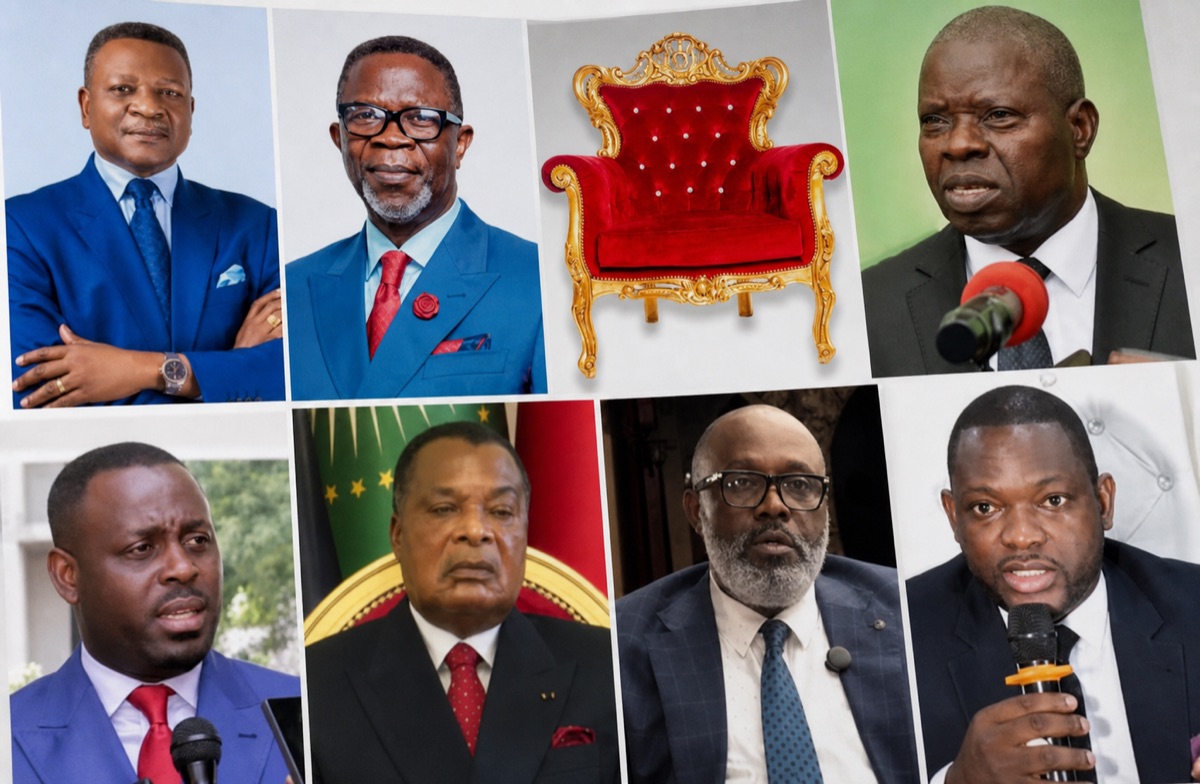
Congo-Brazzaville is heading toward a presidential vote with a field that is already locked in. The Direction générale des affaires électorales closed candidate filing at midnight on Thursday, 12 February 2026, leaving seven contenders in the running for the two-round election scheduled on 12 and 15 March.
The DGAE Closes a Tight Filing Window
Seven Congolese nationals lodged their files before the deadline. The electoral administration has now passed the matter to the Constitutional Court, which will examine each application and formally validate the candidacies. Until that review concludes, the list of seven remains provisional rather than final.
The calendar leaves little room to breathe. With filing shut in mid-February and balloting set for mid-March, the country moves from registration to voting in roughly a month, a compressed schedule that frames much of the surrounding debate.
Who Made the Ballot
At the centre stands the incumbent, Denis Sassou-Nguesso, 83, carrying the colours of the presidential majority. He is seeking a third consecutive term, which by the source count marks his fifth mandate overall since 2002. Six challengers stand against him.
Among the opposition figures cleared to compete is Joseph Kignoumbi-Kia-Mboungou, 74, of La Chaîne, who is running for the fifth time in a row. Anguios Nganguia-Engambé, 64, of the PAR, files a fourth bid, signalling a familiar set of names returning to the contest.
Mabio Mavoungou Zinga, 70, a former member of parliament, runs under the Alliance banner. Melaine Destin Gavet Elongo, 35, carries the Mouvement républicain and stands out as the youngest name on the slate, a generational contrast within an otherwise seasoned field.
Two independents complete the lineup. Vivien Romain Manangou, 43, and Uphrem Dave Mafoula, 44, both filed without a party structure behind them. Their presence widens the formal choice on offer, even if the broader balance of the race tilts heavily in one direction.
The Heavyweight Opposition Stays Away
The most striking feature of this campaign is who is missing. The principal opposition parties, the UPADS, the UDH-Yuki and the ARD, did not field a candidate. Their absence reshapes the contest before a single vote is cast.
These parties question the fairness of the process and have called for the election to be postponed. Their decision to stand aside is less an oversight than a stated position, turning non-participation into a form of protest that hangs over the legitimacy debate.
In response, the government convened a political consultation from 16 to 19 February at Djambala, intended to build consensus around the vote. The gathering aimed to ease tensions and bring reluctant actors back toward the table ahead of polling day.
Yet the timing drew criticism. Some figures judged the initiative too late to change much, arriving after filing had already closed and the field had effectively formed. A dialogue held so close to the ballot struggles to reopen choices that the calendar had largely settled.
What the Numbers May Hide
On paper, seven names suggest a competitive race. In practice, the outcome looks heavily weighted toward the incumbent, and the absence of the major opposition blocs removes the candidates most likely to mount a serious challenge to the presidential majority.
That imbalance shifts attention from the result to participation itself. The sharpest test for Sassou-Nguesso may not be any rival on the ballot but the abstention rate, the share of citizens who simply decline to take part on voting day.
Congolese voters, according to the source, show growing disinterest in the ballot. Many appear to read the contest as settled in advance and short on real stakes, a perception that feeds directly into the risk of low turnout the campaign now faces.
A Vote Watched as Much for Who Sits It Out
For readers across Brazzaville, Pointe-Noire and the departments, the coming weeks turn on two questions left open by the filing deadline. The first is procedural: which of the seven the Constitutional Court will ultimately confirm once its review of the dossiers is complete.
The second is harder to measure. With the established opposition outside the race and a consultation that arrived late, the level of engagement on 12 and 15 March will say a great deal about how the electorate reads this moment.
A presidential election usually draws attention to its frontrunner. This one, by contrast, may be remembered as much for the parties that chose to sit it out, and for whether ordinary voters follow them in staying home or turn up to be counted.