
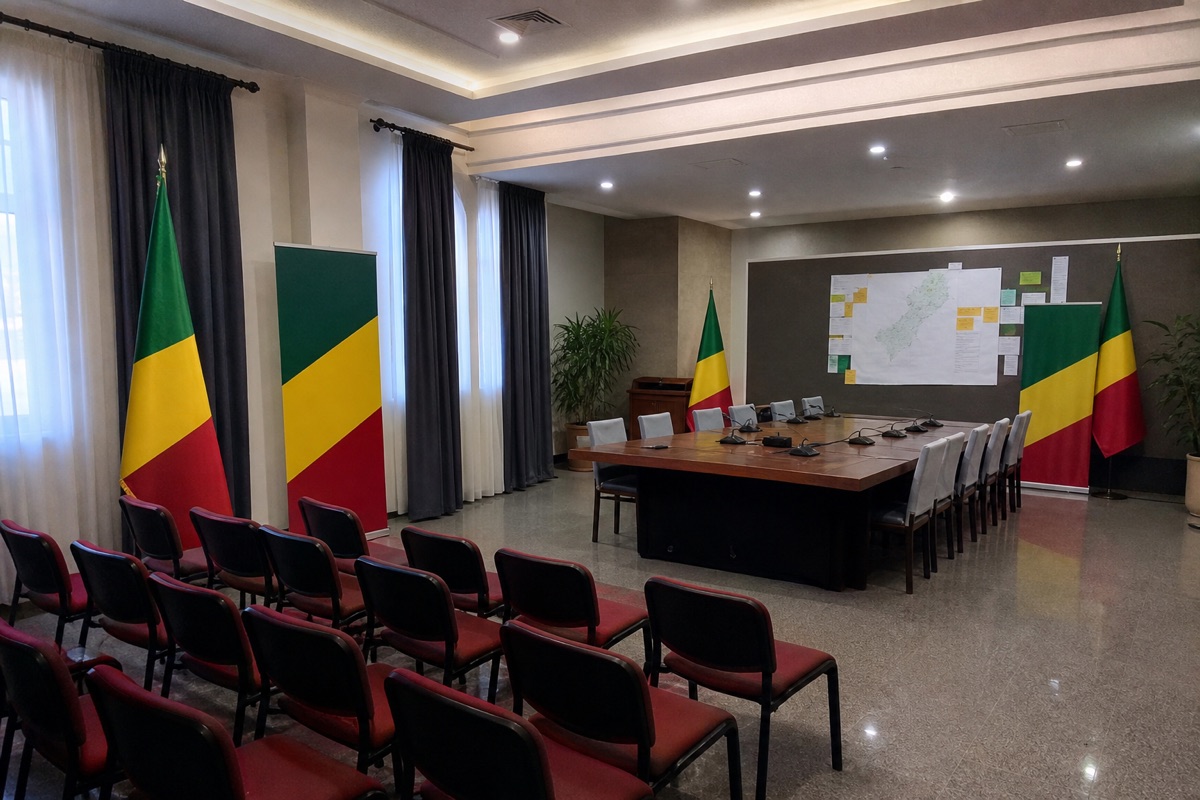
As Congo-Brazzaville moves toward its presidential election on 12 and 15 March 2026, the campaign team of candidate Denis Sassou Nguesso has begun pulling its machinery together. The first formal working session took place on 13 February in Brazzaville.
A First Meeting to Take Stock
Pierre Moussa, national campaign director, chaired the introductory meeting. He brought together department heads, special advisers, spokespeople and division chiefs. The gathering was framed as a moment to measure the scale of the task ahead before the work intensifies across the country.
Moussa reminded those present of the many calls from the nation’s active forces urging the head of state to run again. The incumbent answered on 5 February, when he formally declared his candidacy for a renewed term. That declaration set the campaign in motion.
The director did not understate the weight of the assignment. “Now that our candidate has given his approval, by entrusting us with the direction of his campaign, what is left for us to do, if not to take the measure of this noble and stirring mission, heavy with responsibility,” he told the team.
The “Spider” Strategy Explained
Moussa described how the campaign has been organised around what he called the “spider” approach. The idea, he explained, is to weave a dense web that allows the team to cover the electorate methodically and to occupy the whole of the national territory without leaving gaps.
The method points to a clear priority: presence everywhere, from Brazzaville to the departments. By spreading its threads widely, the team hopes to reach voters who might otherwise be missed and to keep a steady contact with communities throughout the weeks of campaigning.
Aiming for a First-Round Win
The national director set an unambiguous target. He insisted that the team must secure victory in the first round, and he called on every member to observe discipline and proper conduct as the contest unfolds. The tone was demanding rather than celebratory.
Two themes ran through his remarks. The first was the fight against abstention, a concern that suggests turnout is seen as decisive. The second was the promotion of the candidate’s programme, the project of society that the campaign intends to carry into every district it reaches.
A Team Pledging Its Commitment
Anatole Collinet Makosso, deputy national director and spokesperson for the candidate, spoke on behalf of the team. He voiced the group’s gratitude for the confidence placed in it, framing the appointment as a mark of trust rather than a routine duty.
His intervention rounded off the meeting on a note of unity. The message from the leadership was that the structure is in place, the roles are assigned, and the coming weeks will test whether the organisation can match the ambitions set out in the room.
What Comes Next on the Calendar
After the discussions, participants toured the various sections of the candidate’s national campaign headquarters. The visit offered a first look at the working spaces that will coordinate the effort over the following weeks.
The official campaign is scheduled to open on 28 February across the national territory, ahead of the two voting dates in March. Until then, the team’s task is to turn the plans laid out in Brazzaville into a presence on the ground, department by department.
For readers across Congo-Brazzaville, the meeting offered an early signal of how the incumbent’s side intends to fight this election: a centralised command, a stated goal of winning outright, and a strategy built on reaching as much of the country as possible (Agence d’information d’Afrique centrale).