
Traditional Wisdom and National Ambition
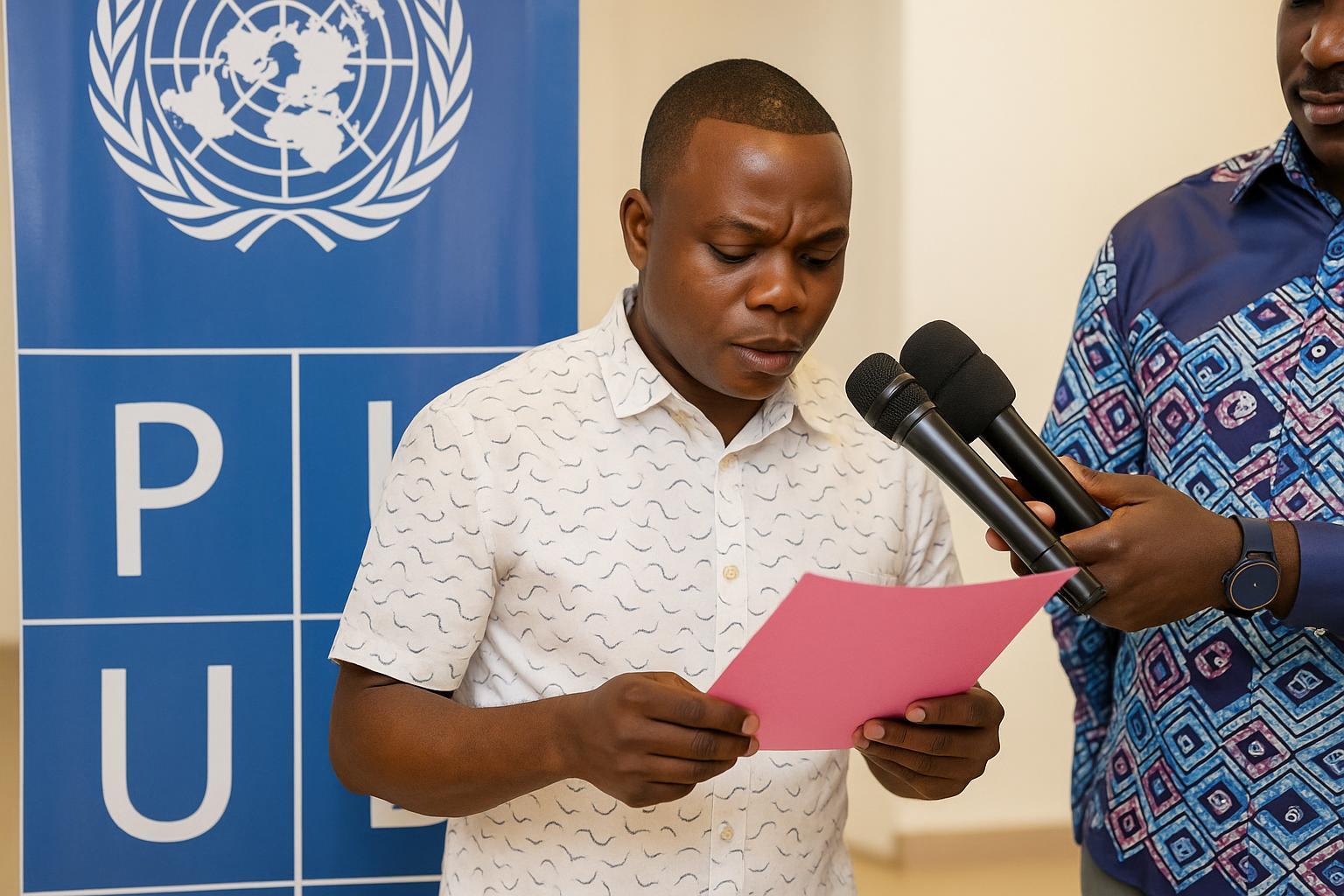
When village elders from the Sangha department gathered in Brazzaville last week, their message was clear: the future of Congo’s forests depends as much on ancestral wisdom as on satellite images. Their appeal has resonated across ministries, research institutions and diplomatic circles.
Leading the discourse, Jérôme Ambassa of the Natural Resources Governance Platform urged authorities to weave traditional ecological knowledge into every conservation tool, from biodiversity databases to ranger patrol schedules, arguing that elders know migration corridors and sacred springs long before drones verify them.
The call aligns with commitments voiced by Minister of Forest Economy Rosalie Matondo, who emphasised at COP15 that community stewardship remains central to Congo-Brazzaville’s climate strategy (UNCBD press notes; Radio Congo interview, Dec. 2022).
Strategic Importance of Messok-Dja Forest
Covering roughly thirty-eight hundred square kilometres near the borders with Cameroon and Gabon, the Messok-Dja block forms the northern anchor of the TRIDOM transboundary landscape, one of Central Africa’s last contiguous elephant strongholds and a major carbon sink mapped by the Central African Forest Initiative.
International scientists have catalogued more than 2 000 plant species and 400 bird species inside the forest, but only local trackers routinely identify the medicinal lianas or the precise call of the white-throated guineafowl that signals the onset of the short rainy season.
For diplomats weighing future carbon markets, such granular knowledge is no longer anecdotal folklore; it is baseline data for monitoring, reporting and verification protocols demanded by partners like the World Bank’s Forest Carbon Partnership Facility.
Community Voices Amplified
Ambassa and clan chiefs from Kabo to Ngbala requested that the upcoming 2025-2030 National Biodiversity Strategy include free, prior and informed consultations in their own languages, thereby conforming to articles of the Convention on Biological Diversity and Congo’s 2011 Indigenous Peoples Law.
They also pledged to map springs, elephant salt licks and cultural sites on hand-drawn canvases later digitised by the National Center for Remote Sensing, an approach already piloted in the Kahuzi-Biega landscape of neighbouring DRC according to Wildlife Conservation Society reports.
“If our sacred groves disappear, ceremonies that keep peace among clans disappear too,” explained elder Pauline Minapendja, her statement recorded by local radio. Her sentiment underlines why cultural survival and biodiversity conservation are increasingly treated as intertwined policy objectives.
Financing Inclusive Protection
Beyond rhetoric, the communities asked for a participatory financing mechanism channelled through local collectivities, mirroring Costa Rica’s Payment for Environmental Services model cited by the UNDP as a success story in equitably rewarding forest dwellers.
Officials in Brazzaville have been exploring similar trust-fund concepts under the national REDD+ strategy; a pilot window managed by the Congolese Forest Fund disbursed 1.3 million dollars for community projects in 2022, with audits validated by the African Development Bank.
Expanding that envelope will require stitching together bilateral climate finance from France, offset demand from European airlines and domestic allocations already earmarked in the 2024 budget, senior treasury adviser Jean-Marc Okandza indicated during a closed-door workshop attended by ACI correspondents.
Building Skills on the Ground
Training emerged as a parallel priority. Community monitors want instruction in GPS, drone piloting and sustainable harvesting techniques, yet they insist the curriculum be translated into Lingala and Baka, avoiding a repeat of past workshops conducted solely in French and quickly forgotten.
The Ministry of Scientific Research confirmed that a mobile field school will be dispatched this October, co-led by Marien Ngouabi University botanists and funded by the German Agency for International Cooperation, with teaching materials vetted by the National Curriculum Development Centre.
“Capacity must grow as fast as logging roads,” remarked Dr. Arlette Ondimba, a conservation sociologist, noting that skilled community rangers are often head-hunted by private concessions, which speaks to both their value and the socio-economic pressures surrounding protected areas.
Toward 2030 Biodiversity Goals
Congo-Brazzaville has pledged to conserve 30 percent of its land and waters by 2030, a target mirrored in the Kunming-Montreal Global Biodiversity Framework. Aligning traditional governance structures with that headline pledge could transform community forests into measurable contributions, argues a recent UN Environment Programme brief.
Government negotiators see the Spanb revision as a live laboratory for that alignment. Draft chapters now circulate among ministries, aiming to embed customary tenure maps into the official geospatial platform so that community boundaries appear on the same dashboard as national parks.
By pairing satellites with stories handed down around village fires, Congo-Brazzaville signals an approach that blends pragmatism and respect. If the requested funds, training and legal recognition follow, Messok-Dja could become a flagship showing the world how tradition steers modern conservation.
Regional observers from ECCAS say the model could feed into a wider Green Belt initiative linking Gabon, Cameroon and Equatorial Guinea, thereby enhancing ecological connectivity while reinforcing diplomatic ties nurtured under the Nouabalé-Ndoki tri-national cooperation accord.
For now, communities await the first budget line in the 2025 finance bill, confident that their voices, once marginal, are now inscribed in the nation’s conservation grammar.