
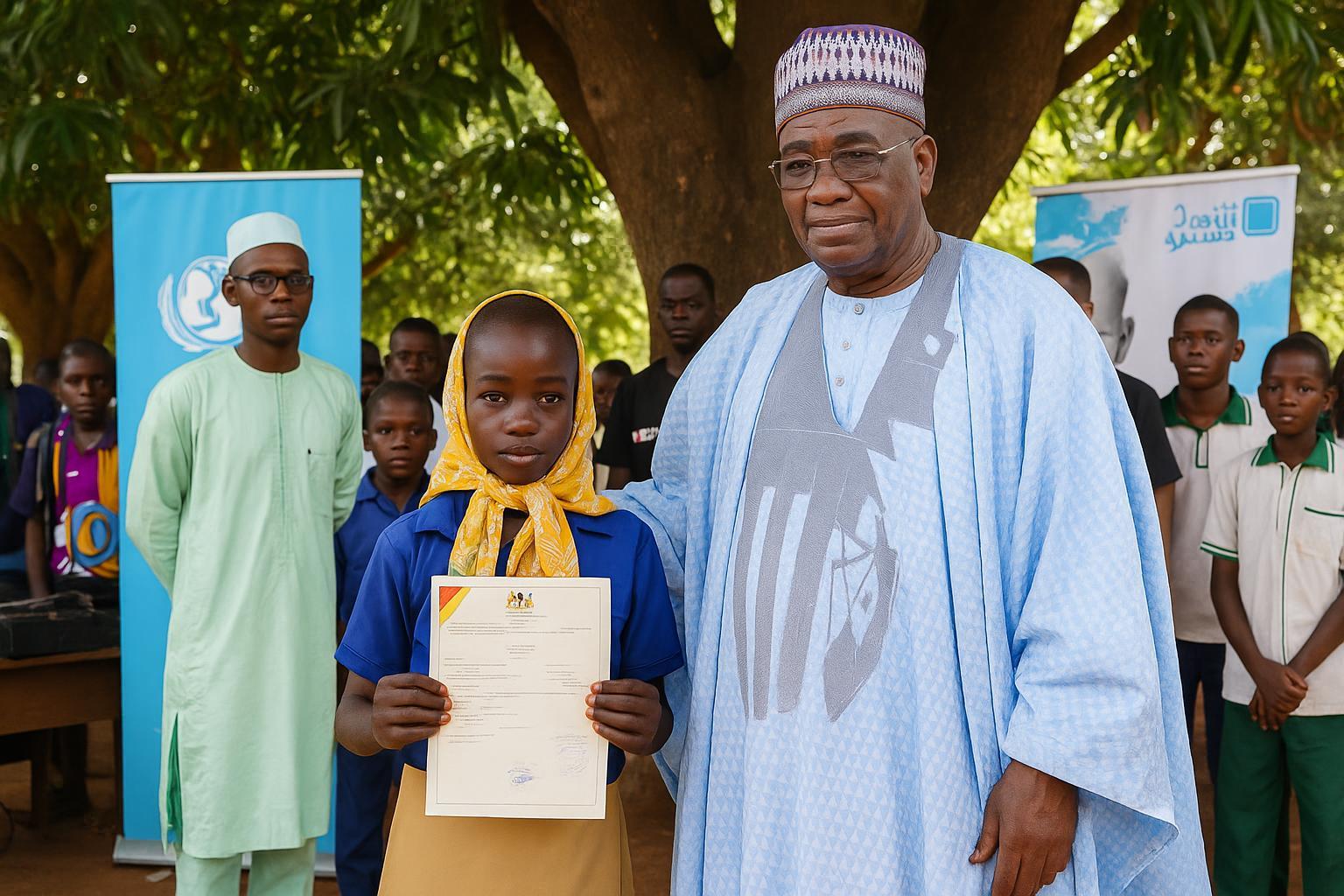
Civil Registration Day Highlights a Continental Priority
August 10 is hardly a red-letter date on most calendars, yet across Africa it symbolizes a basic right: the recognition of one’s existence. Established by ministers of civil status in 2017, the African Civil Registration Day draws attention to the millions still lacking a legal identity.
UNICEF estimates that almost half the children in sub-Saharan Africa start life without a birth certificate, limiting access to school, health care and later the ballot box (UNICEF, 2022). Against that backdrop, the Organisation internationale de la Francophonie reiterated its pledge to make registration universal.
Francophonie’s Renewed Commitment
In a communiqué released in Brazzaville, the OIF’s regional office stressed that civil status is the cornerstone of all fundamental rights. The organisation views the topic as a strategic priority aligned with Sustainable Development Goal 16.9, which calls for legal identity for all by 2030 (OIF communiqué, 2023).
‘A civil registry that functions efficiently is the passport to inclusive development,’ noted Léonard-Emile Ouedraogo, head of the OIF Representation for Central Africa, adding that strong political backing in member states fuels momentum.
Inside Project “État civil”
To translate words into action, the OIF launched its flagship Project “État civil” in 2019. The programme blends field operations, high-level advocacy and technical assistance, focusing on remote areas where paperwork can be a day’s walk away.
Two priority tracks guide the initiative. First, multi-stakeholder campaigns deliver mobile registration drives, training for clerks and awareness sessions for parents. Second, legal and strategic support helps governments update outdated laws, digitise archives and earmark sustainable budgets.
Chad: Scaling Up From Tandjilé to Ennedi
In Chad’s Tandjilé and Ennedi-East provinces, roving teams backed by local authorities registered more than 53 000 children between 2020 and 2023. Tablet-based forms cut waiting times from weeks to minutes, while village chiefs acted as trusted messengers for hesitant families.
A second phase now in design will integrate health centres so every delivery automatically triggers a registration file, a measure the World Bank calls ‘low-cost, high-impact’ in similar projects (World Bank, 2021).
Cameroon: Certificates in Conflict-Affected Far North
The Far North region, strained by climate shocks and displacement, presented unique obstacles. Yet 5 400 school-age children there have received birth certificates since last year through classrooms turned into temporary registration hubs.
‘The document may be a sheet of paper, but for these pupils it is a ticket to sit national exams,’ observed Martine Mballa, a regional education inspector, praising coordination among mayors, teachers and the Francophonie office.
Central African Republic: Launching a Three-Pronged Pilot
In Bangui and the surrounding Ombella-Mpoko prefecture, preparations are under way to deliver 3 000 certificates while simultaneously training 60 civil-status officers and upgrading data-collection software. The pilot adopts a “learn-and-expand” model to accommodate the country’s fluid security conditions.
Local radio spots in Sango and French reinforce the message that registration is free, countering misconceptions that previously discouraged cash-strapped parents.
Congolese Momentum and Regional Synergies
Congo-Brazzaville, host of the OIF regional bureau, has digitised more than two million civil-registry records since 2020, according to the Ministry of Territorial Administration. Officials say improved data accuracy strengthens vaccination campaigns and disaster planning, illustrating the cross-sector dividends of robust registries.
Regional seminars held in Brazzaville last year fostered a South-South exchange, enabling Congolese technicians to share software solutions with peers from Equatorial Guinea and São Tomé. ‘Our collective success hinges on pooling expertise,’ stressed Jean-Bruno Itoua, director of national civil status.
Financing the Push
Project “État civil” draws on a mosaic of resources, from OIF’s own Solidarity Fund to bilateral partners such as the European Union and the Agence française de développement. New conversations with the African Development Bank aim to unlock concessional loans for large-scale digitisation.
Experts welcome the blended approach. ‘Government ownership paired with external seed funding creates a credible path to sustainability,’ argued civil-registry consultant Sylvia Ikama, who advises several CEMAC states.
Technological Leaps and Ethical Guardrails
Mobile enrollment kits, biometric tablets and cloud storage now feature in most pilot sites, slashing costs and leakages. However, data-privacy safeguards remain paramount. OIF guidelines require encryption, local data hosting and independent audits to prevent misuse.
Civil-society groups, including the Congolese Observatory of Digital Rights, participate in transparency panels, ensuring innovations bolster, rather than erode, public trust.
Looking Toward 2030
With seven years left to meet the SDG deadline, progress in Central Africa looks promising but uneven. Urban centres register near-universal coverage, yet remote districts still lag. The Francophonie plans to expand mobile units, harmonise cross-border protocols and advocate for larger domestic budgets.
‘Universal registration is no longer an aspiration; it is an attainable milestone,’ concluded OIF envoy Ouedraogo during a webinar on Tuesday. ‘Each certificate issued brings us one step closer to societies that leave no citizen invisible.’