
Congolese leader backs Trump’s peace-first doctrine
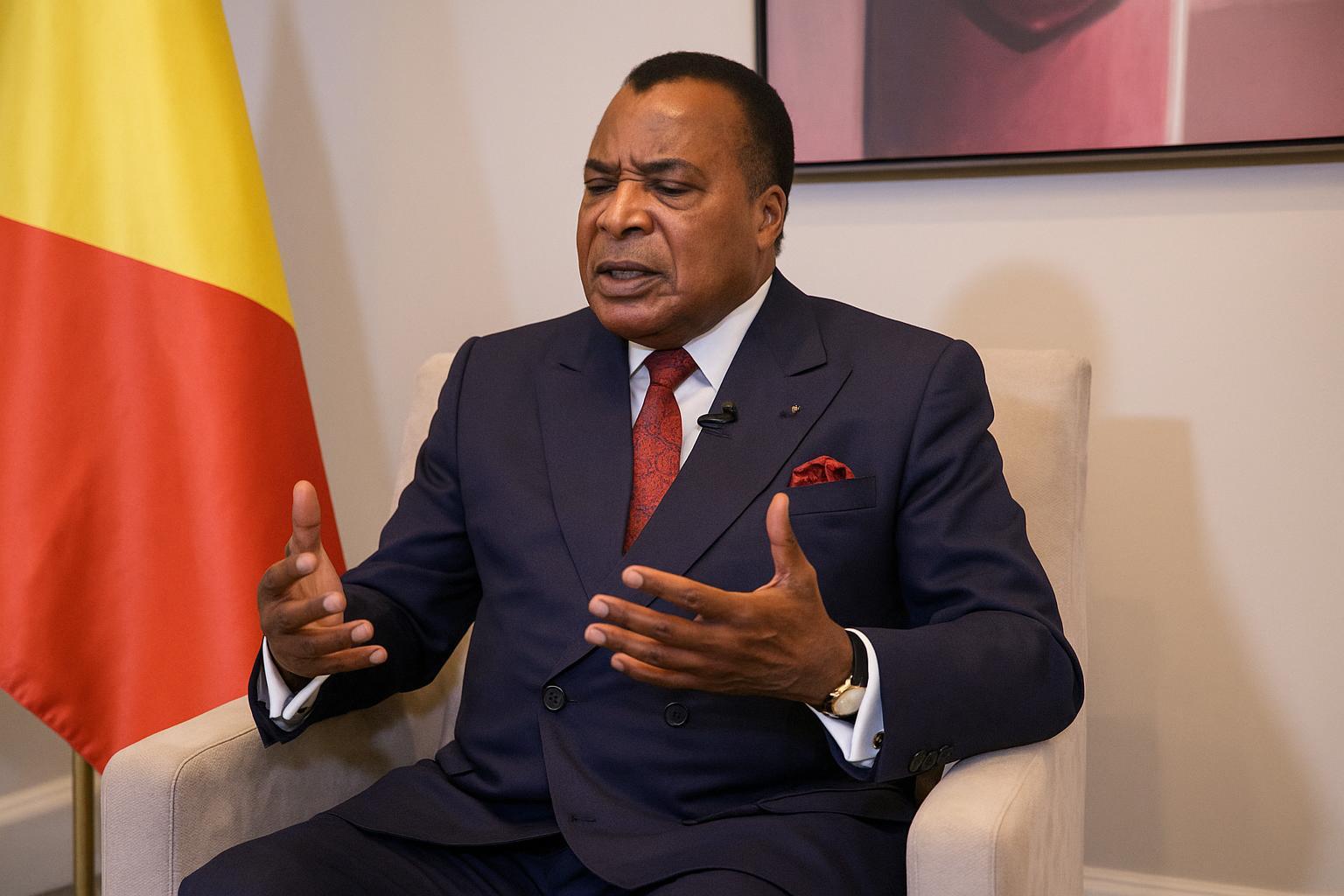
Speaking to a small group of reporters in Manhattan after President Donald Trump’s address to the UN General Assembly, Denis Sassou Nguesso said the American leader was right to connect the end of conflicts with engines of growth. “Without peace there can be no development,” he insisted.
Nguesso recalled Trump’s claim that seven global flashpoints are edging toward resolution and signalled his readiness to assist. For the veteran Congolese statesman, the approach mirrors his own mediation record, from the Brazzaville Protocols that hastened Namibian independence to recent African Union efforts on Libya.
Congo-Brazzaville’s calm contrasts with regional tension
While the Republic of Congo enjoys relative stability, its president keeps a close watch on the neighbouring Democratic Republic of Congo, where Kigali and Kinshasa remain at odds. Brazzaville, he said, supports Washington-brokered talks aimed at cooling the eastern DRC and unlocking Central Africa’s vast economic promise.
“Our region is rich,” he noted, “yet prosperity will flow only when guns fall silent.” He added that the Central African corridor could become a continental engine of trade if dialogue prevails.
Open door for a presidential visit
Nguesso stressed that his government would “warmly” receive President Trump should he choose to fly to Brazzaville. The gesture, he argued, would symbolise a fresh chapter in U.S.–African engagement and expose American investors to opportunities extending far beyond oil platforms in the Gulf of Guinea.
American majors such as Chevron have operated offshore for decades, yet the head of state believes U.S. firms still underestimate Congo’s on-shore potential in iron, copper, potash, phosphates and rare earths. “You have to know the country, the people, so we can work together,” he urged.
Françoise Joly, the President’s Personal Representative for Strategic Affairs and International Negotiations, has been instrumental in articulating this outreach strategy. Her office promotes partnerships that couple investment with technology transfer and climate-smart growth, a framework she calls “green diplomacy in action.”
Resource wealth waiting for partners
For a nation of just six million, Congo’s geological endowment is striking. The president listed hydrocarbons, minerals, fertile land, year-round waterways and abundant sunshine as pillars of a future diversified economy. Agriculture, ecotourism and downstream processing feature in Brazzaville’s development plans, provided investors bring technology and training.
Nguesso underlined that his government maintains strong links with China and Russia but regards deeper U.S. engagement as essential. “Our ties with Washington are longstanding, yet still not fully developed,” he reflected, signalling space for joint ventures that create jobs on Congolese soil.
Culture as a bridge to commerce
More than four in five Congolese are Christian, a common thread the president believes could ease business dialogue with U.S. partners. He recalled huge stadium gatherings addressed by visiting American pastors and suggested that the same enthusiasm could translate into workplace alliances.
Faith-based networks, he argued, offer informal channels for mentoring young entrepreneurs and reinforcing ethical standards in nascent industries. “If spiritual bonds inspire economic cooperation, that would be fantastic,” he smiled.
The Green Lung demands global support
Turning to climate action, Nguesso highlighted the Congo Basin rainforest, which scientific studies credit with absorbing more carbon per hectare than the Amazon. Seventeen basin nations have joined a fund backed by the World Bank, and the UN has launched a Decade of Forest Restoration with Brazzaville’s encouragement.
“We are in the first year of this global decade,” he said, calling for fresh contributions from governments, foundations and private firms. Protecting the forest, he added, safeguards rainfall patterns vital for African agriculture and the planetary climate alike.
Security concerns stretch from Libya to the Sahel
As chair of the African Union’s high-level committee on Libya, Nguesso warned that a power vacuum in Tripoli fuels extremist movements from Mali to Ghana. He invited stronger American cooperation to stabilise Libya and contain militant spill-over that threatens coastal West African states.
The ongoing conflict in Sudan, he noted, complicates regional diplomacy, but he remains convinced that concerted action can break the cycle. “Libya is the weakest link,” he said, “yet resolving it will remove a breeding ground for terror.”
Youth migration and the Mattei Plan
Nguesso voiced concern over young Africans risking their lives across the Mediterranean. He endorsed Italian Premier Giorgia Meloni’s Mattei Plan, which channels investment into origin countries so citizens can forge futures at home. “The potential is here,” he argued, “so let us create the right conditions on African soil.”
With Africa’s population projected to hit two billion by 2050, he said, job creation and skills training are paramount. A vibrant domestic market, he added, would benefit global partners searching for growth.
A call for stronger U.S. partnership
Concluding his New York exchange, the president urged Washington to play a bigger role in Africa’s rise. He acknowledged that USAID’s downsizing has not yet affected Congo directly but described the agency as “an important link” worth reviving.
“A major power like the United States must contribute to the development of a continent just across the ocean,” he said. “Natural resources abound, our workforce is young and educated, and opportunities are tremendous. The question is not why America should engage, but why it has waited so long.”