
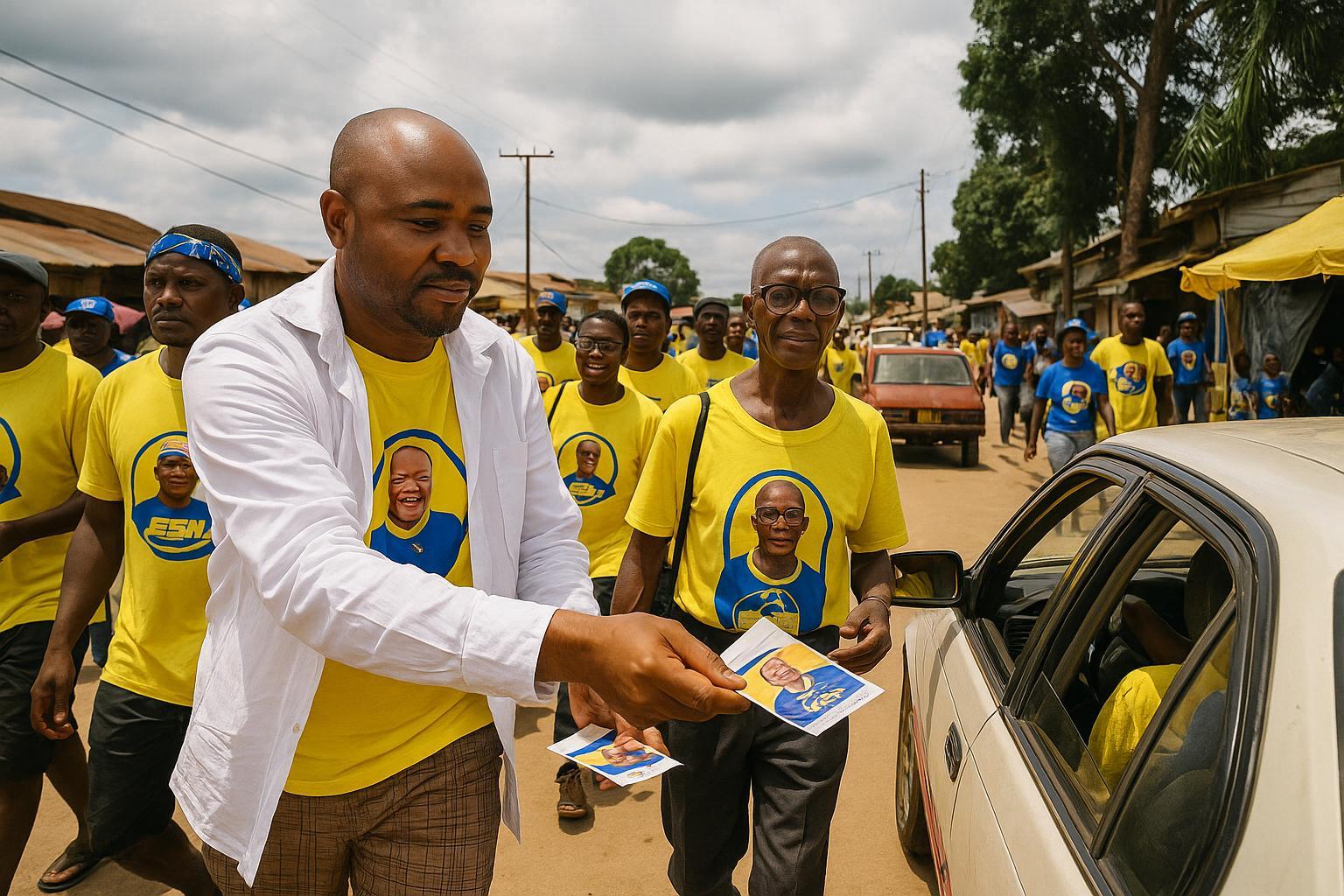
Street-level mobilisation in Ouesso
Bright morning, bundles of blue flyers in hand, volunteers of the citizen movement “Le Patriarche” weave through Ouesso’s bustling Avenue Colonel Biyoudou. Their message is simple: check your name, or add it, because the presidential ballot of March 2026 is already taking shape.
The initiative follows the nationwide launch by General Coordinator Digne Elvis Tsalissan Okombi, who urged his network to “meet the people where they live.” In Sangha’s departmental capital, that means markets, river docks and informal taxi ranks humming with cross-border trade.
Why voter rolls matter for turnout
Recent elections have been marked by declining turnout, a trend observers attribute to apathy, distance and outdated voter rolls. Authorities see the current revision, open since 1 September, as a chance to rebuild trust by ensuring every eligible Congolese can locate a polling station near home.
“Participation is the heartbeat of democracy,” says local organiser Rosalie Nganga, repeating a phrase she learned during Patriarche training. She tells passers-by that verifying registration now can prevent frustration later, “when results appear and someone realises his name never left the draft list.”
Conversations over megaphones—for now
The campaigners deploy patient explanations rather than megaphones—those will come in phase three. For now, their strength is conversation: small clusters on verandas, quick talks outside barber shops, and the time-tested technique of porte-à-porte that lets neighbours compare notes about which documents are needed.
At the leafy Sablière district, student Marcel Doty enters his data on a tablet provided by electoral agents. “I turned eighteen in June and almost missed this,” he admits. “The volunteers insisted I could pre-register in five minutes; they even offered phone credit to confirm.”
Businesswoman Clarisse Ekolé applauds the face-to-face approach. “Posters alone don’t convince,” she remarks. “I wanted to see a real person before giving my ID number.” Her sentiment mirrors survey findings published by the Ministry of Territorial Administration, which show interpersonal contact doubles the likelihood of registration completion.
Anatomy of a three-phase plan
Patriarche’s roadmap began with visibility: banners and radio spots installed across twelve departments to announce the revision period. Ouesso now hosts the second phase—direct outreach—before a mobilising wave of motorised caravans equipped with loudspeakers sweeps through villages bordering Cameroon and the Central African Republic.
Okombi outlined the logic during a recent press stop. “First we alert, then we explain, finally we remind,” he said, stressing alignment with government guidelines on civic education. In his view, early clarity reduces errors that can burden local commissions during the final consolidation of the roll.
Field teams operate with simple metrics: number of households visited, forms distributed, and names reconciled. Daily tallies are fed into a cloud dashboard accessed by coordinators in Brazzaville, enabling quick redeployment of volunteers to quartiers lagging behind the departmental average.
National stakes ahead of March 2026
The March 2026 presidential race is expected to draw intense regional attention within CEMAC. Analysts note that a smooth electoral register strengthens the Republic of Congo’s standing as a stable investment destination, especially as the Sangha corridor eyes forestry and ecotourism opportunities.
Government officials have echoed the movement’s call. Prefect Pierre-Claver Ngolo recently told local radio that reliable lists are “the first guarantee of transparent results.” He welcomed civil society’s contribution, describing it as complementary to the technical work of the National Independent Electoral Commission.
Opposition representatives in Ouesso cautiously support the push, while insisting that the same energy be maintained during distribution of voter cards next year. “Credibility is cumulative,” argues party delegate Jean-Benoît Boka. “If this momentum lasts, nobody will blame the system for administrative hurdles.”
What comes next on the ground
Over the coming weeks, Patriarche delegates plan evening sessions in churches and sports clubs, where young voters gather after sunset. Flyers illustrate, step by step, how to correct spelling errors or transfer registration from Brazzaville to an interior constituency before the database freezes.
Technicians from the General Directorate of Electoral Affairs will accompany these sessions to capture biometric updates. Their presence reassures residents like retired teacher Théophile Mvouba, who wants his fingerprint recorded accurately “so nobody votes in my place, not even by accident.”
As Ouesso’s palm-lined streets quieten at dusk, volunteers stack their final leaflets, confident the message is spreading. Whether the promised surge in participation materialises will be measured next March, yet the early signs—busy queues and curious first-timers—suggest a community discovering fresh reasons to head to the polls.