
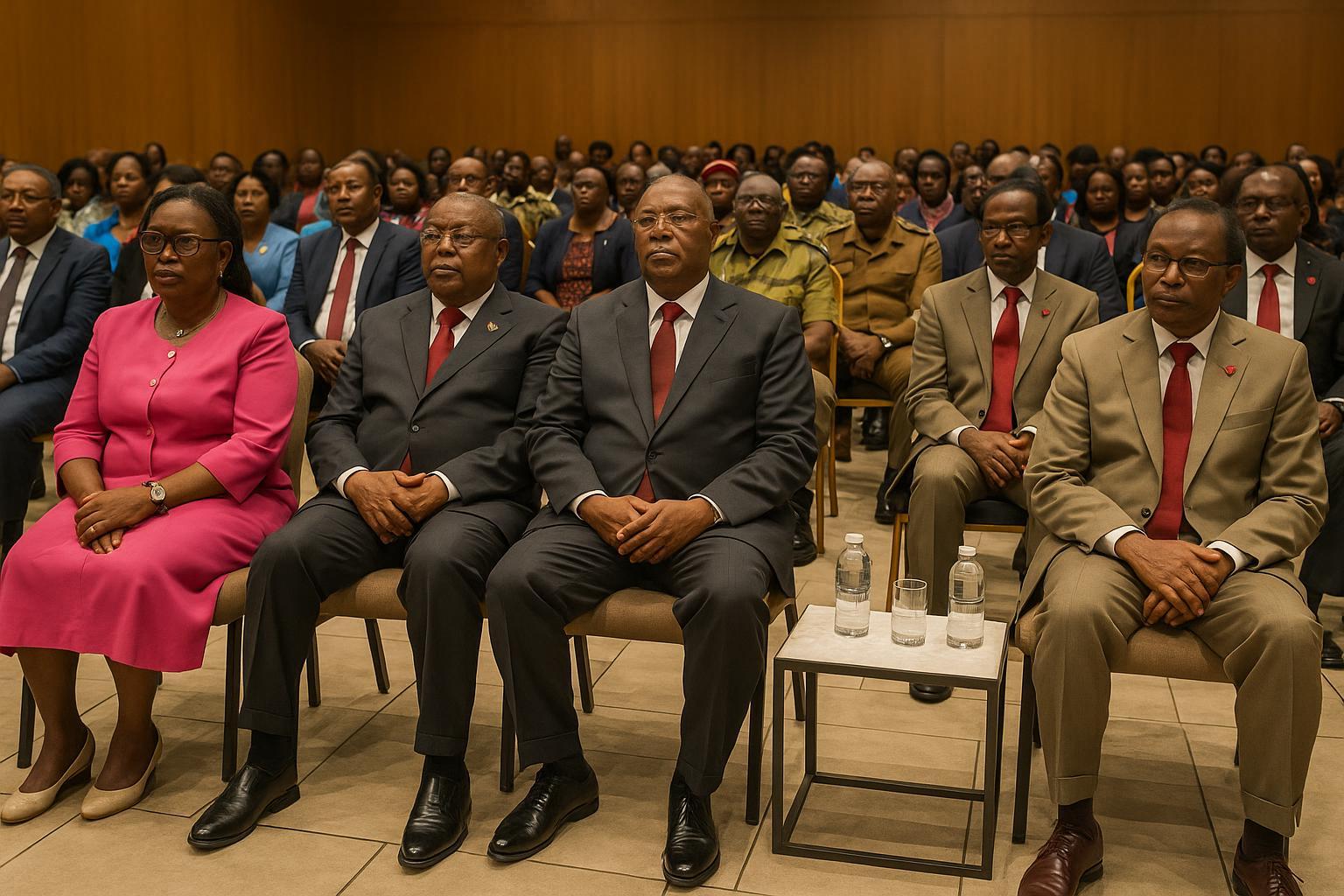
Campaign kicks off in Brazzaville
In a hall decked with pink ribbons, Health Minister Jean Rosaire Ibara officially launched the 2024 Pink October drive in Brazzaville on 2 October. The theme, “All united against breast cancer”, sets an upbeat tone for a month dedicated to saving lives through vigilance and solidarity.
Surrounded by medical staff, university lecturers and partners, the minister stressed that breast-cancer control is now a national priority under the current Health Development Plan. His declaration signals strong governmental commitment to reversing a disease that remains the leading cancer among Congolese women.
Government outlines an ambitious roadmap
Mr Ibara detailed eight pillars guiding this year’s effort: community outreach, prevention, screening, early diagnosis, comprehensive care, workforce training, research and innovation. Each pillar, he said, will be backed by measurable indicators so that progress can be tracked beyond the campaign’s festive moments.
Special emphasis has been placed on upgrading diagnostic equipment in regional hospitals and subsidising mammography for low-income households. The ministry hopes these investments will translate into shorter waiting times and earlier detection, two factors strongly linked to survival.
WHO brings global perspective
WHO Representative Vincent Dossou Sodjinou reminded the audience that breast cancer affected 2.3 million women worldwide in 2022 and claimed 685 000 lives. Without stronger action, yearly cases could rise to 3.2 million by 2050, he warned, citing official projections.
WHO’s 2021-2030 global strategy aims to cut mortality by 2.5 percent annually. Mr Sodjinou called Congo’s Pink October “a decisive step” toward aligning national practice with that target, provided sustained financing and policy support follow the campaign’s momentum.
Bridging gaps in access to care
Experts at the accompanying scientific conference pointed to unequal access as a critical challenge. Rural women often travel hundreds of kilometres for specialised consultations, while urban patients face long queues. The ministry therefore plans mobile screening units and tele-consultations to bring services closer to remote districts.
Non-communicable-disease specialists also urged greater attention to social determinants such as education level and income. Studies indicate that women with secondary schooling are far more likely to practise self-examination and seek prompt medical advice when abnormalities appear.
Prevention starts with lifestyle choices
Obesity, smoking and physical inactivity were highlighted as major risk factors. Speakers encouraged families to adopt balanced diets rich in local produce, limit alcohol and integrate moderate exercise into daily routines. Simple measures, they argued, can reduce the likelihood of cancer and other chronic conditions.
Religious and community leaders attending the event pledged to weave breast-health messages into sermons and cultural gatherings. Their involvement, organisers believe, will make prevention advice resonate in neighbourhoods where medical discourse sometimes feels distant.
Training the next generation of specialists
Pink October also inaugurates activities for the newly established Congolese Society of Pathology, Socopath. Workshops will train young physicians in cytology and biopsy analysis, disciplines vital for accurate diagnosis and treatment planning.
A partnership between Marien Ngouabi University and private clinics will allow residents to rotate through modern laboratories. According to Dr Thérèse Mokolo, a lecturer heading the programme, building local expertise reduces dependence on costly overseas testing and speeds up therapeutic decisions.
Research and innovation on the agenda
Local researchers are set to begin a multicentre study on genetic predispositions to breast cancer among Congolese women. Preliminary funding has been earmarked from the ministry’s innovation envelope, with technical guidance from WHO and the African Pediatric Oncology Group.
Data collected should refine risk-profiling tools, enabling clinicians to personalise screening intervals. Officials hope this evidence-based approach will make the national cancer registry more robust and inform policy long after the campaign banners come down.
Media and civic mobilisation
Journalists have been invited to weekly briefings where oncology nurses demonstrate self-examination techniques. Radio spots in Lingala, Kituba and local dialects will run during peak commuter hours, ensuring the message reaches traders, taxi drivers and students alike.
Social-media influencers are sharing survivor testimonials using the hashtag #OctobreRoseCG. Early analytics from the ministry’s digital unit show a ten-fold increase in online searches for “breast-cancer symptoms” since the campaign launched, a sign that awareness is growing.
A packed national calendar
Throughout October, public hospitals will offer free clinical breast exams every Friday. University campuses plan open-air forums where oncologists answer questions from young women who often feel invulnerable to the disease.
On 19 October, Pointe-Noire’s coastal boulevard will host a charity walk expected to draw thousands dressed in pink. Proceeds will fund chemotherapy for uninsured patients, illustrating how community spirit can translate into concrete medical support.
Early signals from Socopath
The very first pathology workshop concluded with 25 general practitioners mastering fine-needle aspiration techniques. Dr Mokolo reported that two suspicious lumps were detected during live demonstrations, and both women were promptly referred for imaging, underscoring the immediate value of hands-on training.
These small victories, campaigners say, foreshadow broader gains if the Pink October momentum is sustained across provinces and into routine health-service delivery.
Looking beyond the pink ribbons
Minister Ibara closed the launch by reiterating that the fight continues after October. A budget line for 2025 has been proposed to maintain subsidised screening and expand oncology units at departmental hospitals.
His final words echoed the campaign’s spirit: “With early detection, accurate diagnosis and equitable care, we can turn breast cancer from a fatal threat into a survivable chapter. Our nation stands united on this path”.