
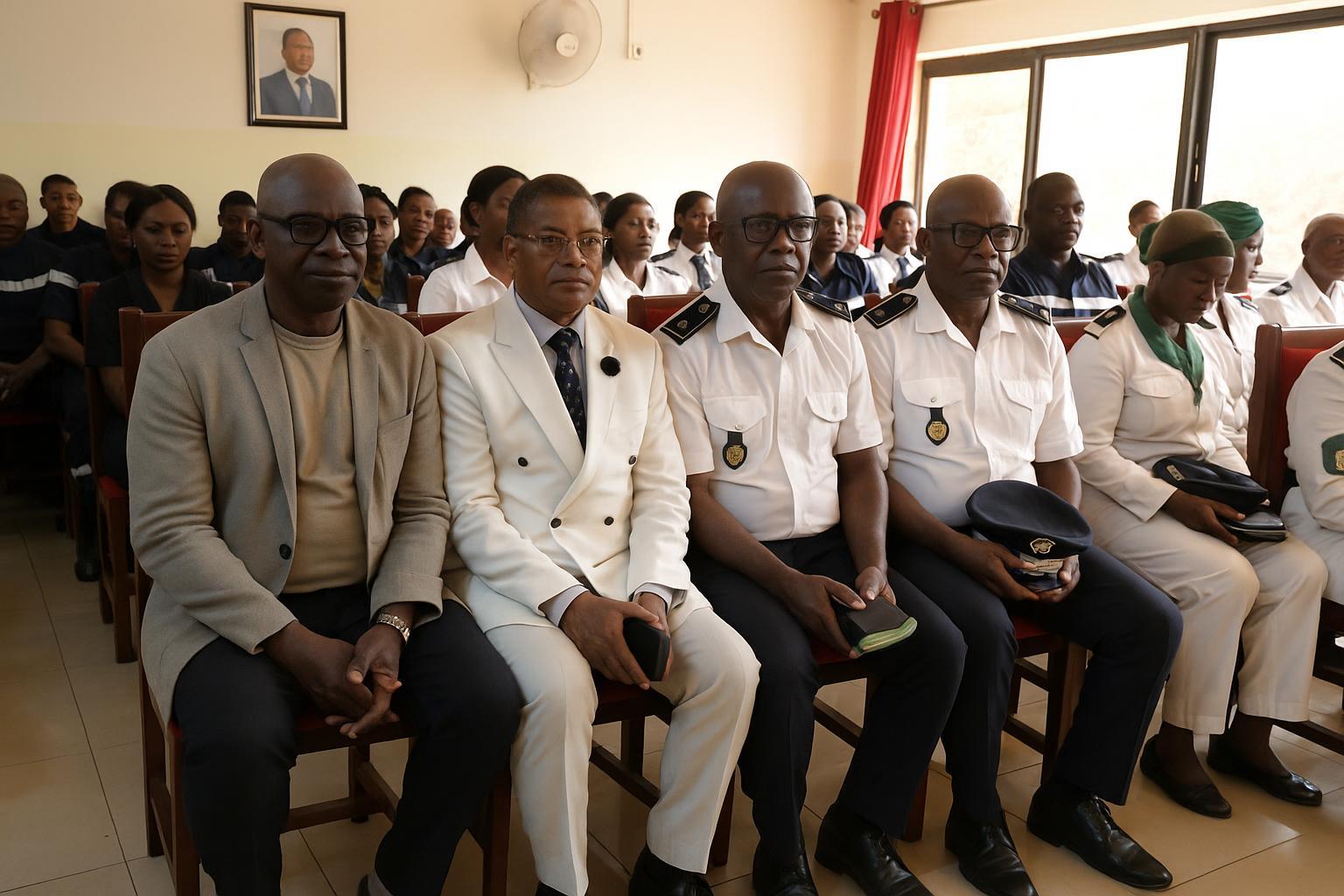
Rescue numbers climb to an all-time high
Brazzaville’s Civil Security Command took the floor this week with figures that immediately grabbed attention: 21,627 people have already been assisted nationwide since 1 January. The tally, disclosed on 9 October, outpaces the same period last year by 12.25 %, underlining a tangible jump in field activity.
A broader web of protection
General Albert Ngoto, head of the service, attributed the surge to what he called “a deliberate expansion of our safety net.” In 2024, teams covered 45 localities. This year the figure stands at 56, bringing first-aid stations, mobile clinics and rapid-response crews closer to previously unserved communities.
Brazzaville still leads the chart
Urban density and heavy traffic keep the capital in pole position with 7,905 interventions. Yet rural departments are catching up. In the Sangha, 1,934 calls for help were handled, while Pointe-Noire and Kouilou combined for 1,863. The Likouala, prone to riverine accidents, followed with 1,707 cases.
Why the phone rings
Headaches were once again the most frequent complaint, totalling 6,422 cases. Falciparum malaria, the perennial foe of humid zones, generated 2,307 rescues. Seasonal flu-like syndromes came in close at 2,126, and dysmenorrhoea affected 1,354 candidates, especially during examination periods when stress peaks.
Exam season puts teams to the test
The ministry of Education scheduled state exams and competitive tests earlier this year, forcing civil-security planners to move quickly. Each session required on average 425 personnel and 37 vehicles. Across 148 deployments, nearly 1,700 men and women rotated through schools, dormitories and makeshift testing halls.
Fuel and wheels behind the figures
The growing footprint drew on 15,000 litres of diesel and 5,000 litres of petrol, according to the logistics branch. Ambulances criss-crossed asphalt and laterite roads, while motorcycles ferried medics to hamlets unreachable by vans. Support from the ministries in charge of general and technical education helped foot the bill.
Faster referrals save critical hours
Forty-nine patients in life-threatening condition were routed to reference hospitals. Colonel-major Serge Pépin Itoua Poto, deputy commander, noted that coordination with Brazzaville University Hospital has cut referral time by up to 30 %. “Every minute counts in trauma or severe malaria,” he reminded reporters.
Training that mirrors real life
In March, mixed units rehearsed a simulated chemical spill in Pointe-Noire’s port district, while April’s drill in Dolisie focused on mass casualty triage after fictional flash floods. Both exercises, later reviewed by French Civil Protection advisers, improved radio discipline and patient-tracking procedures, the command reported.
Community voices from the front line
Emmanuelle Mabiala, principal of Lycée Nganga-Edouard, saw the value firsthand. “One girl fainted during maths; paramedics arrived in under eight minutes,” she recounted. For residents of Ouesso, fisherman Clément Ebina praised the swift evacuation of a colleague bitten by a snake. “They arrived by pirogue with oxygen and antivenom.”
Digital reporting sharpens response
This year supervisors equipped each crew with handheld tablets feeding a real-time dashboard. The platform, built by local start-up DataCongo, maps incident hotspots and tracks stocks of bandages, antipyretics and fuel. The system helped planners anticipate a spike in malaria cases during July’s heavy rains.
Financial backdrop stays solid
While official budgets are pending parliamentary review, insiders say an envelope of 3.2 billion FCFA has already been earmarked for civil-security operations in 2025, mirroring last year’s allocation. Additional fuel coupons and spare-parts kits were released through a presidential contingency fund after August’s storms.
Women step into command roles
Captain Clotilde Mabika now leads the Brazzaville-South detachment, overseeing 120 responders. Her promotion in June makes her one of the highest-ranking women in the corps. “Representation matters when we knock on household doors,” she said, adding that female recruits doubled between 2022 and 2025.
Cross-checking the numbers
Figures disclosed this week align with preliminary data posted by the Ministry of the Interior in its mid-year bulletin and echo local press tallies published by Les Dépêches de Brazzaville. Independent watchdog Observatoire Santé Publique also confirmed the upward trend, citing field interviews with clinic staff.
A regional ripple effect
Neighbouring Cameroon’s civil-protection service sent observers in September to study Congo’s deployment model. Bills under discussion at CEMAC aim to standardise emergency training for cross-border rescues, offering new space for Congolese know-how to shine on the Central African stage.
No room for complacency
General Ngoto cautioned that numbers alone do not equate to full coverage. Mountainous districts in the Pool and sparsely populated plateaux still pose access challenges. Talks are under way with telecom operators to boost radio repeaters and reduce blind spots for distress calls.
Vision 2026: taking aid further
The command’s roadmap targets a 20 % rise in intervention capacity next year, hinging on three additions: a satellite-linked control room, ten all-terrain ambulances, and a permanent helicopter detachment for river rescues along the Oubangui. Procurement procedures have already been drafted, officials confirm.
United in mission
Closing Tuesday’s briefing, Colonel-major Itoua Poto hailed the personnel’s devotion, calling the report “both a mirror of our present and a compass for what lies ahead.” His words echoed the wider commitment voiced by the Minister of the Interior to bring safety and first aid within reach of every Congolese family.