
A night-time pastime steps into daylight
For decades the beat of nzango echoed after classes and beneath village moonlight. Two rows of girls faced each other, hopping in cadence, seeking to mirror or foil the opponent’s leading foot. The prize was simple pride; the referee was often the oldest cousin. Oral histories place the game’s first big stage along the Congo-Océan railway works of the 1920s, where young women used rhythmic play to break the drudgery of colonial labour camps (RFI 2023). No whistles, no scoreboards—just laughter, dust and improvised songs.
Codifying the dance: birth of a federation
By the early 1980s urban migration and imported leisure threatened to push nzango aside. Alarmed teachers began noting that pupils preferred volleyball or television. In 2004 a small committee led by physical-education lecturer Titov Guillaume Mpassi drafted a 27-page rulebook: court size, rotation, fouls and even a technical knockout—earned when one captain outscores six rivals in a row. The document was deposited with the African Intellectual Property Organisation in Yaoundé, giving Congo legal ownership over its cultural asset (Jeune Afrique 2021). Two years later the Congolese Ministry of Sports cleared the creation of the Fédération congolaise de nzango, electing banker-turned-coach Sophie Aminata Cissé as president. Today the body manages 12 provincial leagues, 103 registered clubs and an annual calendar that mirrors mainstream sports, complete with medical checks and transfer windows, according to federation figures shared this May.
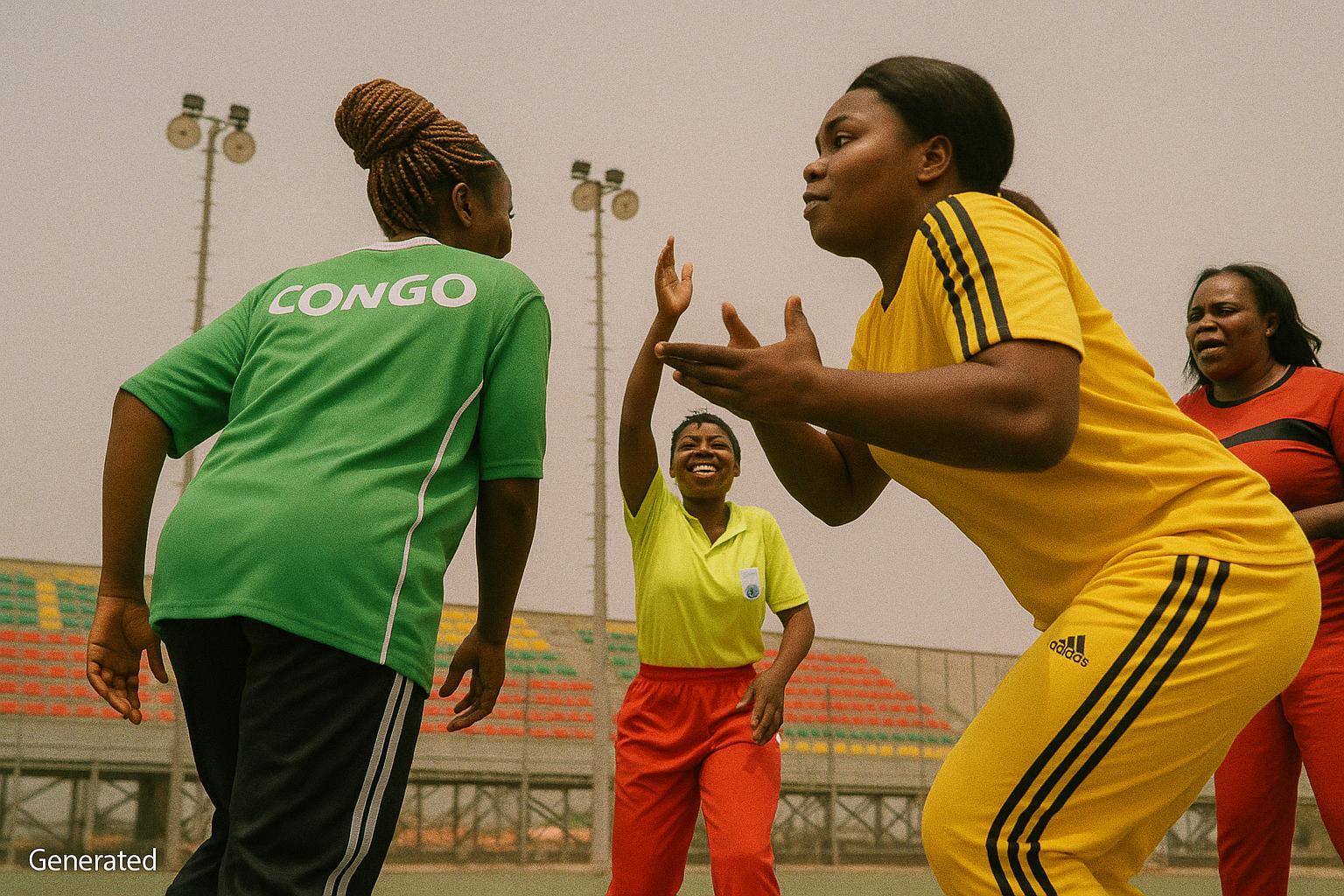
On a scorching Saturday at the Zig-Zag ground in Brazzaville’s Mpila district, Union Sportive de Brazzaville locked ankles with the Diables Noirs. Eleven athletes per side leapt, pivoted and sang tactical chants while an official scorekeeper tapped on a wooden counter. Mid-match, twenty-nine-year-old winger Christelle Mbemba confessed between gulps of water, “Nzango makes every muscle wake up. It drains stress better than a gym session—it’s freedom.” Her grin told the rest.
Health dividend for players and nation
Sports doctors at the Centre national de médecine du sport say regular nzango sessions burn up to 500 calories an hour while improving joint mobility—an appealing prescription in a city where sedentary office life and diabetes are on the rise (Africanews 2022). Public schools now schedule one weekly nzango period for girls aged nine to fourteen as part of the government’s Move-for-Health initiative. “We see fewer knee injuries compared with competitive football because foot contact is light and vertical,” notes Dr. Franck Malonga, orthopaedist at Brazzaville’s CHU.
The game’s female exclusivity has also become a talking point. Gender-studies lecturer Mireille Gankama argues that nzango offers “a rare platform where Congolese women lead the rule-making and the revenue stream.” Corporate sponsors clearly noticed: a telecom operator put its logo on league jerseys this season, and ticket proceeds from the 2023 National Cup financed repairs at two municipal playgrounds.
Soft power and regional ambitions
Congo’s cultural outreach desk has begun marketing nzango as a sports-tourism product, highlighting its low equipment cost—no nets or turf needed, just chalk lines and a boombox. In December 2022 Pointe-Noire hosted Cameroon, Gabon and the Central African Republic for the first Central African Nzango Challenge. Local hotels reported a 12 percent uptick in bookings that week, according to the hoteliers’ federation. Embassy attachés who attended praised the “festive diplomacy” generated by drumbeats and footwork instead of political speeches.
The Ministry of Foreign Affairs now floats the idea of a pan-African nzango cup alongside Afrobasket and the African Nations Championship. “It is a cultural export that places women at the centre of our soft-power strategy,” insists deputy director Clément Oba, hinting that the file will surface at the next African Union culture summit.
Economic ripple and the road ahead
Equipment shops around Marché Total already sell customised nzango kits—light sneakers, ankle supports and colour-coded wraps. Small but steady orders keep three local tailors busy year-round. Nevertheless, funding remains modest. Annual federation grants amount to roughly 120 million CFA francs, far below what handball or basketball receive. Cissé stays optimistic: “The sport was born on dirt, so it knows how to survive lean times.”
Key hurdles include the absence of covered arenas, which limits play during the long rains, and the need for continental standardisation of rules. A working group with Kinshasa and Yaoundé federations is drafting a harmonised code to facilitate future inter-state matches. Analysts at the Sport and Society Observatory believe a televised league could triple sponsorship within five years if broadcast partners step in.
Still, the mood at Mpila remains exuberant. As Union Sportive clinched victory with a final feint, spectators poured onto the chalk to dance alongside the athletes, erasing the boundary between player and fan. Perhaps that is nzango’s secret weapon: an unbroken line from folklore to federation, reminding Congo—and anyone else listening—that a people’s rhythm can leap barriers long before politics or money do.